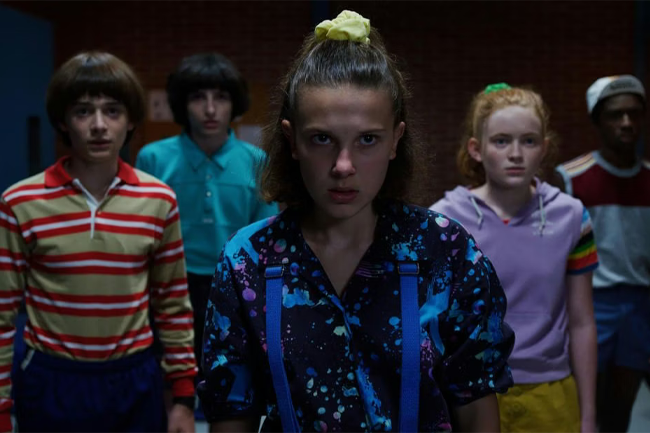
A love letter disguised as a horror series, Stranger Things became a rare cultural crossroads, where Gen X memory and Gen Z discovery collided, bonded and briefly watched the world together, writes Michael Gibbons.
IN JULY 2016, Netflix introduced us to the quiet, fictional town of Hawkins, Indiana. What began as a small, nostalgic supernatural series quickly grew into something far bigger: a cultural phenomenon.
Over five seasons, Stranger Things taught us to love its characters fiercely and fear its monsters, both the tentacled horrors of the Upside Down and the far more familiar menace of government secrecy. In doing so, it became something rare in modern television. A show that belonged equally to two generations at once.
From the beginning, the Duffer Brothers were playing a clever long game. By borrowing heavily from the pop culture DNA of the 1980s, Stranger Things managed to speak fluently to two very different audiences. That dual appeal is central to why the show became unavoidable.
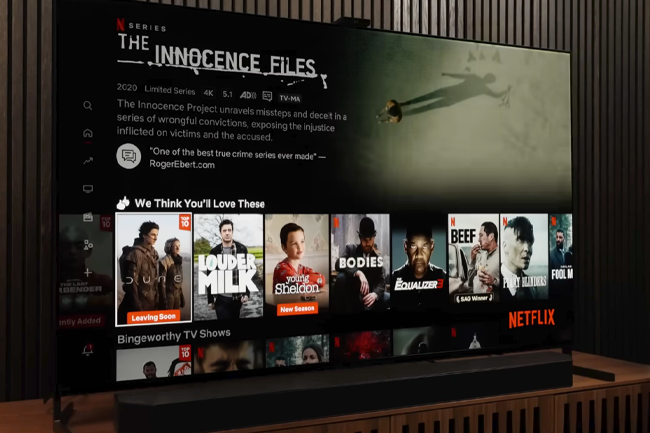
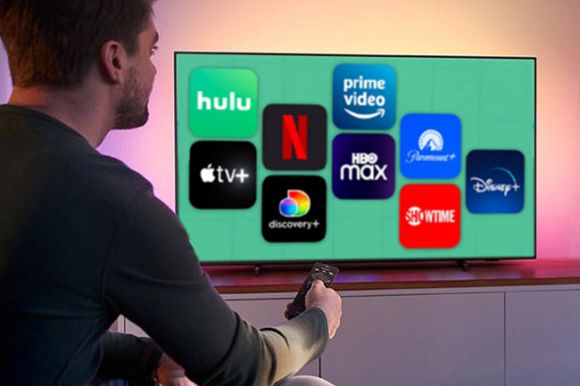
The first audience is today’s youth: viewers roughly the same age as the show’s protagonists, growing up in what is often called the Second Golden Age of Television, or Peak TV. This era is defined by abundance. Streaming platforms bombard audiences with endless options, instant access and algorithm-driven recommendations.

For these viewers, Stranger Things functions as a period piece. Its 1980s setting is as distant and stylised as M*A*S*H or Happy Days once felt to audiences in the 1970s and 1980s. Hawkins isn’t a memory; it is history, filtered through synths, bikes and walkie-talkies.
The second audience, however, experiences the show very differently. These are the Gen X viewers who, like me, lived through the 1980s and recognise the references instinctively. We remember a world before the internet, when mobile phones were the size of suitcases, video games mostly lived in arcades and television was a shared social ritual.
In the mid-1980s, most of us watched the same shows simultaneously. Schoolyards and office watercoolers became forums for recaps and debates. There were no spoiler alerts. If you missed an episode, word of mouth was how you caught up.
Then there was the video store. The ritual of wandering aisles of VHS covers, hoping the movie you wanted hadn’t already been rented out. You would often bump into neighbours or friends, negotiating viewing choices on the spot and quietly judging their taste. Entertainment was slower, more communal and, crucially, finite.
Stranger Things taps into this collective memory with remarkable precision. Through meticulous production design, savvy product placement and carefully chosen narrative cues, the show serves Gen X viewers a nostalgic smorgasbord. Kids on bikes evoke E.T. the Extra-Terrestrial. Familiar soft drink cans and food packaging act like time machines. Entire episodes set in shopping malls resurrect brands and spaces that no longer exist.
And then there’s the music, arguably the show’s most powerful nostalgia engine. Tracks from Kate Bush, Prince, Metallica and David Bowie don’t just accompany scenes; they reactivate emotional muscle memory. With these choices, the Duffer Brothers tapped directly into the cultural zeitgeist of the 1980s.
But nostalgia is a tricky thing. Our fondness for the good old days often says more about the present than the past. Today, we live in a nonstop digital ecosystem. A 24/7 news cycle, constant social media engagement, and a culture where even holidays and tragedies can become branding opportunities. By comparison, the past feels quieter and simpler.
And yet, the 1980s were hardly safe or uncomplicated. The Cold War loomed large. The AIDS epidemic devastated the LGBTQ+ community. Child sexual abuse within the Catholic Church reached horrifying levels. Television comedy of the era was frequently racist or casually offensive, now dismissed as merely being of its time. Technologically, we were on the brink of massive change, but not yet benefiting from it. Computers were bulky, video games took hours to load and the internet was not part of everyday life.
So what is it that we are really nostalgic for?
It is not the decade itself. It is the lack of complexity. For many Gen X viewers, the 1980s represent a time before adult anxieties fully set in, before bills, constant availability and the mental load of modern life. We were not reachable 24/7. There was no need to legislate a Right to Disconnect. Many of us had not yet accumulated the responsibilities that keep adults awake at night. What Stranger Things ultimately provides for this audience is a feeling of safety, an ironic sensation to derive from a show rooted in horror.
At its core, Stranger Things exists at the intersection of these two audiences. For younger viewers, it is a story about kids beating impossible odds, a group of outsiders and misfits standing against forces far bigger than themselves. These characters represent the underrepresented on television. The nerds, not the jocks. The awkward, not the popular.
For older viewers, many of whom are now parents of this younger generation, the show offers something deeper. It is a reminder of who we were, who we wanted to be and who we hoped our kids might become. Watching the Hawkins crew grow from awkward middle schoolers into near adults mirrors our own passage through time.
By blending nostalgia with an underdog narrative, the Duffer Brothers created a cross-generational experience that feels increasingly rare in modern television. Stranger Things did not just entertain; it connected. And in doing so, it became a monster of its own cultural making. Or, more fittingly, a Demogorgon.
As we say goodbye to Hawkins, we are not just closing the door on a television series. We are saying farewell to a rare, shared experience, one that allowed two generations to meet in the same place, at the same time, in front of the same screen. Bikes ready. Walkie-talkies on. For a brief moment, Stranger Things reminded us of what it felt like to watch together, to feel safe and to believe that a group of kids, no matter how unlikely, could still save the world.
Michael Gibbons is an Australian writer with a Bachelor of Arts (with Distinction) majoring in Screen and Cultural Studies.
 This work is licensed under a Creative Commons Attribution-NonCommercial-NoDerivs 3.0 Australia License
Support independent journalism Subscribe to IA.