In the streaming age, falling in love with a new series often means preparing for heartbreak, writes Michael Gibbons.
FOR A TELEVISION NERD like me, few phrases strike fear quite like “axed”, “not renewed”, or the even more ominous “indefinite hiatus”.
It may be recency bias talking, but I don’t remember my favourite shows growing up being cancelled with the same regularity we see today. Series like The Cosby Show, Seinfeld and ER felt like they ran forever. When they ended, they did so on their own terms. The story concluded. The audience was prepared.
Now, in the era of streaming, it often feels like shows vanish without warning.
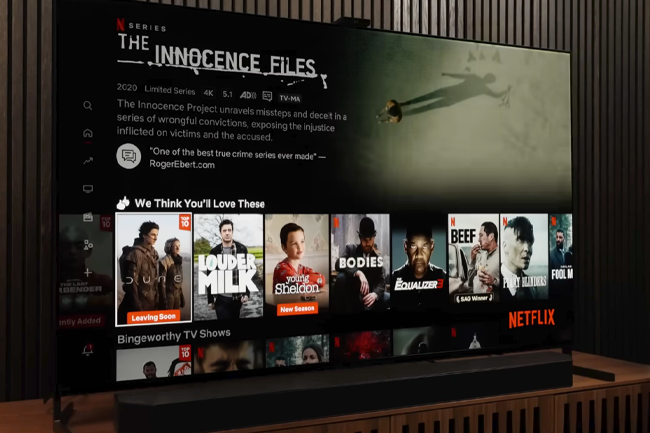
Netflix, the largest of the streaming platforms with over 325 million global subscribers, frequently finds itself at the centre of this conversation. Series are commissioned with fanfare, released all at once and then quietly shelved. Sometimes the story is left partially told. Sometimes it ends on a cliffhanger that may never be resolved.
Mindhunter is a great example. Critically acclaimed, it has lingered in limbo despite persistent calls for its return. There comes a point when hope fades into resignation and audiences learn not to get too attached.
To be fair, revivals do happen. The X-Files returned in movie form and later with a ten-episode reboot in 2018, and another iteration is reportedly in development by director Ryan Coogler for release in 2027. But these comebacks are the exception, not the rule. For every revival, dozens of unfinished stories remain suspended in streaming purgatory.
As a lifelong sci-fi fan, I’ll admit I feel this especially strongly in that genre. Shows like Firefly and Stargate: Universe have become legends precisely because they were cut short. Their cult status has only grown in the years since cancellation. Fan fiction and crowdfunding campaigns attempt to fill the gaps, but nothing replaces the original version.
There’s even an argument that some series benefit from ending prematurely. Better to burn brightly and be adored than to limp across a finish line. (We’ve all debated the final seasons of Lost and Game of Thrones.) But that’s a different conversation.
The real question is this: Do streaming platforms have a responsibility to commit to completing the stories they greenlight?
When Netflix, Prime Video, Disney+, HBO Max or Paramount+ approve a series, should there be a minimum guarantee? Two or three seasons, perhaps, regardless of viewing metrics. Should the public be told upfront how many seasons are planned? Or does the reality of ratings, algorithms and shareholder expectations make that impossible?
In the peak TV era, content is abundant to the point of exhaustion. Hundreds of scripted series are released annually. Data consistently shows that a show’s first season is typically its most-watched, with viewership declining in subsequent seasons. From a business perspective, launching new series often makes more financial sense than nurturing existing ones.
But here’s the kicker: audiences are not just metrics. We invest time – six, eight, 12 hours at a stretch – into characters and worlds. When a show is cancelled abruptly, it doesn’t just disappear from a content library; it leaves behind a broken narrative contract.

There are rare victories. Sense8 was cancelled after two seasons despite being originally envisioned as a five-season arc. After intense fan backlash, Netflix reversed course long enough to produce a two-hour finale, allowing the story to conclude. It wasn’t perfect, but it was closure.
Contrast that with The OA, also pitched as a five-season saga and cancelled after its second season’s mind-bending reveal. The creators had a roadmap. The audience had faith. The ending never came.
Interestingly, while it may feel like science fiction suffers disproportionately, data suggests otherwise. According to Cancelled Sci Fi’s article ‘Do Sci Fi TV Shows Get Cancelled More Often than Other Genres? Here’s a Look at the Numbers’, genre television has flourished in the post-Lost era, with more sci-fi and fantasy series receiving multi-season runs than in previous decades. The problem isn’t limited to one genre. It’s systemic.
And it raises a broader issue — transparency.
What if platforms were upfront about their commitment? What if viewers knew, before pressing play, whether a show was conceived as a limited series, a three-season arc or an open-ended series? Even a clearly communicated minimum commitment would change expectations. Anything beyond that could feel like a bonus rather than a gamble.
Of course, this isn’t how the industry works. Subscription numbers drive decisions. Growth is prioritised over retention. A spike in new sign-ups often matters more than the passive loyalty of existing viewers. But subscription fatigue is real and so is audience frustration.
We can support the shows we love. We can watch them promptly, recommend them loudly and boost engagement. Beyond that, viewers have limited power. The larger shift may need to come from within the industry itself, with better protections for creatives, clearer development commitments and recognition that storytelling and those doing the storytelling are not infinitely disposable.
In an age where we pay monthly fees to global corporations for access to stories, it doesn’t seem unreasonable to ask for one thing in return — a promised endpoint.
As I lament the cancellation of two of my favourite shows that won’t return in 2026 – Duster, starring Josh Holloway, and the psychological horror Teacup – I’m reminded that sometimes the most frightening words in television aren’t spoken by a character at all.
They are “cancelled”.
Michael Gibbons is an Australian writer with a Bachelor of Arts (with Distinction) majoring in Screen and Cultural Studies.
 This work is licensed under a Creative Commons Attribution-NonCommercial-NoDerivs 3.0 Australia License
Support independent journalism Subscribe to IA.