The proliferation of data centres will greatly assist in the promotion of interstate economic warfare and ultimately actual warfare against the rival economic power of China, writes Dr William Briggs.
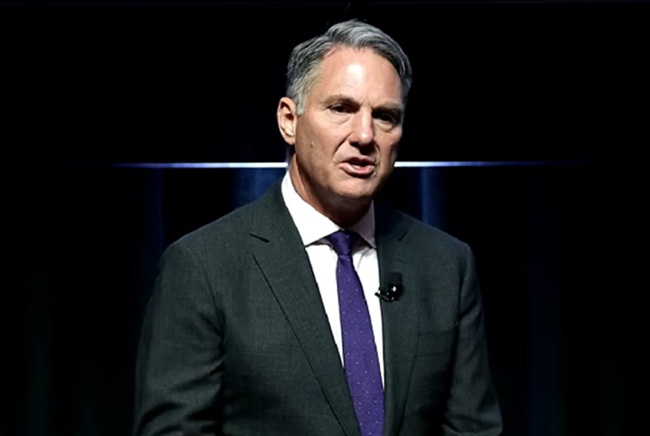
DEFENCE MINISTER Richard Marles has again declared that "we’re with the United States – there’s no question there".
No, Mr Marles, there certainly is not. The militarisation of the region continues, and Australia is looking to be part of a $21 billion deal with the U.S. to make it a big player in the development of AI for war planning and fighting.
Marles’ trip to Washington is all about the belligerent postures of the USA and to make it clear to us all that Australia will be on the front line of any future war with China.
Canberra sees AI as playing an important role in maintaining U.S. power and hegemony. Pine Gap, as we know, makes Australia an integrated part of U.S. signals intelligence and operates as a targeting system. In the same way, AI integration acts to bind Australian digital capacities to Washington’s military-industrial complex and plays a central role in any future war plans.
Some observers have already coined the phrase "a digital Pine Gap". It is not just a catchy slogan, but has a dreadful ring of truth about it.
Weeks earlier, Australia’s Minister for Industry and Innovation, Tim Ayres, made some telling statements that show how Australia is seeking to become even more closely integrated with the USA as America increases the threat to peace in the region.
He was talking up AI, data centres, the need to be able to withstand all manner of foreign interference and to play a more significant role in war preparations.

The drive to AI is broadly based. Its uses are equally broad but are all bound, inextricably, to the need for capitalist economies to maintain profitability. This is the case not simply for the USA but for all economies, China included.
There are economic, environmental and military aspects to be considered here, and recent comments from the Australian government show how economic and military issues coalesce as the U.S. continues to threaten peace.
Capitalist economies are in crisis.
AI is being seen as a means to boost profit but at a terrible human cost. Hundreds of millions of jobs are under threat. No country is exempt. Then there are the environmental implications, which have been capturing headlines recently.
All of this is naturally disturbing, but the military implications cannot be ignored.
War is a feature of capitalist existence; the natural order for capitalist international relations. This is a simple statement of truth.
Capitalism expands by trade, by pressure, coercion and historically, by force of arms. Today the global military budget runs to more than $2.5 trillion. The figure just continues to rise.
In 2025, the global military budget rose by another $88 billion. More and more states are being turned into war economies as a way to jump-start failing capitalist economies.
The arms trade is being passed off as economic policy. Such is the dilemma capitalism faces. Such is the crisis it faces. Such is the lack of feeling it shows for humanity.
There is ample evidence that war is very much on the agenda of capitalist states, as market share and hegemony demand that might be once more shown to be right. It would be surprising not to see AI playing a key role in this bleak future scenario of war for profit.
There is an almost manic drive to militarise. Global and national economies are in chaos. Recession and potentially depression stalk the earth. The use of AI, both as a military tool and as an economic lever, is coming more and more clearly into the picture.
Tim Ayres, in an address to the Lowy Institute, entitled Artificial Intelligence and Australia’s National Interest, commented on the need:
“... to focus on our future competitive advantages in geography, geology and proximity to the world’s fast-growing region and our strategic imperative for economic resilience in a contested world.”
He was not simply talking of trade competition, although that is certainly in the strategic thinking of both the USA and Australia.
Australia, as the Minister stressed:
“... is charting a course through these challenges by leveraging Australia’s strengths — land aplenty, renewable energy potential, proximity to the rapidly growing Asian markets, stable governance and security reliability as a Five Eyes country.”
The reference to Five Eyes countries removes any doubt about where the government’s thinking is leading us.
The Five Eyes, an intelligence network combining the USA, Britain, Canada, New Zealand and Australia, exists to coordinate surveillance, contribute to what can only be described as economic warfare, and to play a direct role in the military confrontation against China.
A statement from the Australian Signals Directorate (ASD) is rather revealing. The Signals Directorate, directly linked to the Department of Defence, exists to gather intelligence through covert acquisition of foreign information. In other words, a direct spy agency.
The statement is clear:
'We are united in our call to action: the evolving landscape of artificial intelligence is rapidly transforming cyber risk, and we must act swiftly to remain ahead. Adversaries are already using AI to move faster and more effectively. Defenders must do the same.'
The link, the connection between the economic, the political and the military, must always be borne in mind.
And so, we have the USA and its allies and, in this case, Australia, acting to promote its interests and Australia’s perceived interests in order to check and push back the interests of an economic adversary: China.

David Wroe, in the right-wing Australian Strategic Policy Institute (ASPI) journal, The Strategist, acknowledged that the U.S. has been using the hacking tool, Mythos:
... to carry out offensive cyber operations against foreign adversaries. Australian entities, including our highly respected Australian Signals Directorate, managed to negotiate access to the formidable and restricted Mythos model to check for cyber vulnerabilities.
We need to make sure such access continues even as models grow more powerful.
AI is being seen as more and more vital to the interests of war planning and fighting.
This is a nice bonus for a state apparatus that seeks to support the capitalist ethos of extracting greater profit for less outlay, which is an undoubted feature of the anti-worker nature of AI.
The proliferation of data centres may well exacerbate environmental destruction, but they will greatly assist in the promotion of interstate economic warfare and ultimately actual warfare against the rival economic power of China.
As Wroe so bluntly put it:
Companies such as Anthropic are clamouring to build data centres here, thanks to our abundant land, renewable energy, political and regulatory stability. This puts Australia in a strong position and gives us leverage… we should sell Washington on our role in supporting U.S. AI dominance, emphasising our alliance, our Five Eyes partnership, and our ability to help them by training models here and relieving their creaking power grid — a winner with the America First agenda.
Defence industry cooperation is a good paradigm… cooperation under AUKUS on national security technologies, including AI, is an excellent basis, as are examples such as the F-35 Joint Strike Fighter project in which Australia built parts for the global supply chain.
Marles has taken the argument a step further, enthusing:
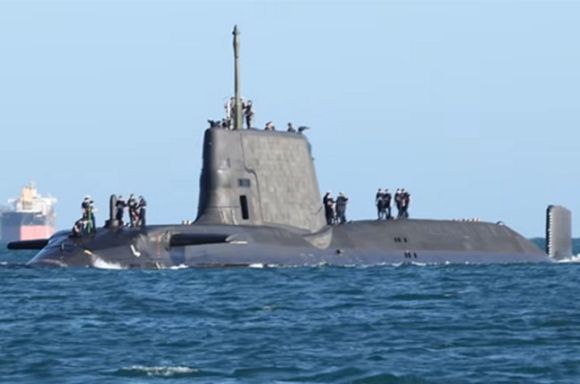
“... the technology would one day operate submarines and F-35 aircraft and provide battlefield data to soldiers… the question is what agency do we have… this is as big a sovereignty inflexion point as we’ve seen since the Second World War… we need to be working with America to advance our national interests.”
When next we scratch our heads about why there is indecent haste to build more and more data centres, we might pause and reflect on the nature of a system that puts profit and power ahead of the actual needs of the people, regardless of the language spoken by the people or their masters.
Dr William Briggs is a political economist. His special areas of interest lie in political theory and international political economy. He has been, variously, a teacher, journalist and political activist.
 This work is licensed under a Creative Commons Attribution-NonCommercial-NoDerivs 3.0 Australia License
Support independent journalism Subscribe to IA.


Related Articles
- AI Lucky Country — Big tech companies invest in Australia
- Australia needs AI skills — not just more data centres
- AI near misses: The space between potential and catastrophe
- Big Tech: When 1984 meets The Godfather
- EDITORIAL: Big Tech — When 1984 meets The Godfather