Australia’s worsening housing crisis exposes an economic system that puts profit before people, leaving governments unable or unwilling to deliver meaningful solutions. Dr William Briggs writes.
THERE IS A housing crisis in this country. Nobody denies it, but nothing is done about it.
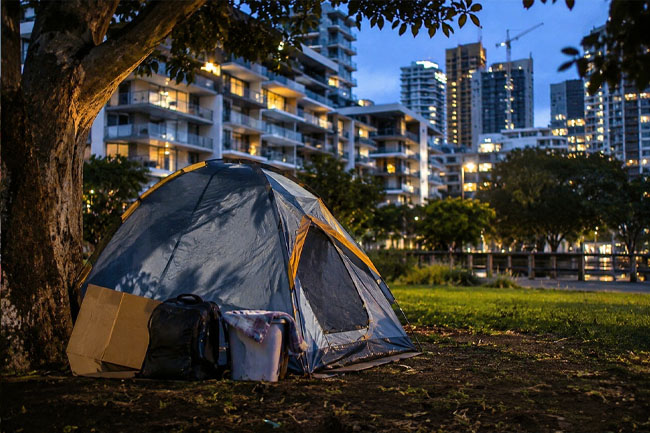
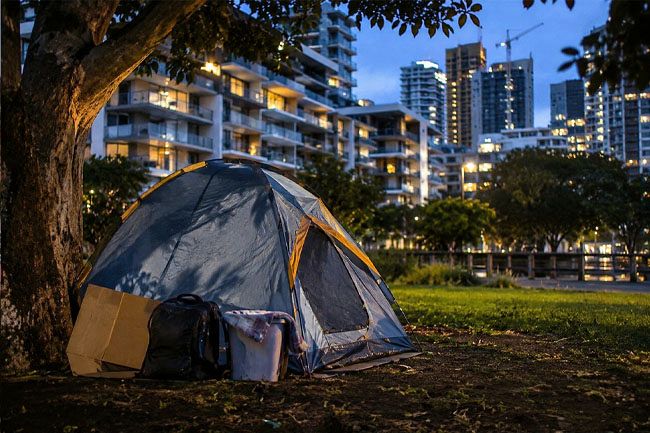
The most recent crime against the people has just been revealed. Agencies are asking women and families escaping domestic violence whether they can sleep in their car and, if not, are handing them tents. People become angry. Official hands are wrung and nothing gets done.
The ever-dwindling band of true believers in a system that can no longer deliver point to other countries that are having even greater crises. It is simply a case of a tweak here, a pulled lever there and all will be well. It won’t be well and has not been well for decades.
Treasurer Jim Chalmers has conceded that the country is facing a deteriorating fiscal outlook. Inflation is rising, interest rates are rising and the federal debt is set to be $1.2 trillion by 2030. Social spending is to be further reined in, in accordance with International Monetary Fund (IMF) demands.
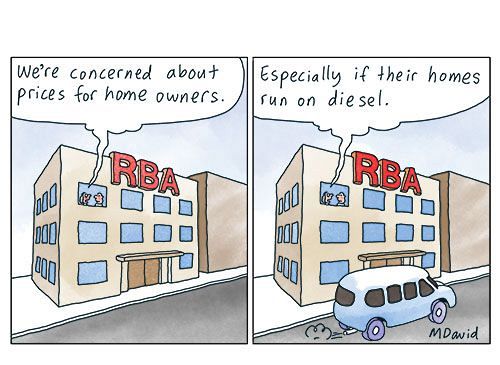
The interest rate is now at an 18-year high. Petrol prices are soaring. The combination of these two factors means that an average household with a relatively modest mortgage and a car is effectively expecting to face a $5,500 pay cut this year.
The crisis in capitalism is not marked by borders. All of the ills that can be seen in one country are directly mirrored in all other nation-states. Just the same, as OECD figures show, Australian housing prices, relative to incomes, have risen more sharply than in most other advanced economies. This has been a growing feature since the early 2000s.
Those same figures show that across all OECD countries, house prices have increased by more than 40% in the past ten years. A third of all tenants and 25% of all those with mortgages are being forced to spend more than 40% of their income on housing. Millions in the OECD countries are now officially homeless. State investment in housing has fallen significantly across all OECD states.
The crisis in housing is one part of a web of interrelated factors that have their root cause in an economic system that can no longer even pretend to deliver. Capitalism enjoyed what was something of an aberrant period from the end of WWII until the 1970s. It has been labelled the ‘golden age’.
We share a world where economic structures determine state policies. As the crisis in those economic structures worsens, the state that exists to facilitate capitalism becomes incapable of offering any modest redress. The ‘golden age’, by the way, came at the cost of the war and the deaths of 80 million people, or 3.8% of the total population of the world.
Today, there is an almost universal domination by capital. The catastrophe that is so evident in housing and poverty is spread, albeit unevenly, across the world.
The United Nations World Cities Report 2026: The Global Housing Crisis: Pathways to Action shows that as many as 3.4 billion of the world’s 8 billion population lack access to secure, safe and adequate housing.
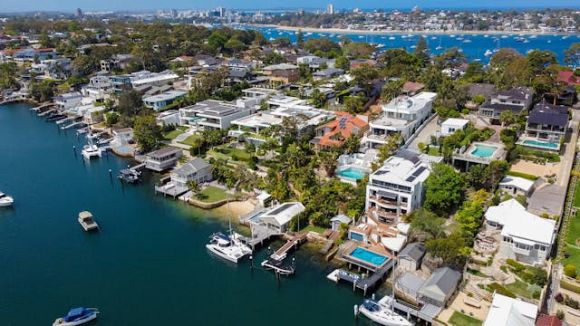
The report describes the crisis as driven by rising housing costs, limited supply, widespread displacement, inadequate grading of existing homes and informal settlements and the growing impact of climate change. This is not “simply” a developing world problem. It is being experienced in the richest nations on Earth.
The report acknowledges that building more houses will not solve the problem. Why? It is, at its core, a housing crisis stemming from unaffordability, the price of land and particularly financial speculation. More houses do not equate to more affordable houses. This becomes obvious when housing becomes just another asset or tradable commodity and that is what is happening across the globe.
Private equity firms buy up more and more residential blocks in the biggest cities in the world. Superannuation funds and pension funds are pumped into real estate trusts. Blackstone, a global real estate platform, for example, manages real estate assets of over $1.5 trillion. The majority of its real estate portfolio is concentrated in rental housing. There is no room here for affordability. Rental yields are driving profit margins.
The actions of the Victorian State Government, in its plan to demolish the North Melbourne tower blocks, show the complicity of the state and capital in the manic desire to extract the last penny of profit. The tower blocks will be replaced, but at the expense of the public housing tenants who will be driven into rentals that they cannot afford.
In inner-city Sydney, the transformation of Millers Point has seen much of its former public housing replaced by high-end residential developments, reflecting the area's shift towards an increasingly wealthy population.
The situation in this country, as in all other countries, has been keeping pace with the dilemma facing a global economic system; the existential crisis of a tendency for profit rates to stagnate and fall. The housing crisis is just one symptom of this crisis and, like all problems of capitalism, it affects those least able to defend themselves from the ravages of a global economy in peril.
Cheryl Crisp, writing for World Socialist Web Site, states:
The Australian housing market is now ranked among the least affordable in the developed world, with the majority of the population facing extreme challenges in securing housing.
According to Cotality, an independent property and analytics data platform, “Australia’s housing affordability reached new lows by the end of 2025.”
The problems facing all countries appear insoluble and it is not a cynical thing to say that they are. It is beyond the capacity of government, of any stripe or colour, to resolve these problems as the economic structures that support them compel governments to act in lock-step in a dangerous and downward spiral.
Elections will come and elections will go. There will be calls and recriminations. The faithful will seek to find points of difference between the major parties and while there might appear to be differences, they are superficial. On the big questions, and the biggest is economic, there will be accord.
The IMF and the “masters of the universe” will go on demanding austerity and declare that for the security of the system there must be cuts to social spending, while governments pour more and more money into a war economy that endangers us all.
And, as voters are urged to find a “lesser of evils”, the lives of those being handed a tent as a way of “resolving” homelessness become more and more desperate.
Dr William Briggs is a political economist. His special areas of interest lie in political theory and international political economy. He has been, variously, a teacher, journalist and political activist.
 This work is licensed under a Creative Commons Attribution-NonCommercial-NoDerivs 3.0 Australia License
Support independent journalism Subscribe to IA.


Related Articles
- Debate on housing and intergenerational equity is just beginning
- Why we have a housing crisis and why government cannot fix the problem
- Four more things Australia can do to arrest house prices
- Forum reveals widening divide over housing strategy and affordability targets
- The human cost of Australia’s housing crisis