It's obvious that technology will evolve and that the development of artificial intelligence is inevitable. But when George Orwell’s Nineteen Eighty-Four meets The Godfather in real life, surely it’s time to consider the lack of public protection and regulation of AI and Big Tech.
THE ACCIDENTS
Firstly, there are the data breaches.
Standouts so far include Optus, when a cyberattack in 2022 compromised the personal data of about 9.5 million customers. And we’re not talking about sharing just their buying preferences – though of course, they were also shared – but so were names, dates of birth, phone numbers, email addresses, driver's licence and passport numbers, and even home addresses.
Optus is facing regulatory and class action lawsuits over the matter.
In 2021 and 2022, Telstra breached carrier rules over 163,000 times by accidentally publishing unlisted/silent phone numbers and addresses online for anyone to access.
The Australian Communications and Media Authority (ACMA) responded to the breaches with the following:
‘…The ACMA has given Telstra a remedial direction requiring it to take actions to support compliance with obligations not to disclose or use information related to unlisted numbers.’
Telstra’s senior management are no doubt shaking in their boots.
And in 2022, Medibank leaked extensive private medical claims data and personal details for 9.7 million current and former customers — only everything to see here!
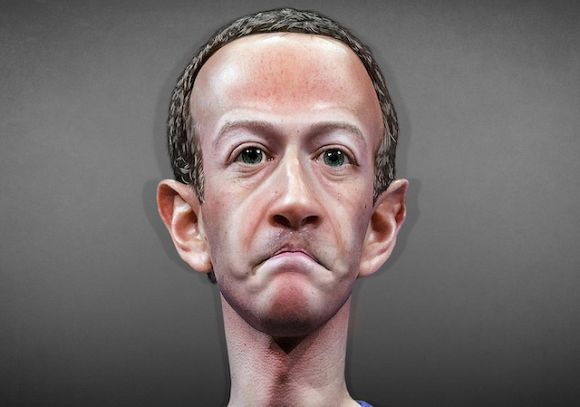
Meta, which controls Facebook, Instagram, WhatsApp, Threads and Messenger, has so far had four major security breaches as well as several large-scale data scraping incidents affecting over a billion unique users worldwide.
This did lead to a $5 billion penalty being imposed by the U.S. Federal Trade Commission, but since Meta makes about $200 billion per year and given these accidents keep happening, it doesn’t seem anywhere near enough to ensure such breaches aren’t repeated.
Multiple security incidents and data scrapes affected Twitter (now X) between 2021 and 2025. A 2021 security vulnerability allowed the matching of phone numbers and email addresses to public profiles, exposing over 200 million user records.
X was fined $210 million by European Union regulators for breaches of its digital regulations. No fines have yet been issued in Australia.

THE LAYOFFS
Then there are the job losses.
Prominent organisations implementing AI-driven redundancies so far this year include Atlassian, WiseTech Global, Commonwealth Bank, NAB, Coles, JB Hi-Fi and the ASX.
Amazon and Meta Platforms have also laid off thousands of employees this year worldwide.
Suffice to say the amount spent on AI investment by many corporations far outweighs any fines they may ever face for breaching privacy/public safety.
Musk's SpaceX reported spending $15.8 billion on AI projects in a single quarter. Meta's projected spending for AI infrastructure is around $145 billion in 2026 alone. And Amazon has earmarked a staggering $220 billion for its 2026 AI spend.
SHADOWY BANS
When the social media giant feels like it, Meta’s policies and practices have been silencing voices it doesn’t like, such as those in support of Palestine and Palestinian human rights.
According to Human Rights Watch, there has been ‘a wave of heightened … systemic online censorship [which] has risen against the backdrop of unprecedented violence in Gaza.
Twitter claimed it would tell users when they’re being shadowbanned, but that does not appear to be the case.
As reported by TechCrunch:
‘X was found to have violated a number of provisions of the … pan-EU privacy framework where fines can reach 4 per cent of annual turnover, following legal challenges brought by an individual after X shadowbanned his account.'
At least the EU knows how to regulate this space.
TechCrunch added:
'X has long been accused of arbitrary shadowbanning — a particularly egregious charge for a platform that claims to champion free speech.’
Indeed.
BURNING THE BOOKS
And what of all the intellectual property we have to date? How will the wealth of information hitherto recorded in books be conveyed as our reliance on artificial intelligence increases?
If the following report is accurate, it seems fair to say information won't be treated in the way professional archivists and lovers of information and truth might hope:
'Artificial intelligence labs are in a new arms race to buy up millions of rare books, slicing them open, scanning the pages and pulping the remains — sparking concerns that the last remaining copies of out-of-print texts are being destroyed on an industrial scale.'
In one particular example, according to Culture:
'Anthropic's Project Panama bought two million books, sliced them up, and pulped the remains. The practice is legal — and largely unregulated.'

IT'S NOT PERSONAL, IT'S STRICTLY BUSINESS
Suffice to say, as it is owned and controlled by major corporations, artificial intelligence currently exists not to advance humanity or improve quality of life for the masses, but for one simple reason: to make ever more money for those who control it.
As The Godfather's Michael Corleone famously said as he planned the murder of a drug lord and a police captain:
"It's not personal, Sonny, it's strictly business."
And in tactics reminiscent of movies about the mob is the following extremely disturbing story.
E-commerce giant eBay has agreed to pay a Massachusetts couple $56 million in damages over what the then-U.S. attorney for Massachusetts described as:
“...a systematic campaign, fueled by the resources of a Fortune 500 company, to emotionally and psychologically terrorise this middle-aged couple..., with the goal of deterring them from writing bad things online about eBay.”
Ms Steiner had dared to criticise e-Bay and its CEO, Devin Wenig in a series of articles on the couple's blog, prompting Wenig to instruct his communications chief (a former CIA employee) to:
“Take her down ... whatever it takes.”
According to The New York Times:
'The Steiners were bombarded with anonymous material including deliveries of live cockroaches and a bloody pig mask. They were threatened online. Much of the material they were sent, including a funeral wreath and a book on surviving the loss of a spouse, suggested imminent death. The security team was on the verge of breaking into the Steiners’ garage to put a tracker on their car when the plot was derailed.'
This terrifying story serves as a stark reminder of what can happen when bad actors have access to our personal information.
New technologies are growing at unprecedented levels with little regulation or accountability for the consequences. The time to create serious duty-of-care legislation is now.
This is not the whole story! Subscribe HERE to read this article in full and receive regular updates directly to your inbox, from as little as $1.15 per week.
Follow managing editor Michelle Pini on Twitter @vmp9 and Bluesky @michellepini.bsky.social, and Independent Australia on Twitter at @independentaus, Facebook HERE and Instagram HERE.
 This work is licensed under a Creative Commons Attribution-NonCommercial-NoDerivs 3.0 Australia License
Support independent journalism Subscribe to IA.