The streets of France have erupted in chaos, met by tear gas and stun grenades, as French citizens protest their Government's austerity cuts to social services; it would be naïve to assume that Australia is faring any better, writes Dr William Briggs.
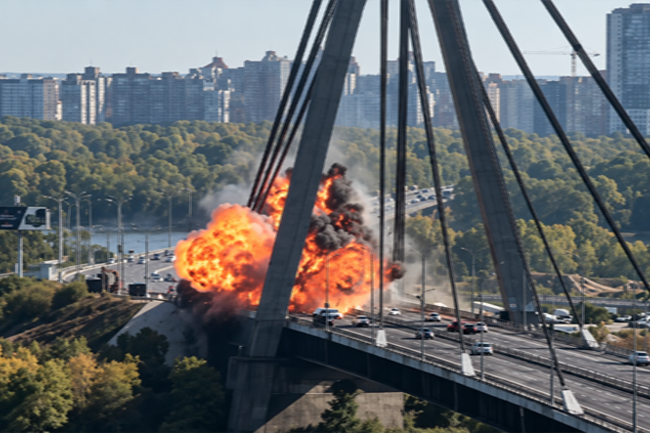
THE WORLD HAS BEEN WATCHING France as hundreds of thousands take to the streets and thousands are arrested. The protests are met with water cannons, stun grenades and tear gas.
Many in the media and in government around the world seek to write this off as "anarchists" or as student unrest. The fact is that France is but one country that has erupted. Why? What is going on?
How do the media explain the mass protests and strikes that are engulfing France, Portugal, Spain, Belgium, and Greece?
How do they explain the strikes and protests across South America, without looking at a virtual collapse of order that is the direct result of a near collapse of the global capitalist economy?
What is happening in France is a spectacular illustration of this crisis. The more than half a million people who assembled across France were protesting against rising fuel prices, cost of living costs and the critical state of education. Their government cannot and will not meet these basic needs.
The French government is in the process of making budget cuts of €54 billion. This can only come from further inroads into social spending. These cuts have been reflected across the world and are being demanded by the International Monetary Fund (IMF).
In October, the IMF declared that cuts to public spending were now a matter of ‘urgency.’
This strident tone stems from the fact that the rise in long-term interest rates is now greater than the growth of global GDP.
The global government debt-to-GDP ratio stands at 95.3%. The figure for the most advanced economies now stands at 108.2%!
Part of the reason that France is on fire is that it sits in the very centre of this storm. The money required to service existing debt in the coming year is set to reach €65 billion.
Emanuel Moulin, who heads the Bank of France, has stated that the country risks being “strangled by interest rates” unless action is taken on public finances.
The financial crisis is real and by no means simply a French problem. The global debt spiral is fuelled by the drive to invest in AI projects which might or might not return a profit, but which will mean the loss of millions of jobs.
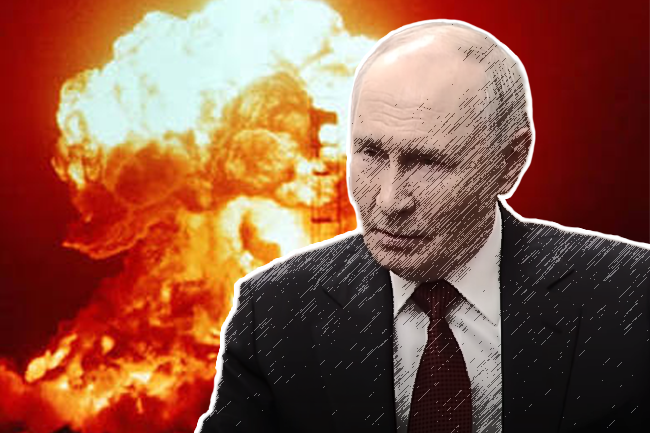
There is another factor, and that is the almost inevitable drive to militarise entire economies. This year the total military budget for the world will reach $3 trillion.
This drive comes from a realisation that the overall global rate of profit is in decline and that competing nation-states are, as a consequence, pushing for greater access to cheaper resources, materials and access to markets.
Historically, when capitalist economies reach a crisis point, war quickly follows.
What we are able to see unfolding before us is a process of war financing. This is a malignant and circular process. It creates greater debt, which increases interest rates, which means that social spending must be slashed to protect the finances of individual nation-states.
This is a process that is reflected in all capitalist states.
Given that France has been foremost in the news, it is apt to read French PM Sébastien Lecornu’s take on the issue:
“Next year, because of the geopolitical context, which is pushing interest rates up, the country will have to find an additional 10 billion euros.”
The geopolitical reference is a coy and almost embarrassed way of referring to the massive rearmament that is underway.
The economies of the EU are committed, through the so-called Readiness 2030 initiative, to produce an €800 billion EU war budget.

This mad circle will be broken. There is only so much austerity that can be tolerated. How it will be broken is the question facing the world.
We can see turmoil and protest as attacks on living standards are being met with stun grenades and tear gas and mass arrests. Even as these images fill our screens, the world moves closer to war and authoritarian rule as a means of "resolving" the crisis.
How much debt can be tolerated before the major players take that step to war remains to be seen, but debt, war budgets, and cuts to social spending are a global reality.
The USA now has an interest bill approaching a $1 trillion dollars a year. Trump has declared that the war budget means that social services must be slashed.
While the American figure is especially massive, the total global interest payments are now well over $4 trillion a year. The global debt is now more than $365 trillion and growing by an average of $10 trillion each year.
How can this not be a crisis? And yet the military spending across the planet is now in excess of $3 trillion a year and rising!
Can anybody be surprised to see hundreds of thousands of protesters taking to French streets? Trump may rail at what he sees as a "revolution", but it is not simply a Parisian thing. Spain, Belgium, Italy, Germany, Portugal and Greece tell the same story.
The people cannot afford any more cuts to their living standards. It is the same across South America and in the heartland of global capitalism – in the United States.
How do workers feel when they learn that Volkswagen, a global employer of 665,000, has put a freeze on any wage increases until 2030 and has already cut thousands of jobs?
It is naïve to assume that Australia is faring any better.
No, the tear gas grenades are still safely locked away, and yes, the level of debt to GDP is not as high as the global average, but the same IMF that has decreed that social spending must be cut has not exempted this country.
The last federal budget saw cuts in social spending of more than $63 billion while the government was happy to increase military spending by a corresponding amount.

What should be particularly worrying is the impact of global interest rate rises. Between 2013 and 2021, rates were relatively low. The interest rate on Australian government debt was about 1.6%. Rates are now expected to be 4.8%.
Treasury has projected that interest payments on debt will continue to grow, reaching $42 billion in 2029. While the figures are lower than many other countries, it will still be the fastest-growing item of expenditure in the federal budget!
Today’s rate of $29.6 billion in payments is already more than the federal government outlays for unemployment benefits or childcare.
Our streets may remain calm, but can anyone say with any authority that there is anything like an Australian exceptionalism?
Dr William Briggs is a political economist. His special areas of interest lie in political theory and international political economy. He has been, variously, a teacher, journalist and political activist.
 This work is licensed under a Creative Commons Attribution-NonCommercial-NoDerivs 3.0 Australia License
Support independent journalism Subscribe to IA.