
Australia should invest in AI — but it must distinguish between spending money on the hype and building the capabilities that will create lasting national value, writes Paul Budde.
AUSTRALIA RISKS mistaking expenditure on AI infrastructure for a successful AI strategy. The greatest national returns may come not from building more data centres, but from investing in the people, skills and implementation capabilities needed to use AI productively.
The Australian Computer Society (ACS) says Australia needs another $13 billion a year in private investment in artificial intelligence. Its latest Digital Pulse report also warns that the technology workforce shrank by 0.3 per cent in 2025 – the first recorded decline – while another 259,000 workers may be needed by 2035.
These findings raise an important question: what kind of AI investment will produce the greatest return for Australia?
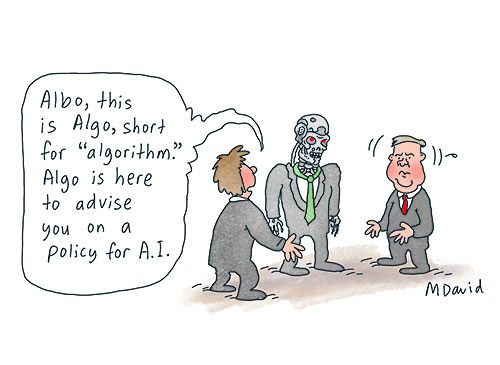
AI will undoubtedly have an immense impact on society and the economy. It will become embedded in healthcare, education, government, finance, manufacturing and almost every other sector. However, confidence in its future does not justify every investment made in its name.
The technology may succeed spectacularly while many of those financing its infrastructure receive disappointing returns.
A familiar pattern
The comparison with the dotcom boom is unavoidable. Investors in the late 1990s were correct that the internet would transform the world. Its eventual impact exceeded many expectations. Yet hundreds of companies failed, enormous amounts of capital were lost and the telecommunications industry underwent painful consolidation.
Telecom operators built vast fibre networks based on forecasts of almost unlimited demand. Internet traffic subsequently increased beyond anything imagined at the time, but that did not rescue every investment. Capacity became cheaper, competition intensified and some networks were sold for a fraction of their construction cost.
The technology succeeded magnificently. Many who financed its early expansion did not.
Traffic is not profit
As discussed in my earlier article, ‘The telecoms industry doesn’t need 6G — it needs a rethink’, traffic across fixed and mobile networks has increased enormously without producing comparable growth in telco profitability.
Operators financed and maintained the networks, but much of the additional value flowed elsewhere — to cloud companies, digital platforms, device manufacturers, software providers and online services.
Could something similar happen with AI?
AI will generate work for consultants, systems integrators, ICT suppliers and software developers. Businesses will use it to automate processes, reduce costs and improve products. Much of this activity will be delivered through existing cloud platforms, enterprise systems, telecommunications networks and consumer devices.
AI may create enormous economic value without producing sufficient revenue for every company financing specialised infrastructure. Usage is not revenue and technological importance does not guarantee profitability.
Infrastructure without capability
This is where the ACS findings become important. Australia cannot capture AI’s benefits merely by approving data centres. It needs people capable of adapting AI to businesses, public services and Australian conditions, while governing and securing the systems being introduced.
The Productivity Commission estimates that AI could add $116 billion to Australian GDP over the coming decade. But this represents potential economy-wide productivity gains, not a forecast return for data-centre investors. The value may appear as lower costs, improved services and higher productivity — and may be captured by organisations using AI rather than those providing the computing capacity.
The ACS describes the decline as a crisis, although a 0.3 per cent fall should be treated cautiously. Its figures show that technical, professional and management roles grew while trade and administrative roles declined. AI may be changing the composition of technology employment as much as creating an overall shortage.
Nevertheless, the underlying warning is valid: infrastructure without skilled people will not deliver its full potential.

Will every data centre be needed?
Meanwhile, AI computing is becoming rapidly cheaper and more efficient. New chips, smaller specialised models, model compression and improved data-centre designs are reducing the resources required for individual AI tasks. Chinese developments such as DeepSeek demonstrate how architectural innovation can produce competitive performance using less active computing power.
AI demand will continue to grow and cheaper services may stimulate far greater usage. Nevertheless, it is unlikely that every announced data centre will be built. Grid constraints, equipment shortages, planning delays and concerns about electricity and water use will postpone or eliminate some projects. Others may be overtaken by technological change before delivering their expected returns.
Australia therefore needs a balanced strategy. Data-centre approvals should reflect demonstrable demand, energy availability and rapidly changing technology.
At least as important will be investment in skills, integration, Australian applications and helping businesses use AI productively. The lesson from the internet is clear: a technology can transform the world without rewarding everyone who financed the boom.
Australia should invest in AI — but it must distinguish between spending money on the hype and building the capabilities that will create lasting national value.
Paul Budde is an IA columnist and managing director of independent telecommunications research and consultancy, Paul Budde Consulting. You can follow Paul on Twitter @PaulBudde.
 This work is licensed under a Creative Commons Attribution-NonCommercial-NoDerivs 3.0 Australia License
Support independent journalism Subscribe to IA.


Related Articles
- AI near misses: The space between potential and catastrophe
- Big Tech: When 1984 meets The Godfather
- EDITORIAL: Big Tech — When 1984 meets The Godfather
- AI job applicant screening — the law still applies
- AI resilience is the next step after the Government's AI regulatory framework