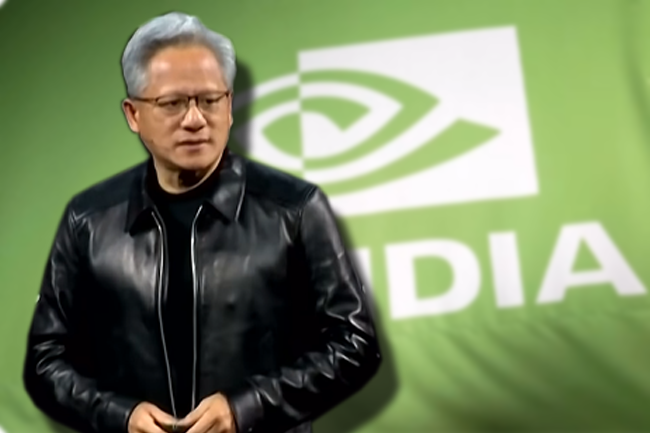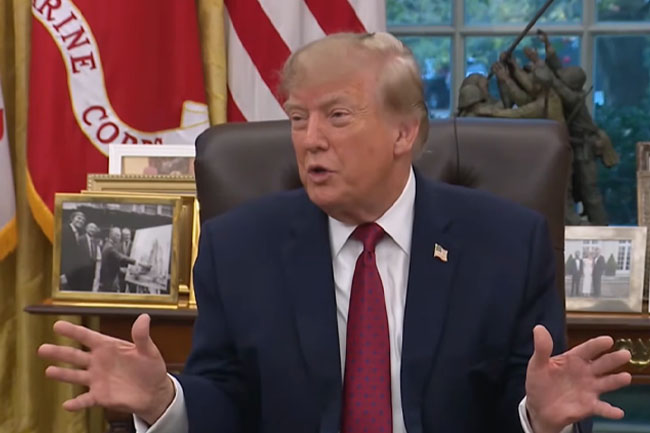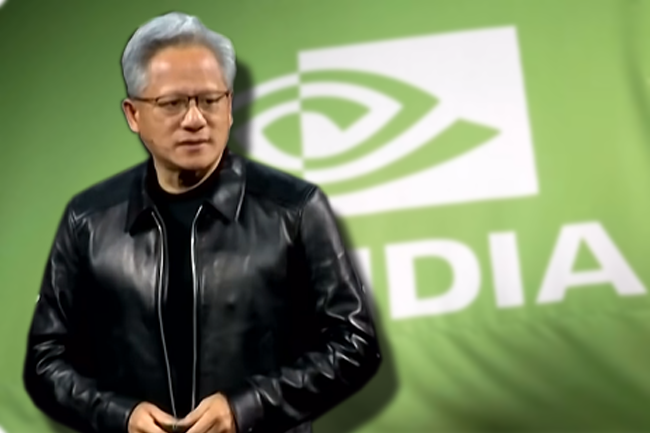
The frenzied competition for AI supremacy – and its extraordinary risks – has again been highlighted by the twists and turns in Jensen Huang’s Nvidia affair. Dr Jeff McMullen writes.
IT IS A POKER GAME where only men with extraordinary wealth, power and connections assume a seat at the table.
The chips are down. The stakes keep rising. Even the players are divided on how this might end.
But here is the game so far:
Nvidia’s board ousted its founder and CEO, Taiwan-born Jensen Huang, on 12 November 2026, principally over allegations that he endangered U.S. national security by having a sexual affair with Alice Huang, who allegedly used a Singapore-based company to secure embargoed Nvidia chips for China.
The most advanced chips designed by Nvidia and manufactured in Taiwan can be used in AI, some weapons and cyberattacks, which is why U.S. law bans selling them to China.
Sacking Nvidia's boss saw the chip maker’s stock lose trillions, plunging about 40% from its October peak.
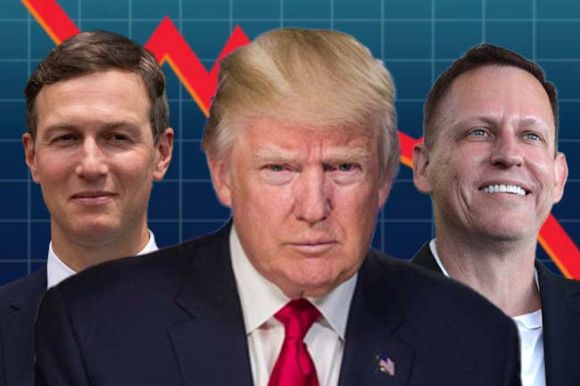
Just 11 days later, after a media release announcing Jensen Huang would be reinstated, Nvidia’s stock price in a single day rocketed 31.5%, equivalent to almost US$950 billion (AU$1.43 trillion). This is the largest single-day gain for a company in U.S. market history.
The Nvidia surge also saw the Nasdaq 100 index gain 6.4% and the S&P 500 4.7%.
For most of us, it is hard to imagine such astonishing amounts of money changing hands so rapidly. That single day’s gain in Nvidia’s value, according to NBC News, is three times the value of the Bank of America and twice the size of Coca-Cola.
To achieve this remarkable turnabout, it took dramatic and yet very predictable intervention by none less than President Donald Trump; Elon Musk, the world’s richest man; OpenAI’s Peter Steinberger; Epic Games CEO Tim Sweeney; Anduril Industries defence tech co-founder Palmer Luckey; Replit CEO Amjad Masad; and Y Combinator CEO Garry Tan.
The Silicon Valley campaign to reinstate Jensen Huang included an attention-grabbing public petition with the above tech bros as well as people describing themselves as Nvidia employees and shareholders who understood that the company’s future and theirs hung on his leadership.
What we are seeing is the hyper-intensive psychology of the AI push, protecting the Nvidia giant at any cost.
In Washington, D.C. and on Wall Street, there is a disturbing realpolitik, based on the belief that Nvidia is not only powering America’s AI growth but, to some extent, the U.S. economy.
Many realise that the so-called Magnificent Seven, the giants of 21st-century technology, now account for one third of the value of the U.S. stock market.
If or when this tech bubble bursts, the global economic pain will be felt to some degree by almost every human being.
Under Jensen Huang’s leadership, Nvidia showed its strengths, partnering with half a dozen other financial institutions to create a US$500 billion (AU$754 billion) platform for AI startups.

Trump himself unabashedly views Nvidia as the most important and dynamic engine maintaining the growth of America’s AI sector.
After Jensen Hunag’s reinstatement, Trump posted on Truth Social:
‘The Country needs Jensen’s leadership at Nvidia in order to ensure the Success and Prosperity of not only the Company, but the American Economy. The United States Government has no reason to believe that Jensen’s return to Nvidia poses any risk to National Security.’
In contrast to Trump’s insistence that there is no evidence that Jensen Huang broke the law or endangered U.S. security, the New York Times has reported that the President was briefed a year ago on concerns about Alice Huang’s contact with a high-level Chinese intelligence officer around the time she was involved with Jensen Huang.
In May this year, on his way to meet China’s President Xi in Beijing, Trump was again warned. He still chose to invite Jensen Huang to join him on Air Force One.
Throughout this whole incredible saga, China has maintained that it did not have intelligence operatives interacting with Jensen Huang and has denied receiving embargoed chips from Nvidia. Trump says he spoke with Xi about Huang and he saw no further problems.
Former U.S. Secretary of State Hillary Clinton, who had to endure Trump’s merciless taunts over her use of an unauthorised email server, posted her outrage over the Jensen Huang scandal:
Is it a national security scandal? Yes.
Is it a corruption scandal? Yes.
Is it an insider trading scandal? Yes.
Is it a market manipulation scandal? Yes.
If AI is “superintelligence”, Clinton taunted, let us call this “Supergate”.
Is it a national security scandal? Yes. Is it a corruption scandal? Yes. Is it an insider trading scandal? Yes. Is it a market manipulation scandal? Yes. If it’s “super intelligence,” call it Supergate.
— Hillary Clinton (@HillaryClinton) November 23, 2026
Clinton is correct in seeing this as the biggest Washington intelligence scandal in many decades.
It clearly illustrates Trump’s shirking of responsibility to maintain national security when warned, reportedly in a secret memo from Secretary of State Marco Rubio and senior intelligence officials.
Jensen Huang will face aggressive questioning on 1 December when he is scheduled to face a closed-door interrogation by members of the House Foreign Affairs, Intelligence and China Select Committees.
The Democrats and even some riled Republicans such as Senator Tom Cotton of Arizona want to see Nvidia’s records illuminating how the company’s most prized chips were rerouted to China.
There are just as many questions about why Trump and some close to him have championed Jensen Huang’s return to influence.
Just over a year ago, Huang donated US$25 million (AU$37.6 million) towards helping build the President’s grandiose ballroom and bunker.
Several months later, Trump allowed Nvidia to sell another range of its chips to China under a deal that would bring 25% of the profits back to the United States.
Although the White House insists Trump does not now handle his financial investments, during his second term the President reportedly has made over a hundred Nvidia stock trades.
The value of Trump’s holdings in the company has been reported as between US$12.5 million (AU$18.8 million) and US$58 million (AU$87.2 million) according to his financial disclosure statement filed in June 2026.
The incoming House Speaker, Hakeem Jeffries, a New York Democrat, also wants to investigate decisions made by Trump’s wealthy Commerce Secretary, Howard Lutnick.
Lutnick recused himself from the investment firm, Cantor Fitzgerald, run by his son. But House Democrats claim that there are still glaring conflicts of interest given that this firm holds hundreds of millions of dollars of Nvidia stock.
The astonishing levels of personal profiteering by some during Trump’s second term are matched only by this President’s brazenness.
In typical Trumpian use of AI, he has posted an image reprising the infamous photo of himself bloodied and protected by the Secret Service after the near-miss assassination attempt at Butler, Pennsylvania.
Trump’s post shows Jensen Huang with blood splashed across his face, holding aloft a bright red bra.
Dr Jeff McMullen AM was an ABC foreign correspondent in the U.S.A. from 1972 until 1984; he is the recipient of the United Nations Media Peace Prize.
 This work is licensed under a Creative Commons Attribution-NonCommercial-NoDerivs 3.0 Australia License
Support independent journalism Subscribe to IA.