Political upheaval in Serbia is part of a "global youthquake", and Student List, the unlikely winners of the October election, now face the even more daunting challenge of implementing the sorts of reforms they championed, writes Dr Mark Beeson.
SERBIA IS NOT AN OBVIOUS candidate for international political leadership, especially of an unambiguously "progressive" variety. Serbia is, after all, the country that produced Slobodan Milošević, whose efforts to create a "greater Serbia" contributed to the breakup of Yugoslavia, and the development of a policy that came to be known as ethnic cleansing, following the forcible expulsion of Croats, Bosnian Muslims, and Kosovo Albanians from Croatia and Bosnia.
He wasn’t the only rabid nationalist to emerge from the wreckage of Yugoslavia, either. Radovan Karadžić, the former head of the Bosnian Serb administration, and General Ratko Mladić were both indicted by the International Criminal Tribunal for the former Yugoslavia for their roles in the Srebrenica massacre, in which the Bosnian Serb Army slaughtered more than 8,000 Bosnian men and boys.
Given this unfortunate history and the support that authoritarian "strong men" leaders have enjoyed in Serbia, the recent upheaval in its domestic politics is a welcome surprise.
It’s also one of the most hopeful developments anywhere in the world at a time of growing international tension and scepticism about the capacity of democratic states to survive, let alone solve unprecedented problems.
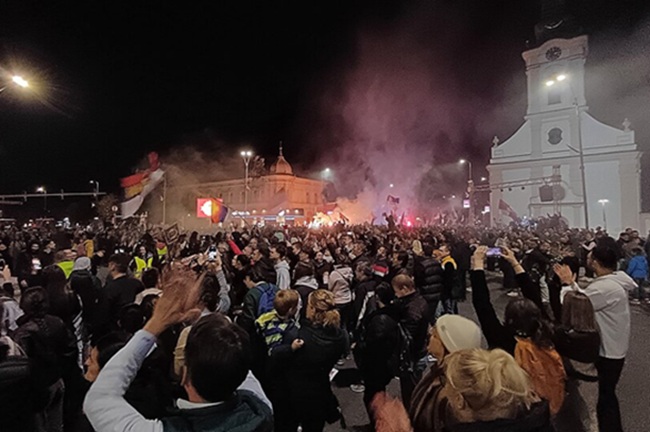
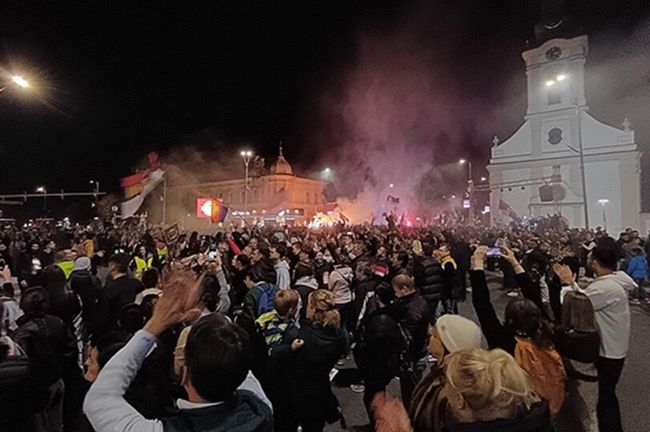
Former prime minister and president, Aleksandar Vučić, was the accidental architect of Serbia’s political upheaval. Faced with increasing public anger about corruption and a lack of accountability, given particular focus by the Novi Sad station tragedy, Vučić called a snap election, which he clearly expected to win.

That he didn’t is not just remarkable; it’s also testimony to the ability of opposition forces to mobilise and create what turned out to be an election-winning message: 'corruption kills'.
Student List, the unlikely winners of the October election, now face the even more daunting challenge of implementing the sorts of reforms they championed.
Chief among these will be institutional reform. Years of corruption and cronyism entrenched a patronage system in which political allies were appointed to key positions in business and even in the legal system.
Getting rid of, much less prosecuting, officials from the old regime will be difficult given that the prosecutors themselves are creations of that order.
Reform is not impossible, however, and it may even be contagious.
In Poland and Hungary, similarly entrenched authoritarian regimes exercised tight control over the media and judiciary, were peacefully ousted, and serious attempts at reform to dismantle the "deep state" that maintained autocratic control are underway.
The one key difference that Student List and its supporters must overcome is the reality that they have next to no experience in the nuts and bolts of administration and implementation of public policy. What was one of their principal attractions when they were a protest movement may become a handicap now that they have won power.
Given that Student List doesn’t have the sort of hierarchy or leader that characterise traditional parties – and which are especially popular with authoritarians – its approach to governance will necessarily be an experimental work-in-progress.
But given that all its candidates have pledged to follow the reform agenda, we shouldn’t write them off.

That there is an appetite for this sort of change, especially amongst the young, cannot be doubted.
As former British prime minister Gordon Brown has observed, we’re witnessing a ‘global youthquake’, driven by a recognition that the prospects for young people everywhere look blighted by climate change, AI-driven unemployment, the cost of living, not to mention the likelihood of continuing conflict, which could even turn nuclear.
Who can blame them for getting a bit bolshie? Whether burning down the local school or l'hôtel de ville is quite the best way of achieving change is questionable, but the possibility that they’ve got something to be aggrieved about isn’t.
The wonder is that it’s taken them this long to realise that they’ve got more in common with their counterparts in other countries than they do with their frequently elderly leaders.
Serbia’s youthful revolutionaries will have to be careful that the "grown-ups" don’t take over and rob the movement of its energy and everything that makes it distinctive.
But one of the problems policymakers of all ages need to think about is inter-generational justice, and the danger that the rapidly growing ranks of the elderly will use their electoral clout to tilt the system in their favour. Unfortunately, it’s already happening and democratic leaders are taking note.
Demographic trends favour older generations and public policy reflects this: tax benefits for the old, student debt for the young, for example.
But given Serbia’s sometimes brutal authoritarian past, perhaps the hardest part has been accomplished. Getting rid of incompetent, corrupt leaders isn’t easy, especially when they enjoy the support of the coercive apparatus of the state.
Despite the deaths of half a million or so young Russians in Putin’s pointless vanity project, the slaughter continues. We can only hope the overthrow of ageing autocrats catches on.
There’s another one in North America who’s clearly overstayed his welcome.
Dr Mark Beeson is an adjunct professor at the University of Technology Sydney and Griffith University. He was previously Professor of International Politics at the University of Western Australia.
 This work is licensed under a Creative Commons Attribution-NonCommercial-NoDerivs 3.0 Australia License
Support independent journalism Subscribe to IA.