As Google and Meta expand their control of vital undersea infrastructure, Australia risks surrendering its digital sovereignty to powerful U.S. tech monopolies, writes Jemma Nott.
THE SEABEDS are a “battlefield” according to Australian Defence Minister Richard Marles.
Marles announced in May that an element of AUKUS was a desire to protect underwater sea cables increasingly at risk of sabotage by state or individual actors. The discussion around the vulnerability of seabeds picked up again around discussions about potential tactics as a part of the U.S. war on Iran and the alleged Ansarallah attack on subsea cables in 2023.
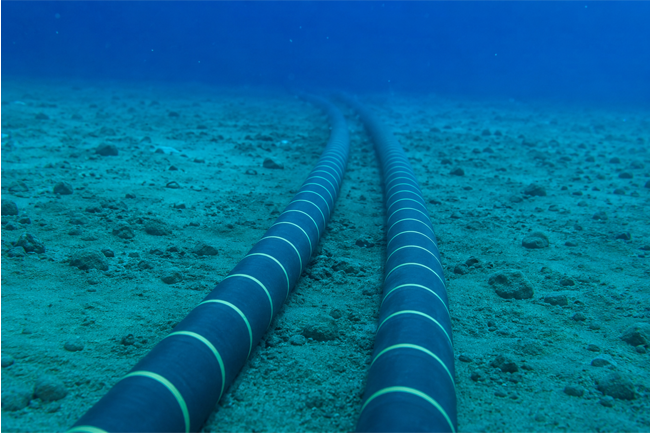
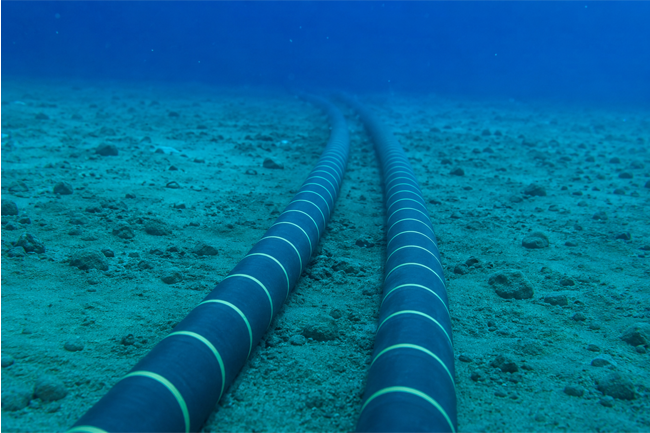
However, a lesser-known element of this story is that this vulnerability – that being your personal cybersecurity – is functionally by design. Much of Australia’s security concerns have been levelled at China, but the average Australian isn’t aware that everything you do on the Internet moves through roughly 1.5 kilometres of submarine cable, not a cloud, but a handful of pipes.
Over 95% of global data and roughly US$10 trillion (AU$14.2 billion) in daily financial transactions move across some 1.5 million kilometres of submarine cable. These pipes are produced and owned by multinationals, in particular America’s SubCom, Japan’s NEC, and France’s ASN.
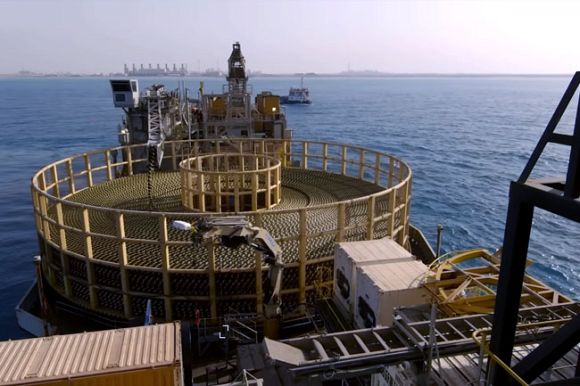
China, by way of Huawei (now HMN Tech), similarly receives the bulk of the public conflagration, while the majority of the most recent contracts being signed to build or run Australian seabed cables are in fact American-owned tech companies.
Google is the big winner of Australian government contracts in recent years, with five cables now touching Australian shores, including in Perth, Humboldt, Tabua, Bosun and Taylay Link. Meta's Project Waterworth, at roughly 50,000 kilometres, billed as the world's longest subsea cable, has a proposed landing point in Northern Australia. Between them, Google and Meta are becoming structurally central to how Australia connects to Africa, South America, Asia and the Pacific simultaneously.
So, much like proposed aspects of AUKUS (AUKUS Pillar 2), these deals seem to go one step further in integrally tying Australia’s digital sovereignty to major American tech companies. The exact regulatory logic behind the Huawei ban is that these cable beds are so sensitive to national security, they can’t be trusted to manage Australia’s connectivity is not being applied to hyperscalers like Google or Meta.
The major tech companies have been explicitly hosting these sea cables with the intention of being designed to handle high-volume AI workloads. Globally, hyperscalers control about 90% of capacity on the transatlantic route and about 71% of global subsea fibre optic capacity.
In a European Centre for Development Policy Management (ECDPM) report, there was concern that:
‘Europe lacks reliable, centralised data on who owns its subsea cables, who is investing in them, and how traffic flows across the network.’
They conclude that the more serious threat to the EU is the transfer of ownership and control to “non-EU actors”, in other words, American companies with little regulatory oversight by comparison with the old Telecom model.

They specifically feared that if the hyperscalers like Google or Meta’s private cables crowd out telecom carriers, while the alternatives go underfunded, this could have broader consequences. This type of monopoly control is a serious concern for several reasons, but primarily that under the old Telecom model there was a “common carriage” guarantee, meaning they can’t refuse to sell bandwidth or favour one customer over another that the hyperscalers don’t.
What this essentially does is give them monopoly control over who has fast, available internet and when. They also create a tiered system because the newest, highest capacity routes all belong to Google and Meta. Since there is no requirement to report from private operators like these, there’s also no way for the Australian Government to know how much of the country’s international capacity is being reserved purely for AI workloads versus general use.
Across the tech industry, spending is massively outpacing earnings and major AI companies have shifted to increasing reliance on external debt financing. All the key signs of a bubble on the brink of bursting are falling like dominoes over the past few months.
The hardest hit if a bubble does burst will be infrastructure spending, such as data centres being approved and, of course, seabed cables. Yet, the risks of allowing monopoly control in critical infrastructure like this have been passing us by quietly.
Once again, it's prudent to be asking ourselves the question about how much we are willing to cede our digital sovereignty to financially-tenuous American monopolies.
Jemma Nott is a Political Economy post-graduate student at the University of Sydney and a freelance writer.
 This work is licensed under a Creative Commons Attribution-NonCommercial-NoDerivs 3.0 Australia License
Support independent journalism Subscribe to IA.


Related Articles
- CARTOONS: The AUKUS caucus is decidedly raucous!
- AUKUS: Its single point of obsolescence
- Independent AUKUS Inquiry ramps up pressure on Labor
- Labor's progressive patriotism collides with AUKUS
- From Crimea to AUKUS: How distant wars reshape Australia