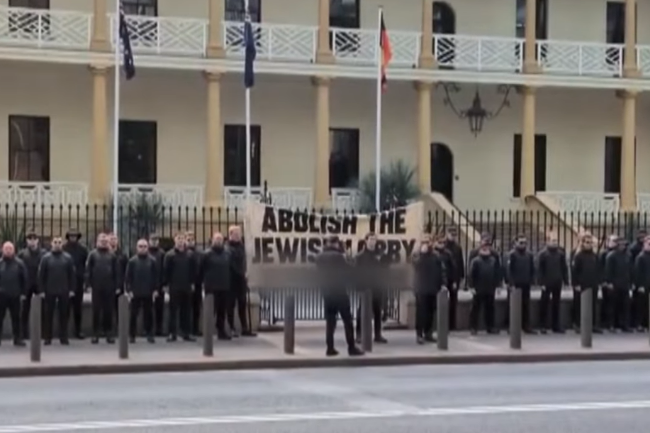
The war in Gaza is fuelling hatred, division and violence far beyond the Middle East, with Australia increasingly facing the consequences, writes David Higginbottom.
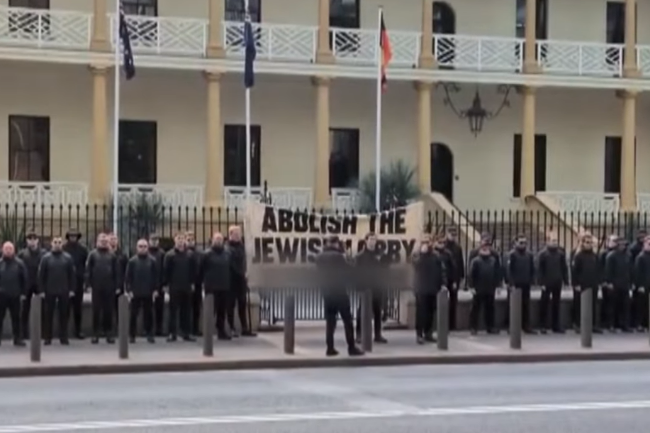
IN AUSTRALIA, the rise in hate speech has led to the establishment of the Royal Commission on Antisemitism and Social Cohesion, following the tragic terror attack at Bondi Beach.
The Commission's interim report, released in April 2026, highlighted the severe impact of antisemitism and the need for stronger counter-terrorism and social cohesion measures.
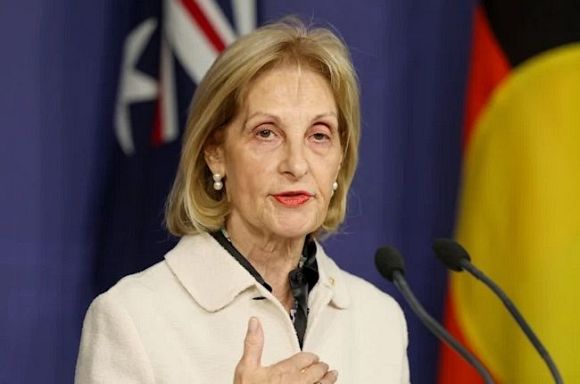
At the same time, a surge in Islamophobic incidents has been recorded in Australia since the war began. Ten months after its own special envoy, Aftab Malik, delivered 54 recommendations to combat Islamophobia, the Albanese Government finally released its response in July 2026, accepting some measures on education and community liaison, but rejecting calls to overhaul counter-terror laws and refusing to establish a separate inquiry into anti-Palestinian and anti-Arab racism.
Multicultural Affairs Minister Anne Aly acknowledged that Islamophobia in Australia is now “dangerously close to becoming normalised”. That it took a decade of conflict, a terror attack and a Royal Commission for the Government to reach that conclusion speaks for itself.
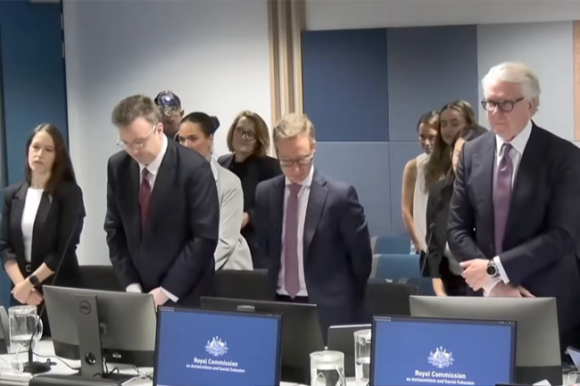
This Royal Commission and the hatred it investigates are not isolated phenomena; they are the inevitable outcomes of what has been allowed to happen in the Middle East. This conflict has shown that historical lessons have no value — “never again” has no weight, no meaning. Arguments are constructed to justify violence and normalise racism; arguments are chosen to support beliefs, to justify phobias, whilst dismissing any evidence that may force a re-evaluation.
Whilst terms such as genocide or war crimes are important – especially following the International Court of Justice's rulings on the plausibility of genocide and the illegality of the occupation, and the International Criminal Court issuing arrest warrants for Israeli leaders – these terms should not be necessary; there is no ambiguity:
Humanity alone ought to be enough to judge what is happening — and to demand it stop.
Men, women and children are dying. The reported death toll has now surpassed 75,000 Palestinians, with over 100,000 injured. Those who are not killed or maimed, even if physically unharmed, are traumatised. They will never recover and will suffer for the rest of their lives. Futures destroyed. Gaza and all those who live (or lived) there have had their future erased. Gaza is effectively wiped off the face of the Earth, reduced to rubble — a testament to all, a monument to our impotency.
The focus must be on how to stop this conflict. The conflict is fuelled by hate, by racism, by a sense of superiority — whatever -ism that is used. It is fuelled by the supply of arms from the West; society is complicit in failing to call out these atrocities.
There is no doubt that crimes have been committed (saying “on both sides” is redundant), but the power to end this conflict rests collectively with society. Yes, to different degrees, but there is a shared obligation — nothing justifies death and destruction; ignoring it is complicity.
Many escalations may bring this conflict closer to home, including widening the war to other regions such as Iran. No outcome can be characterised as positive.
Nothing good, nothing that can ever be said to be good, can come from this conflict.
The conflict will fuel:
1. An increase in Antisemitism, Anti-Arab racism and Islamophobia
This is inevitable as people take sides and identify with various “tribes”, whether racial, cultural, class, school, education or location — whatever makes one feel superior to others. Many on the political Right who are pro-Israel are simultaneously antisemitic; they simply despise Arabs more than Jews and now feel they have been granted permission to express their views.
2. An increase in terror attacks
The normalisation of violence, the acceptance of force as a means of resolving disputes and the feeling of outrage or grievance that is now “acceptable” over any perceived issue, fuels indiscriminate attacks. Some will see this as the only way they can be heard or have an impact.
As of mid-2026, Israel's military has dropped an estimated 70,000 to 100,000 tons of explosives on Gaza, far exceeding the tonnage dropped on Dresden, Hamburg and London combined during World War II.
All traces of hope have been destroyed. No hospitals, no cultural sites, no educational institutions are left untouched. Nearly 97 per cent of all schools and universities have been damaged or destroyed. Gaza's streams and groundwater are contaminated and will remain so for many years; its agricultural lands are destroyed.
No one can say they did not know. If the atrocities are not witnessed, it is by choice — they are there for all to see. A variety of sources exist, but one only needs to view Israeli sites such as Haaretz, +972 Magazine, or The Jerusalem Post to gain insight. These sites are worth exploring to see what is said both to justify or call out this display of inhumanity.
Individual complicity may seem incidental for those without direct influence. Remaining silent when the truth is unwelcome allows unpleasant discussions to be avoided; however, if approaching local political representatives is the only available action, then it should be taken. If enough people did so, governments might feel they have the necessary support to advocate for a permanent end to this conflict and to raise concerns with the U.S., which supplies the weapons.
As Noam Chomsky reminds us: individuals are responsible for the anticipated consequences of their own actions and, in this case, inaction.
The Royal Commission will report by December 2026. Whatever it finds, the hatred it was convened to address was manufactured — bomb by bomb, silence by silence.
David Higginbottom is a member of the coordinating committee of the Independent and Peaceful Australia Network (IPAN) and coordinator of the Make Peace A Priority campaign (mpap.au).
 This work is licensed under a Creative Commons Attribution-NonCommercial-NoDerivs 3.0 Australia License
Support independent journalism Subscribe to IA.


Related Articles
- Australian flotilla survivors describe ordeal after Gaza mission
- Gaza flotilla exposes world’s selective attention to suffering
- Prime ministerial loyalty on trial in Australia’s ‘Gaza’ war
- What Gaza and Ukraine reveal about a new era of imposed peace
- UN endorses Trump-backed Gaza plan, drawing condemnation from Palestinians