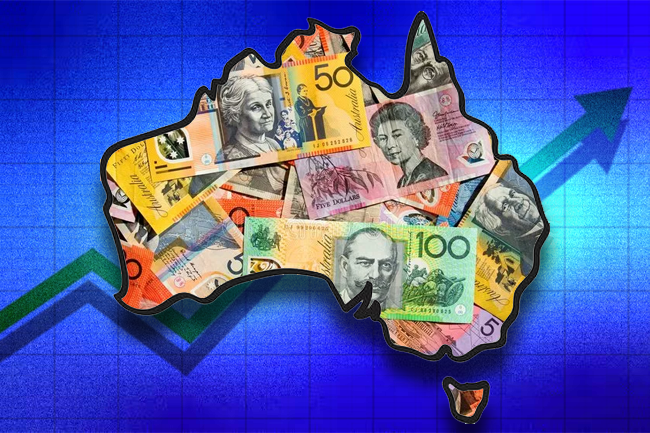
Australia’s high and relatively evenly distributed wealth underpins living standards and leaves the nation among the world’s most prosperous, writes Stephen Koukoulas.
AMID THE hand-wringing, self-indulgent whinging and bitter complaints about the state of the economy, Australians remain among the wealthiest people on Earth.
This is a good thing.
There are a myriad of research reports showing the undeniable correlation between wealth and living standards, life expectancy, health outcomes, education and even happiness. The wealthier people are, for example, the better the outcomes for their health and education.
This high level of wealth means Australia, unlike many other countries, can provide a wide cross-section of educational opportunities, low or no-cost universal health care, a stunningly wide range of prescription medicines, childcare and superannuation, to name a few, directly because of this wealth.
These are all for the benefit of Australians.
According to data from the UBS Global Wealth Report, the median wealth of Australians is $298,570 per capita. This is behind only Luxembourg and Belgium.
Sit back and look at these contrasts. They are, frankly, extraordinary.
The median wealth of Canadians is $209,425 per capita, Japan: $192,436, the United Kingdom: $176,857, Singapore: $135,826, Sweden: $118,858 and just $97,658 for the United States.
This means not only is wealth high in Australia, but its distribution is fairer than in most other countries.
To be sure, there are still issues with the distribution of this wealth, which is why progressive governments boost education and health opportunities to the least well off via the tax and payments systems. There is the wealth to do this.
The contrast of the difference between the average and median wealth in Australia and the U.S., for example, spells out much of the extreme difference in inequality between the two countries.
The median person in Australia has three times the wealth of the median person in the U.S.
The average level of wealth in the U.S. is $985,060 per capita versus median wealth that is one-tenth this level, at just $97,658. This means a relatively small proportion of people in the U.S. have huge levels of wealth while a large percentage of the population have very little wealth.
Australia, conversely, has a much more favourable distribution of wealth. The average level of wealth is $871,842, below that of the U.S. (we have fewer filthy rich people), which is less than three times the median wealth of $298,655.

What this all means
Australians' wealth is mainly in their houses, but also increasingly in superannuation, direct share holdings, bank deposits and other items (art, consumer durables, cars and the like).
The growth in net wealth (which takes account of household debt and other liabilities) has risen strongly over the past few decades.
Of note, there have been very few periods where net wealth has fallen. The only occasions of a material pullback were during the 1990 recession, the 2008 to 2010 Global Financial Crisis and the COVID pandemic.
It is noteworthy that during periods of rising household wealth, the economy has never experienced a recession.
This is why the Reserve Bank (RBA) and Government look to the builders of wealth when it comes to managing the economy.
It is noteworthy that the RBA, for example, does not target house prices or the stock market — asset prices in other words. This should be obvious and it is a wise practice.
That said, the RBA is alert to the potential economic fallout when asset prices boom and bust.
House prices are falling — does it matter?
It is early days, but the current cycle of falling house prices could yet evolve into one of those periods when wealth falls uncomfortably far and fast.
For the moment, the falls in house prices are moderate and are being offset by strength in the stock market and ongoing contributions to superannuation from people in paid work.
It is difficult to pinpoint at what level the fall in wealth would become a more serious issue that required a policy response — interest rate cuts specifically.
If the overall fall in wealth gets to 5 per cent or so, the attention of the RBA will quickly turn to the deflationary effects of falling household purchasing power, possible concerns for bank balance sheets and the availability of credit.
Australia is not at that point.
As wealth has already started to edge lower with the fall in house prices overwhelming the rise in other household assets, markets are focusing on the deflationary effects to the point where there is now only a small chance of an interest rate rise in the months ahead.
Indeed, the market is now starting to flirt with the notion of interest rate cuts in 2027, which is a scenario that would become reality if household wealth in Australia falls sharply in the year ahead.
And for those who don’t think wealth matters, consider the well-being of citizens in the following countries given their median wealth, much of which is less than the price of a TV or a fancy dinner in Australia:
- Haiti: $293 per capita
- Central African Republic: $368
- Lesotho: $377
- Sierra Leone: $466
- Congo: $538
Stephen Koukoulas is one of Australia’s most respected economists, a past chief economist of Citibank and senior economic advisor to an Australian Prime Minister. You can follow Stephen on Twitter/X @TheKouk and on Bluesky @thekouk.bsky.social.
 This work is licensed under a Creative Commons Attribution-NonCommercial-NoDerivs 3.0 Australia License
Support independent journalism Subscribe to IA.


Related Articles
- Flailing newsrooms stymied by household luxury spending splurge
- Forty-three years after Hawke, Australia needs a new economic debate
- Truths about price rises they don’t want you to know
- The business investment boom will spark a surge in productivity
- Investors applaud resilient economy while newsrooms refuse to report it