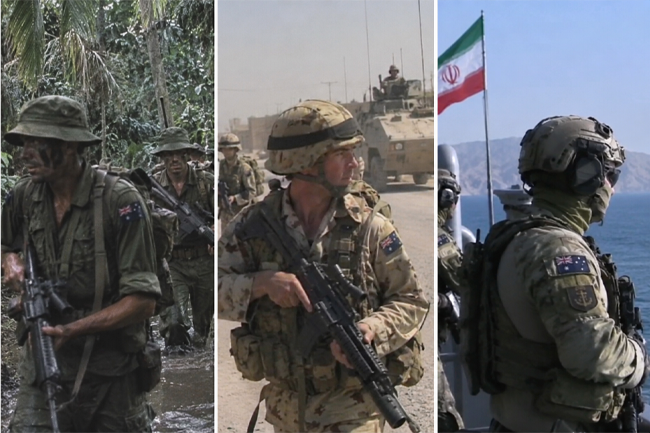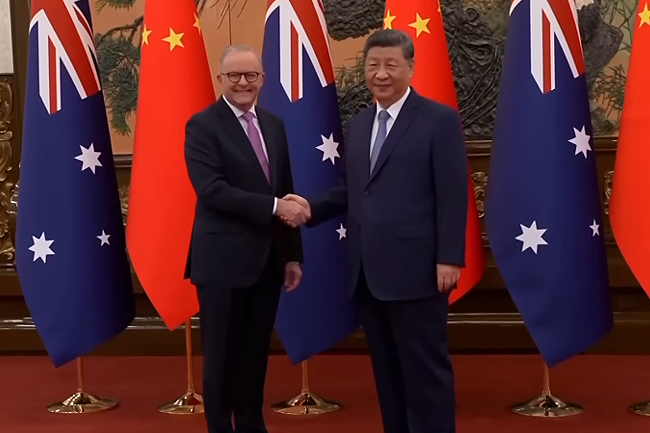
Australia’s history of war shows why today’s conflicts demand greater scrutiny, empathy and a relentless pursuit of peace, writes David Higginbottom.
AUSTRALIA CELEBRATES the end of wars. We gather for Anzac Day, name roads, buildings and rooms after battles and rightly honour those who served.
However, as time passes, we often conclude that the decision to enter a conflict was wrong.
That paradox should make Australians more careful about the arguments now made over Ukraine, Gaza and the wider war with Iran, not to mention a possible war with China. We already send air and sea patrols to the South China Sea.
This does not mean aggression should go unanswered, or that people have no right to defend their homes. It means that a just cause, an ally’s request or a compelling narrative should not mean that war is always the answer.
It is hard to think of any war, even if the West intervened for “noble” reasons, that left people better off. In these cases, any other alternatives would have been less devastating. The exceptions may be East Timor and the Solomon Islands, which were essentially peacebuilding exercises. There have been other peacebuilding initiatives, such as Bougainville; these have ended conflicts peacefully — not by force.
After each war, we realise that what we have been told is wrong and then we repeat the same mistake. We need to realise how fragile humanity is and how much we need to change, as outlined in this article.
The real question is not whether a cause is righteous. It is whether our response advances peace, protects civilians and leaves a region more secure.
No end is justified that treats ordinary lives as expendable and spreads insecurity far beyond the battlefield.
Time may not repair the lives that have been broken and does not resurrect the dead. However, years later, when archives open and evidence accumulates, fear, patriotic pressure and partial information give way to a harsher reckoning for those who take time to investigate. Justifications at the time prove wrong and alternatives, once dismissed as impractical, prove to have been deliberately ignored.
However, what remains are the dead, the wounded, the societies destroyed and the claims that were made are seen to be overstated or even false. However, for many these are often not recalled, let alone challenged.
The last war becomes a lesson in restraint. The present war becomes a test of loyalty.
Vietnam remains Australia’s clearest exemplar. Early in the commitment, anxiety about communism and the small initial deployment produced little resistance. As Australia expanded its role and conscription exposed young men to frontline service, opinion shifted. In 1967, 46% of those polled disapproved of further deployment, while 37% approved. By 1995, 55% of respondents thought sending troops had been wrong, against 30% who thought it right.
These figures do not show that all supporters of the war acted in bad faith. They show that accepted narratives shift when promised gains remain elusive and the cost acquires names, faces and funerals. A nation can honour veterans while still asking whether its leaders sent them on an unnecessary mission.
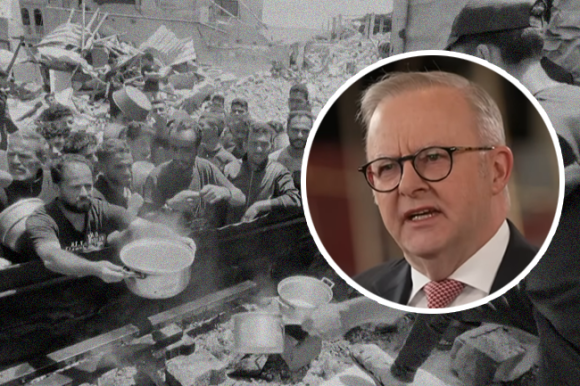
Iraq offers another warning. In 2003, Australia joined the United States-led invasion amid claims about weapons of mass destruction, terrorism and liberation. The National Archives of Australia’s account of the 2003 Cabinet papers records that the intelligence claims were wrong, and that no Cabinet submission set out the costs, benefits and implications of entering the war.
Fear after 11 September and distrust of Saddam Hussein were real considerations; so, too, was the alliance with the United States. Neither was a substitute for testing the evidence, legality, aftermath or cost to Australia, let alone the cost to Iraq.
The problem is that wars do not arrive as history lessons. They arrive as emergencies; images are instant, fear spreads quickly and language narrows to “with us or against us”, “deterrence or surrender”, “security or sympathy” or the harsher “appeasement rewards aggression”.
In that atmosphere, scepticism can be miscast as cowardice, while empathy is rationed to the victims who fit one’s view.
The result is cognitive dissonance: the ability to see complexity in every past war, but only moral simplicity in the current one.
Ukraine requires an especially disciplined version of this insight. Russia’s full-scale invasion violated Ukraine’s sovereignty and was condemned by the UN General Assembly; Ukraine’s right to resist cannot be treated as a pawn in anyone else’s strategy.
However, historical awareness cannot begin on 24 February 2022. Describing the conflict simply as “unprovoked” risks treating the preceding years as irrelevant. Contested accounts of Euromaidan, NATO enlargement, Crimea, Donbas and the failure of Minsk have produced incompatible frameworks of sovereignty, security and self-determination, as explored in Ukrainian Events 2000 - 2025: Multiple Perspectives.
Acknowledging that history neither excuses invasion nor diminishes Ukraine’s agency. It explains why a durable peace cannot be made from slogans alone.
That is why cognitive empathy matters. It is the capacity to understand, without necessarily endorsing, the attachments, identities, fears and experiences that shape political choices. The fact that some Crimeans identify strongly with Russia does not make an annexation conducted under military occupation lawful; nor does the illegality of annexation mean that Crimeans can be treated as a people without history or preference.
The tension is explored in Cognitive Dissonance in Crimea. Ukraine must not be reduced to a map, just as Crimea and Donbas must not be reduced to propaganda props. Any settlement that denies Ukrainian agency, or refuses to understand why others see the conflict differently, is likely to preserve the grievance from which the next war grows.
Australians should also be wary of language that treats a long war as a strategy to “weaken” or “extend” a rival. RAND’s 2019 study of cost-imposing options toward Russia assessed the risks as well as the possible benefits of escalation. It concluded that increased military arms and advice to Ukraine would need careful calibration to raise costs for Russia without provoking a much wider conflict.
That does not prove a conspiracy or turn Ukraine’s defence into someone else’s scheme. It does require candour: support for Ukraine should be measured by what Ukrainians choose and what will secure their future, not simply by the strategic aim of exhausting Russia.
Gaza demands the same refusal of exclusive empathy. Hamas’s attacks and hostage-taking are abhorrent; Israelis have a right to safety; Palestinians have equal human worth, rights and claims to security, and civilian protection is not an optional courtesy.
The UN Security Council’s call for an immediate ceasefire, humanitarian access and hostage release demonstrates that these obligations are compatible rather than competing. Bertrand Russell’s final statement on the Middle East made an enduring point: past trauma cannot justify present suffering and bombardment is no substitute for a political settlement. The historical context may differ, but the moral warning remains.
Australia’s history sharpens the point. The Department of Veterans’ Affairs notes that Australian policy in Vietnam largely followed the United States’ military lead.
Alliances matter, but they should make democratic scrutiny more rigorous, not less. Before Australia supports military escalation, it should demand a clear public account of the aim, evidence, legal basis, alternatives, civilian safeguards, risks of expansion and conditions for ending the commitment.
That is not reflexive pacifism, nor is it the false balance of treating every actor as equally responsible. It is disciplined moral humility.
We should ask of today’s wars the questions we wish we had asked in the last:
- What is the objective?
- What would victory mean in human, political or security terms?
- Who would pay — not only in money, but in deaths, injuries, displacement, destroyed livelihoods and devastated regions?
- What settlement or compromise is possible and what must be protected to make it endure?
Are we building peace, or merely creating the next conflict that, in retrospect, we will call a mistake?
David Higginbottom is a member of the coordinating committee of the Independent and Peaceful Australia Network (IPAN) and coordinator of the Make Peace A Priority campaign (mpap.au).
 This work is licensed under a Creative Commons Attribution-NonCommercial-NoDerivs 3.0 Australia License
Support independent journalism Subscribe to IA.