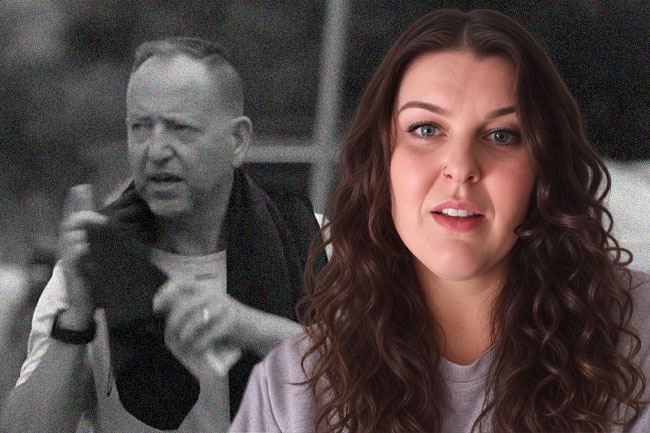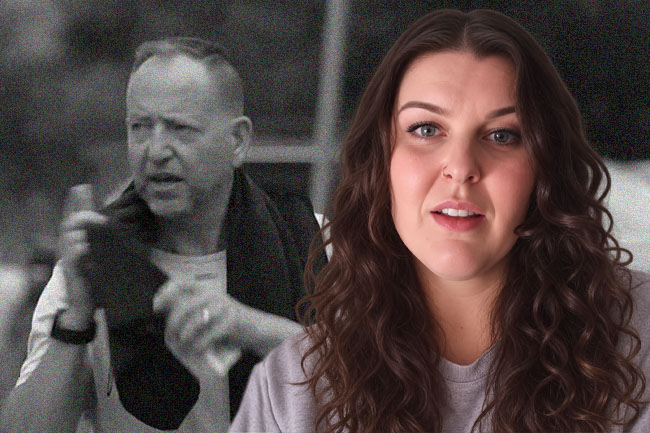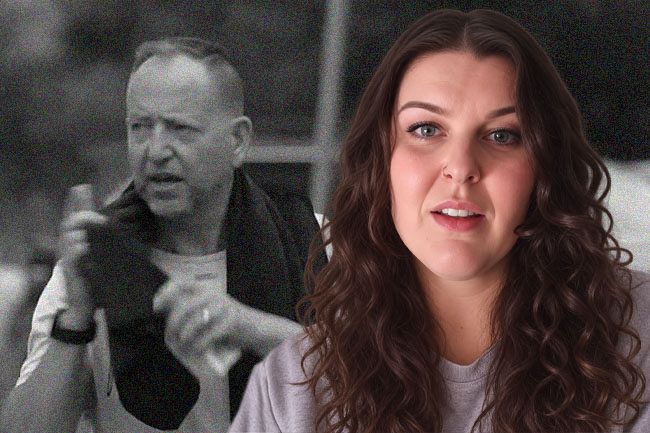
Six months on from the Simon Gordon scandal, the systems that allowed his alleged surgical abuse of endometriosis patients continue to fail them, writes managing editor Michelle Pini.
** CONTENT WARNING: This article discusses suicide and medical procedures, which may be distressing for some readers **
A few of them have decided that, you know, it’s too much, ... so they have tried to take their life.
~ JESS FOSTER
Founder of support group for former Simon Gordon patients, Surviving Scarred
IT'S BEEN SIX MONTHS since a Four Corners program, 'Scarred', broke the story of Melbourne gynaecologist Simon Gordon’s alleged surgical mutilation of endometriosis patients.
It's alleged that Gordon – an endometriosis “specialist” – ignored concerns from colleagues, excised healthy tissue, destroyed the function of healthy pelvic organs and, in some cases, even removed entirely healthy organs, rendering many women infertile. This is alleged to have occurred in hundreds of cases.
MUCH PUBLIC SYMPATHY
Since then, both state and federal levels of government expressed sympathy for those involved, made public apologies, promised assistance for the hundreds, possibly thousands, of affected patients, and announced a police investigation into Gordon’s alleged crimes.
The medical regulator, Australian Health Practitioner Regulation Agency (AHPRA), announced it would be investigating complaints.
IA is unaware of any complaints received about Gordon being investigated by AHPRA prior to the airing of the Four Corners program. Indeed, multiple complaints about him appear to have been dismissed by the regulator.
Simon Gordon voluntarily resigned his medical registration, but has continued to deny all allegations.
Multiple law firms became involved in the arduous process of litigation.
Some of his former patients received a government-funded medical review, some have made use of a hotline set up in Victoria, and some have sought legal help.
And the once-lauded Melbourne private hospital Epworth announced an internal, yet “independent” review into its 'clinical governance arrangements', shortly after the program aired.
To IA's knowledge, Epworth had also not investigated any of the many complaints received against Gordon from both patients and medical professionals before the Four Corners episode.
The terms of reference of this internal Epworth review are yet to be released to the public.
GROSS PUBLIC INJUSTICE
It's important to reiterate that a gross public injustice has occurred here and whether anyone will be found culpable for this systemic failure remains to be seen.
No public announcement about compensation for the victims of this systemic public injustice has been made by the Victorian or Federal governments, under which the responsibility for public health squarely sits.
And there has been no announcement about a government inquiry. Surely, this is the absolute minimum owed to the victims of this health disaster.
* Since Gordon's alleged serial surgical abuse became known, IA has spoken with many of his former patients, including patient advocate and founder of support group, Surviving Scarred, Jess Foster, who said:
“We just need more than what’s happened.”
It's hard to think of a greater understatement for the lack of support afforded to the (approximately) 1,300 traumatised former patients of Simon Gordon, whose lives have been irreparably damaged.
These victims are not only dealing with the effects of this alleged surgical abuse, but with the psychological trauma, the subsequent lack of urgently needed and ongoing medical care, and the astronomical medical costs associated with the management of, in many cases, debilitating post-surgical health issues.
On top of all this, many are now unable to access ongoing medical care for their very real injuries.
The lack of practical assistance and concern for this cohort of affected patients is quite simply only adding insult to injury.

Following is the bare minimum of what needs to happen to address this systemic public failure.
ADDRESSING SYSTEMIC FAILURE
1. A royal commission, or failing that, at least a Senate inquiry
An internal review by the hospital that allowed this gross public injustice to occur, no matter how "independent" it purports to be, is simply not going to cut it.
How can these former patients, or indeed any patients, be assured that there will not be a repeat performance? Given Epworth's and AHPRA's dismissal of numerous complaints about this medical professional, how can any of us know similar injustices aren't occurring elsewhere?
As Jess Foster told IA:
"[A government inquiry] is the only thing that’s really going to get to the crux of the matter."
Indeed, an official government-led inquiry is the only way change in systemic procedures and investigative processes, to avoid a recurrence of such massive systemic failure, may be achieved.
2. Government assistance with access to and cost of ongoing medical care
Former patients of Simon Gordon, in many cases, are either being referred back to Epworth or Gordon's former associates, or have been unable to access medical care.
'You can't have patients going to reviews with [medical] people directly connected to Epworth or Simon Gordon or the people that have harmed them... It’s very triggering", says Jess.
Then there's the issue of who will treat them, as Jess explains:
...People have had trouble finding anyone that will want to go near this situation, which is really sad because the people that were harmed [from] these surgeries, they are not to blame for this.
And...they're being shunned. ... Everyone's like, 'Oh, I don't want to comment,' or, 'I can't look at this'.
They can't find a gynaecologist and even GPS are now saying that they don't want to touch it ... which is really, really devastating.
Jess adds:
"I think the girls have been through enough. And then to have these people, other people in the medical industry that are supposed to look after them and care and help, they're sort of getting stonewalled by that as well."
Then there are the costs involved, not only in the ongoing medical treatment required for their endometriosis, but for all the additional medical treatment, allegedly required as a direct result of their surgical procedures.
For many former patients, their medical needs don't stop with gynaecological specialists and can include colorectal surgeons, bowel surgeons, neurosurgeons and mental health professionals, many of whom charge between $200 and $500 per appointment (for which the Medicare rebate is generally a maximum of $155.85). This, of course, does not include tests such as ultrasounds, CT scans, MRIs, blood tests and so on.

3. Legal aid
Multiple legal firms are now involved in the litigation process. But it is far from a fait accompli, with significant financial risks and complex legal consequences to be navigated, and the possibility of victims being subjected to further invasive tests and intense legal examination.
The victims of this gross injustice need independent professional help, both in navigating this process and with any costs that may arise.
4. Government compensation
Many former, mostly young patients – like Jess – are in constant pain requiring daily opiates and thus unable to work. This, coupled with astronomical medical expenses, means they may be unable to meet the cost of necessary treatment and also cannot plan for their uncertain futures.
"It's just sad to think that if you're not wealthy enough or you don't have the money to cover it, ... you're not going to get the help you need", says Jess.
In her unassuming and polite way, she explains:
Without being too forward, I do think that [the government] needs to provide some sort of monetary support ... because it's going to be lifelong, some of the damage, and you know, how do you pay for all of these things?
The level of damage that has been caused and the ongoing costs that people are going to have, it's just insurmountable.
5. Government assistance with access to trauma-informed mental health professionals
This is an area about which Jess feels very strongly and advocated for in the initial meetings with Mark Butler and Jacinta Allen.
On the issue of mental health, Jess says:
That was a point that I did make multiple times in the meetings with government officials because it's just you know, the PTSD that people have...
I know that a lot of the girls aren't sleeping properly. Like they get nightmares...a few of them have tried...
A few of them have decided that it's too much so they have tried to ... take their life. And I just every night I go to sleep, I am so afraid that I will wake up the next morning and one of the girls is not going to be there anymore.
*If you are a former patient of Simon Gordon and would like to speak to us about your experience, on or off the record, please email editor@independentaustralia.net. All enquiries will be treated in strictest confidence.
If you would like to speak to someone about mental health issues, please call Lifeline on 13 11 14 or the Suicide Call Back Service on 1300 659 467.
This editorial was originally published as part of the Independent Australia weekly newsletter. Subscribe to IA to access all our work from as little as $1.15 per week and help power our journalism throughout 2026.
Follow managing editor Michelle Pini on Twitter/X @vmp9 and Bluesky @michellepini.bsky.social, and Independent Australia on Twitter/X at @independentaus, Facebook HERE and Instagram HERE.