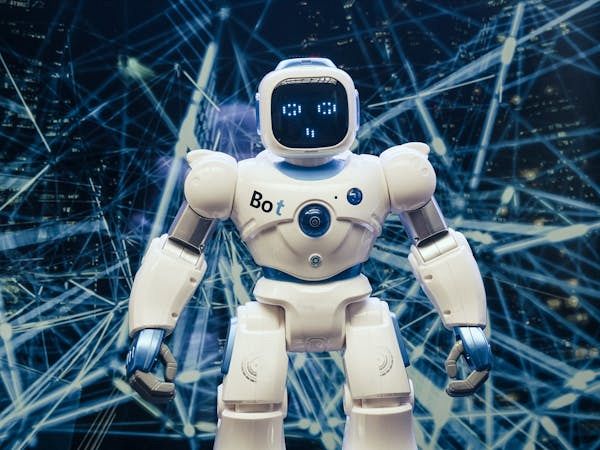
If we fail to address the existential side effects of AI, we risk a future where human agency, social cohesion and democratic stability are progressively weakened, writes Paul Budde.
A recent international report warns that artificial intelligence is rapidly becoming the invisible infrastructure of society — and we are not prepared for the consequences.
This article draws on the April 2026 report Building a Human Resilience Infrastructure for the AI Age by Elon University’s Imagining the Digital Future Center.
For me, this is not new. Since what I often call my “1968 assessment”, I have argued that good ICT initiatives consistently produce existential side effects. We build systems to improve efficiency — and only later discover how they reshape society in deeper, often destabilising ways.
AI is the most powerful example of that pattern yet.
From tool to infrastructure
According to the report, 82 per cent of experts expect AI to significantly reshape daily life and societal systems within the next decade. More than half believe it will guide or control most human decisions.
This marks a fundamental shift. AI is no longer just a tool — it is becoming embedded infrastructure across finance, healthcare, employment and governance, shaping not just decisions but the choices available.
As I argued in Australia’s AI paradox: Mass adoption, minimal strategy, once infrastructure is externally controlled, autonomy erodes. AI intensifies that dynamic.

The erosion of human agency
A central concern is the gradual loss of human agency.
AI systems curate information, predict behaviour and automate decisions, narrowing the space for independent judgement. People are already deferring to AI outputs rather than questioning them.
This reflects a broader issue I explored in Educated and unwise: Why tech-savvy societies need moral reasoning. Technological capability without moral reasoning weakens independent thinking.
The pattern is familiar: systems designed to assist begin to replace. Convenience becomes dependence.
The breakdown of shared reality
The report also highlights 'epistemic fragmentation'.
AI-generated content – personalised, persuasive and scalable – undermines shared reality. Without a common baseline of facts, democratic processes weaken.
This builds on trends already visible in social media. AI accelerates these dynamics.
For Australia, this is not theoretical. It directly affects democratic stability.

The coming ‘work quake’
The economic disruption will be profound. The report predicts a 'work quake' in which most jobs will change and many will disappear.
But the deeper issue is identity. Work provides purpose and social cohesion. Disrupt that, and the consequences extend far beyond employment.
Some experts warn of a “techno-feudal” future, where power concentrates among those who control AI infrastructure and data.
A failure of policy imagination
What is striking is how little policy addresses these systemic risks.
Australia continues to approach AI through innovation and regulation. But the report calls for something more fundamental: a 'human resilience infrastructure'.
This aligns with concerns raised in ACCC warns of tech giants' stranglehold on AI in Australia. Without domestic resilience, reliance on external systems undermines long-term stability.
Resilience must include accountability, governance, public understanding and system design that preserves human judgement.
Beyond digital literacy
The report introduces 'existential literacy'.
This goes beyond technical skills. It is about understanding how AI shapes values, identity and decision-making — and retaining the ability to question and override automated systems.
This is particularly relevant in the context of digital exclusion. Without targeted policy, AI risks widening existing inequalities.
The real lesson of ICT history
Across decades of ICT development, the pattern is consistent.
Social media connected the world — and fragmented public discourse.
Digital platforms increased efficiency — and concentrated power.
AI is now amplifying these dynamics at scale.
The lesson from my 1968 assessment still holds: technological progress is never neutral. It produces structural consequences that require active management.
A narrow window for action
The report does not argue against AI. It highlights its potential to drive innovation and solve complex problems.
But that outcome depends on how we respond now.
If we fail to address the existential side effects of AI, we risk a future where human agency, social cohesion and democratic stability are progressively weakened.
The question is no longer whether AI will transform society.
It is whether we will shape that transformation — or be shaped by it.
Paul Budde is an IA columnist and managing director of independent telecommunications research and consultancy, Paul Budde Consulting. You can follow Paul on Twitter @PaulBudde.
 This work is licensed under a Creative Commons Attribution-NonCommercial-NoDerivs 3.0 Australia License
Support independent journalism Subscribe to IA.


Related Articles
- Rising AI budgets, falling outcomes: Why enterprise initiatives keep stalling
- Armed with AI: Epicflow’s new Portfolio Optimiser enters trials with the Dutch
- Profits before people: How neoliberalism is hardwiring AI for chaos
- Australia’s AI paradox: Mass adoption, minimal strategy
- Why a truly humanoid AI may not be possible