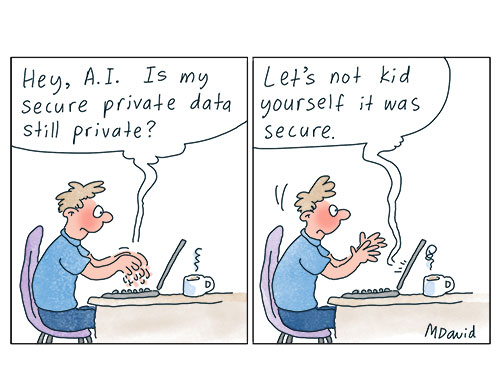
When Microsoft locked an ICC prosecutor out of their email, it proved just how easily U.S. power can reach across borders and into the heart of global justice, writes Paul Budde.
THE RECENT INCIDENT involving Microsoft and the International Criminal Court (ICC) should send a chill down the spine of every democratic nation. Following a sanctions order from Donald Trump’s White House, Microsoft locked ICC Prosecutor Karim Khan out of his enterprise-level Office 365 account. That account wasn’t personal — it was part of the ICC’s institutional infrastructure.
And just like that, an American tech giant disabled access to a key international legal actor.
I am genuinely astonished that Microsoft went through with it. Their public statement tries to downplay the move, claiming that services to the ICC itself weren’t suspended, only to a “sanctioned individual”. But this is a textbook glass-half-full denial. What it shows, in practice, is that if a U.S.-sanctioned person happens to work within a foreign institution, American companies can – and will – reach into that institution’s operations and pull the plug.
This should be the end of any illusion that digital infrastructure is neutral or apolitical.

It’s also deeply hypocritical. Here in Australia, we banned Chinese platforms like Huawei from critical infrastructure due to concerns about foreign interference. We were rightly alarmed at the prospect of another country controlling access to our communications and data. And yet now we find that our supposed ally, the United States, can unilaterally deny access to cloud-based systems that host everything from government emails to court records, simply because it doesn’t like what an international prosecutor is investigating.
This isn’t just about one email account.
Globally, nearly all government data, personal records, communications services and modern financial systems are hosted on U.S. platforms: Microsoft, Google and Amazon. These companies don’t just power your inbox; they underpin ministries, parliaments, hospitals and courts in countries around the world. They are, in effect, privatised instruments of sovereignty.
We’ve seen this play out before. In 2020, Trump sanctioned ICC officials investigating U.S. military actions in Afghanistan. Those sanctions were lifted under former President Biden. Now, under a new Trump administration, the levers are being pulled again. It’s an authoritarian reflex: weaponise emergency powers, target international institutions and sidestep legal norms. And when a tech platform complies, the result is chilling.
It echoes a broader pattern we’ve seen in authoritarian states – from Hungary to Russia to Turkey – where emergency legislation is used to silence dissent, bypass legal systems and entrench power. What’s different here is that it’s being done through digital backchannels. It's authoritarianism delivered as a cloud service.
And in the most extreme historical example, Nazi Germany used the 1933 Reichstag Fire to justify sweeping emergency powers under the Enabling Act, effectively dismantling the Weimar Republic and centralising all authority under Hitler. That, too, began with legal instruments, public fear and the belief that “temporary” measures were justified for the greater good.
What’s worse is the normalisation of it all. We scroll past headlines like “Microsoft cuts ICC access” and carry on with our day. The sociologist Alexei Yurchak coined a term for this: hypernormalisation — the idea that everyone knows the system is broken, but we all pretend things are normal because no one can imagine how to change them.

That’s precisely the risk we face now. We’ve grown so dependent on these platforms, we’ve stopped asking who controls them — and who controls us as a result.
I made a similar point in a previous article on Central Bank Digital Currencies (CBDCs). There, I warned that unless countries take real steps to build independent and transparent digital infrastructure, even their core financial systems could fall under the indirect influence of foreign governments. That risk isn’t abstract anymore. We’re watching it play out in real time, and the ICC incident shows how quickly it can escalate beyond economics into law, justice and governance.
In earlier articles, including those co-authored with Hendrik Rood, I’ve also argued for the structural separation of digital services from the extraterritorial reach of U.S. law. The fact that a prosecutor at an international court can be locked out of official systems because of an American political directive proves the urgency of that argument.
But this isn’t a call for isolationism. Countries like Australia cannot go it alone. What we need is strategic collaboration between like-minded democracies — Europe, Canada, New Zealand, Japan and South Korea. Europe has already begun asserting military and digital sovereignty through initiatives like Gaia-X and GDPR. Australia should be fully aligned with that agenda, not watching from the sidelines.
If we don’t act now, we risk finding ourselves digitally disarmed; not by adversaries, but by allies who believe their law trumps our sovereignty.
The ICC email block is not a glitch. It’s a glimpse of a future where sovereignty exists at the pleasure of the cloud provider. If we believe in the rule of law, democratic independence and national dignity, then we need to reclaim control of the infrastructure that holds our societies together.
Because if we don't, someone else will.
Paul Budde is an Independent Australia columnist and managing director of Paul Budde Consulting, an independent telecommunications research and consultancy organisation. You can follow Paul on Twitter @PaulBudde.
 This work is licensed under a Creative Commons Attribution-NonCommercial-NoDerivs 3.0 Australia License
Support independent journalism Subscribe to IA.


Related Articles
- Normalising Trump is killing the media's credibility
- Dealing with America's 'Toddler in Chief'
- Emperor Trump's new clothes
- CARTOONS: Trump drops the f-bomb
- U.S. border crackdowns catch Australian visitors in the net