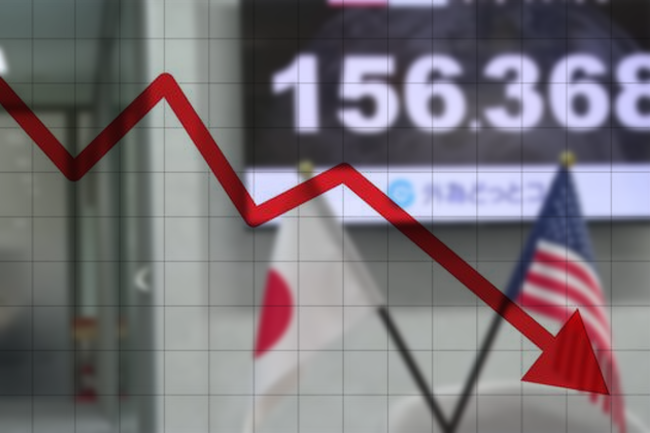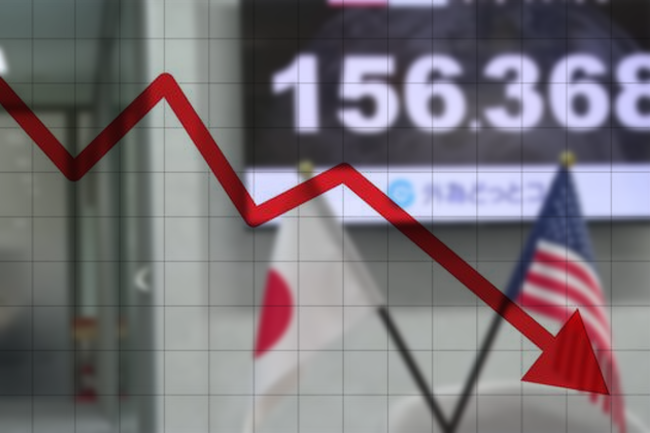
Japan’s yen crisis could expose Australia to rising borrowing costs, a weaker dollar and a fresh cost-of-living shock, writes Jemma Nott.
THE JAPANESE YEN has come under serious pressure since late July. Japanese interest rates are rising, government bond yields are climbing and the U.S. dollar system that has underpinned the global economy for decades is facing increasing pressure.
Most coverage has treated this as a problem for Japan. But there may be a bigger issue. The global economy has relied heavily on the U.S. dollar for generations, and Japan and China have been among the biggest buyers of U.S. government debt. If that relationship begins to change, the effects could spread well beyond Japan and the United States.
Australia is particularly exposed. Our banks, housing market and currency are all heavily influenced by global interest rates and movements of international money. What happens in Japan may therefore matter to Australian households far more than it initially appears.

What is U.S. dollar hegemony?
The U.S. dollar has enjoyed unprecedented dominance in the global economy since WWII, functioning as the world's safe reserve currency largely as a result of U.S. military and geopolitical dominance in the post-Bretton Woods order. Countries like Japan export more than they import, so it’s convenient for them to park surplus trade in the dollar by recycling that back through to U.S. Treasury bonds.
Conversely, this mirrored relationship that China or Japan has with the U.S. means that the profits result in American workers and the U.S. Government carrying more debt so that the rest of the world can keep stockpiling dollars. In other words, the post-Bretton Woods system has always relied on a strong dollar to maintain the U.S. financial system at the cost of domestic industry and secure, well-paying jobs like manufacturing industries.
Similarly, in the forex markets, traders will attain dollars by borrowing cheap yen and converting it, chasing the interest spread because it’s profitable. That’s the carry trade. The efficacy of this, however, relies on Japan consistently running low interest rates.
However, if interest rates rise as a result of supply-side inflation from oil squeezes, then this carry trade becomes less popular and dumps of U.S. Treasury bonds start happening exactly as we have been seeing. U.S. Treasury secretary Scott Bessent pushed this problem down the hill by dumping euros and using them as the funding vehicle to buy yen, but he didn’t fix the problem long-term.
In fact, macroeconomist Phillip Pilkington recently postulated that this may be the beginning of the end for the dollar or, as he put it, the ‘assassination in Sarajevo moment’. Mainly, this is because Japan is locked into a structural problem, not merely a momentary crisis. Japanese companies rely on low interest rates to maintain their massive rolling borrowing models, but lower interest rates worsen oil inflation.
Japan is a domino and Australia may be next
Deutsche Bank recently became the first bank to lead the way for renminbi clearing and this may be a sign that European monetary institutions are beginning to see the writing on the wall about the future of the dollar.
The Iran war has proved costly for the status of the U.S. dollar, as it puts a strain on Gulf recycling into U.S. treasures and major European pension funds have begun distancing themselves from the U.S. by reduced its Treasury holdings by about $9 billion as of early 2026.
The dollar has always served as a useful means of economic interdependency between the U.S. and Global South nations as they use it as a hedge against inflation in their own domestic economies. However, if Washington can no longer guarantee the terms under which that oil moves and more of the proceeds are held in non-dollar currencies, that threatens real turbulence in the dollar-denominated bond market that sits at the heart of the global financial system.
Japan and China collectively hold the largest reserves of U.S. Treasury bonds — a mass sell-off is not just a threat to the Japanese economy, but to the U.S. dollar system and Bessent most likely knew that.
If we are heading towards de-dollarisation, we are thereby also heading towards a system where markets heavily reliant on the U.S. dollar and investment are at risk. Australia is potentially just as exposed as Japan is, but just not quite in the same way. If the yen carry trade unwinds, the first thing we would see is the AUD experiencing a rapid depreciation.
AUD assets are a popular destination for yen-funded carry trades and a run on treasury bonds could mean AUD assets become, in essence, collateral damage. Australian government bond yields and, more immediately, Australian bank wholesale funding costs would likely rise in sympathy, since they're priced off the same global risk-free curve and credit spread dynamics.

The biggest risk for Australia is not simply that Japan has a financial problem. It is that Japan could be an early sign of a much larger change in the global financial system.
A gradual move away from the U.S. dollar could actually benefit Australia. A stronger Australian dollar would make imports cheaper, while Australia could attract investment that has traditionally flowed into U.S. markets.
A disorderly change would be very different. The Australian dollar could fall, borrowing costs could rise and household finances could come under even more pressure. Australia already has high household debt and weak household purchasing power, leaving little room for another major economic shock.
The lesson is simple: Australia cannot assume that the global financial system will remain unchanged. If the world is moving into a new financial era, we need to recognise it early and decide where Australia fits in it.
If we see a rapid depreciation, that then worsens Australian purchasing power and worsens inflation in a country that has already seen the worst decline in disposable income in the OECD due to a combination of supply-side inflation and housing inflation.
Japan’s major vulnerability in a scenario like this sits in their corporate debt and Australia’s sits in household debt.
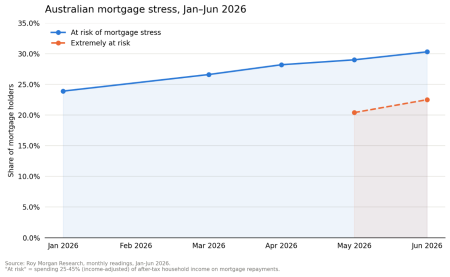
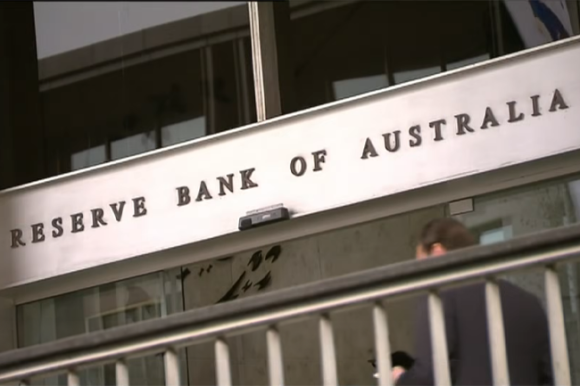
Mortgage stress has been steadily climbing in Australia due to real wages declining via supply-side inflation. The Reserve Bank then faces a version of the same underlying tension as Japan’s — raise the cash rate and risk a downturn in the housing market, but lower the cash rate and worsen inflation.
Even without a cash rate change, bank wholesale funding costs passing through to variable rate mortgages could become very volatile. Australia has built up 2008 levels of leverage without yet seeing that tip over into the realm of defaults, but that doesn’t mean we are somehow immune, especially if supply shocks slow growth and increase unemployment.
Australia has the potential to benefit from a managed move away from the dollar in so far; even without any major changes to our system, eventual appreciation against a weak dollar means reduced supply-side inflation and a draw of capital previously concentrated in U.S. markets into Australian credit and equity markets.
Comparatively though, a disorderly collapse of the dollar is the worst possible scenario. Almost inevitably, it would mean a simultaneous collapse in assets and reduced purchasing power. As always, while asset holders and super will take a paper hit, households would once again be asked to eat the cost-of-living hit with absolutely no room to do so.
Australia's problem is not that we are powerless in this changing system. It is that we have spent decades assuming the existing system will continue.
If the relationship between the U.S., Japan and the dollar is genuinely changing, Australia will need to think beyond simply responding to the next crisis. We need to consider what kind of economy we want to have in a world where the rules governing global money, trade and investment may no longer be the same.
The yen crisis may ultimately amount to nothing more than another bout of market turbulence. But if it is an early sign of something bigger, ignoring it would be far more costly than preparing for it.
Jemma Nott is a Political Economy post-graduate student at the University of Sydney and a freelance writer.
 This work is licensed under a Creative Commons Attribution-NonCommercial-NoDerivs 3.0 Australia License
Support independent journalism Subscribe to IA.