
NBN Co's positive FY26 results vindicate fibre, demonstrate improving operational discipline and show that Australians will embrace higher speeds when these are accessible, writes Paul Budde.
NBN CO’S FY26 RESULTS show that fibre is finally delivering the reliability, efficiency and customer demand long promised. But Australia must not confuse better company finances with the broader public purpose of the network.
NBN Co’s latest financial and operational results are encouraging. Revenue increased by 3% to $5.92 billion, EBITDA rose by 5% to $4.46 billion and free cash flow before financing activities jumped by 51% to $1.16 billion.
More importantly, the results demonstrate that the transition from copper to fibre is producing the structural benefits many of us predicted from the beginning.
During FY26, more than 575,000 homes and businesses upgraded to fibre-to-the-premises, bringing the number of premises connected by fibre to 3.3 million. For the first time, NBN Co says it has more customers connected to fibre than to copper.
This is a significant turning point.
When I advised the original NBN project in the mid 00s (yes, 20 years ago), the case for fibre was never simply about delivering spectacular headline speeds. It was based on the long-term economics of infrastructure. Fibre is more reliable, requires less maintenance, consumes less energy and can accommodate decades of increasing demand without continually rebuilding the access network.
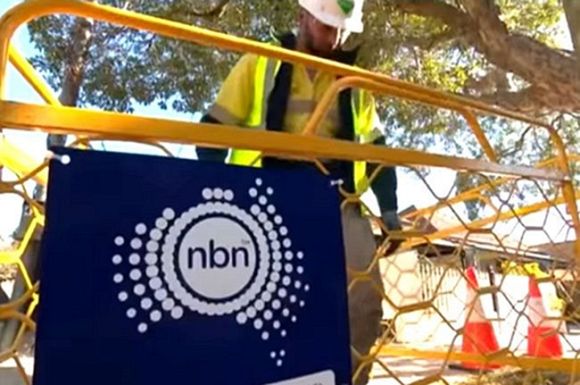
The FY26 figures support that argument. Operating expenditure declined by 3%, while direct network costs reportedly fell by 12%. NBN Co is recording fewer faults, fewer truck rolls and fewer manual interventions. The cost of connecting an individual premise to fibre has fallen below $1,000.
These are precisely the savings that were placed at risk when the original fibre-to-the-premises strategy was replaced by the Coalition’s mixed-technology model. Copper appeared cheaper politically and financially in the short term, but it transferred costs into maintenance, remediation and the inevitable return to fibre.
Australia is now paying to correct that decision. Nevertheless, we should acknowledge that the present Government and NBN Co are moving decisively in the right direction.
Customer behaviour is also changing. The proportion of services operating at 100 Mbps or above increased from 32% to 47% in one year. Even more strikingly, 37% are now on plans of at least 500 Mbps, compared with only 4% in FY25.
This suggests that Australians were not inherently uninterested in faster broadband. Uptake was constrained by the network’s capabilities and, importantly, as I have argued from the start, by the way higher-speed services were priced.
Average monthly downloads have now reached 574 gigabytes per premise, rising to 687 gigabytes among fibre customers. Cloud computing, streaming, remote work, online education and artificial intelligence will continue to increase demand. Fibre gives Australia the capacity to accommodate that growth.

However, the financial headlines require qualification.
Residential average revenue per user (ARPU) has increased from $50 to $52 a month. NBN Co attributes this to both faster-service adoption and its CPI-linked wholesale price increase. These are not the same thing. One reflects consumers choosing more capable services; the other simply transfers inflation into wholesale broadband prices.
As I argued earlier, reaching the old $51 ARPU benchmark 15 years later is largely symbolic. In today’s money, the original target would be closer to $75. More fundamentally, continually increasing broadband prices is not a sustainable national digital strategy.
Nor is NBN Co yet financially clear of its legacy. It finished FY26 with $27.5 billion in net debt and a net debt-to-EBITDA ratio of almost nine times. While free cash flow before financing improved strongly, cash flow after capital expenditure, leases and interest remained negative.
This does not mean the NBN is failing. It means we are still trying to force national infrastructure into a narrow commercial accounting framework.

The NBN should remain publicly owned. Its value lies not simply in the revenue collected by NBN Co, but in the productivity, innovation, education, healthcare, resilience and social inclusion it enables throughout the economy.
The FY26 results are therefore genuinely positive. They vindicate fibre, demonstrate improving operational discipline and show that Australians will embrace higher speeds when these are accessible.
But the next test is not simply whether NBN Co can extract more revenue from each household. It is whether Australia can use this improving infrastructure to provide affordable, reliable and high-capacity broadband to everyone.
That is the measure by which the NBN should ultimately be judged.
Paul Budde is an IA columnist and managing director of independent telecommunications research and consultancy, Paul Budde Consulting. You can follow Paul on Twitter @PaulBudde.
 This work is licensed under a Creative Commons Attribution-NonCommercial-NoDerivs 3.0 Australia License
Support independent journalism Subscribe to IA.


Related Articles
- End of an era: Australia's NBN watchdog can finally stand down
- NBN reaches long-awaited revenue target — but inflation changes the story
- NBN’s digital twin marks a turning point for intelligent infrastructure
- Online but outpaced: Australia’s digital drift
- NBN fibre rollout reaches A.C.T. in long-delayed final phase