Australia's adversarial two-party system is stifling democratic reform, making the case for proportional representation stronger than ever, writes Dr Klaas Woldring.
THE GENERAL TACTIC to avoid any serious public debate at the recent ALP Conference is deplorable and could further damage the ALP’s support in many marginal electoral districts.
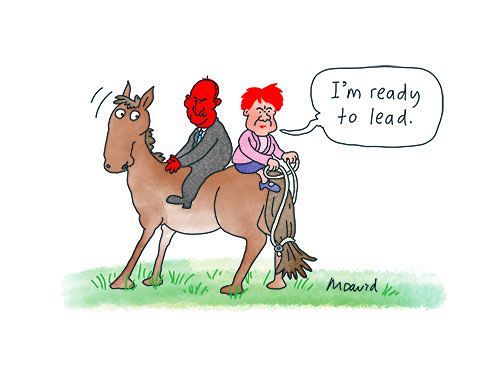
The recent news that the Prime Minister may face a strong woman Independent in the next general election in his own seat of Grayndler, Hannah Ferguson of Cheek Media, unexpectedly takes on major significance. If Ferguson were to win the seat, the ALP would need to find another leader. She is rightly described as media-savvy and is already well known.
Such a change would probably also open up support for proportional representation, as Ferguson is interested in considering alternatives to the existing single-member district system.
Reform has been held back by the existing system. At best, it is somewhat doctored after every federal election by the parliamentary Joint Standing Committee on Electoral Matters. That committee is entirely dominated by the major parties.

The adversarial bickering by these major parties can hardly be described as a “debate” anymore. Most of the voters have had enough of it; this is reflected in the outcome of the last five or six federal elections and the emergence of One Nation. The Westminster heritage of the single-member electoral district, which is the very origin of the two-party system, no longer delivers democracy.
The British now realise this themselves as well. In systems based on proportional representation, the emphasis is on seeking a majority to form government from among several parties, following general elections. It's not either the one or the other; it is instead: how do we find a combination that truly reflects a national majority after the election?
Anthony Albanese and Andy Burnham: Proportional representation
We can only encourage the Australian PM to follow the advice from his friend Andy Burnham, who recently became Prime Minister of the United Kingdom. There is a lot more of importance to Andy Burnham than his friendship with our PM and his interest in rugby league.
Burnham is a strong supporter of proportional representation and, now as UK PM, is likely going to replace the UK’s single-member district system with proportional representation, based on multiple-member districts. It is unquestionably fairer and far more democratic than the current system. That should also be of great interest to Australia and the ALP Government.
The electoral system reform discussion has come into focus in the UK as senior figures in the British Labour Party there have made statements backing serious electoral reform in recent weeks. Burnham believes that proportional representation is an idea whose “time has come”. He has been a passionate advocate for electoral reform for several years now.
In his most recent interview with The Observer, Burnham said:
“I am committed to proportional representation.”
Burnham’s conversion to electoral reform came through experience of a preferential system, rather than proportional, but he has rightly identified that proportional representation is the answer for Westminster. That may seem like a small difference, but it is a crucial one when considering which electoral system should replace the first-past-the-post system.
Regrettably, what we don't see in the Australian media are assessments about alternative electoral systems. Sadly, our universities have also failed society in this respect, with the exception of a small number of progressive academics. Very few journalists seem to consider it worthwhile to ask the obvious question: Why is it so, and what can and needs to be done about it?

The major parties themselves seem to be the last to raise such questions. One of the reasons why the impact was so small, no doubt, was that Civics education at high schools has been increasingly inadequate. As Australian universities became increasingly commercialised from the 1990s onwards, humanities and social science disciplines, including politics at some institutions, came under growing financial pressure and, in some cases, were reduced, merged or discontinued.
It is not just the pork-barrelling and the lack of effective alternatives in the lower house parliaments that block fair and effective representation. It is the virtual impossibility for the governing party to introduce bold alternative legislation, major renewals and daring longer-term projects. In the adversarial system, the official Opposition would or could make swinging voters change their mind. When the voting system discourages risk-taking, Australia stands to lose great opportunities.
Associate Professor Ian Marsh (UNSW Graduate School of Management) was one of the first to seriously question the two-party system in 1995. In Beyond the Two-Party System, he critically discussed political representation, economic competitiveness and Australian politics.
That is now 30 years ago. Frankly, little has changed.
Marsh's excellent analysis is still worthy of re-examination and presents the question: Why is that so? His main explanation and conclusion: the two-party system. The two-party regime has not been able to accommodate the culturally and ethnically diverse interests of the growing society, he argued, and then suggested a three-party system.
In a half-page article in the Sydney Morning Herald (5 July 1995), ‘Towards a two-and-a-half party system’, Marsh considered the result of proportional representation in New Zealand, Germany and the Netherlands. There are around 90 states that have PR as their principal electoral system.
It seems that the Greens here now hope for a three-party system. However, although proportional representation is in their policy platform, strangely, they do not campaign for it in elections. Former Greens' leaders Bob Brown and Christine Milne have both recently publicly supported proportional representation as the best alternative system for the Greens and for Australia.
There have been several others who have published books about restructuring Australia, mostly in relation to federalism and regionalism, as well as the Republic and constitutional change. Most of them appeared in the 2000-2010 period.
However, very few have linked the lack of success to the electoral system and the system conservatism which originates from that system in particular. It's worth mentioning Elaine Thompson – together with Sol Encel and Donald Horne – in Change the Rules, 1977 and Tim Dunlop's Voices of Us, 2023. The important book edited by Marian Sawer and Sarah Miskin in 1999, Representation and Institutional Change in the Senate, is also worth a mention.
The Senate adopted proportional representation in 1948 and it has been a great success. But the Senate can only block draft legislation, not initiate new legislation. All major change needs to come from the House of Representatives where the two major parties have lost ground for the last 20 years. Let me close with the following conclusions about the Senate performance since 1948.
Prior to 1948, the first-past-the-post and the group preference systems used for electing senators meant that all Senate seats in any state could be won by candidates of the same party. The Commonwealth Electoral Act of 1948 provided for the adoption of a system of vote-counting known as proportional representation. The result has been that the membership of the Senate is now a truer reflection of the voters’ support of the different political parties.
Dr HV Evatt said that “the fairest system and the one most likely to enhance the status of the Senate is that of proportional representation” (Commonwealth Parliamentary Debates, 16 April 1948, p. 965).
Evatt further commented:
“Proportional representation has also enabled small parties and independents to gain representation in the Senate, providing a place in the Federal Parliament for a wider expression of community viewpoints.”
After the 2025 Election, the issue of the electoral system needs to be addressed. Electors are tired of the adversarial way of promoting policy based on two- party programs, which can shift markedly during the campaign, even though one of them may win based on receiving a little more than a third of the total votes.
Surely, this is the debate that Australia needs to have, publicly.
Dr Klaas Woldring is a former associate professor at Southern Cross University and former convenor of ABC Friends (Central Coast).
 This work is licensed under a Creative Commons Attribution-NonCommercial-NoDerivs 3.0 Australia License
Support independent journalism Subscribe to IA.


Related Articles
- Fair votes, fairer future: Why Australia needs electoral reform
- Why are the Greens not initiating the strong case for Proportional Representation?
- Fair voting system gains traction in UK