Analysis suggests Australia’s electoral system may be unintentionally boosting One Nation’s chances while exposing flaws in the nation’s democratic representation, writes Dr Klaas Woldring.
THE CURRENT electoral system, based on single-district systems, in all lower house elections at least, actually favours One Nation.
For the moment, this is especially at the expense of the Liberal and National parties, according to DemosAU, of which George Hasanakos is the director of research. Their recent research is based on the 2025 Federal Election. Significantly, the research unit also pointed out that the growing support for One Nation is not just based on growth in Queensland.
Hasanakos writes:
Another notable feature of the current One Nation surge is how consistent it is across state lines.
While the party remains strongest in Queensland, its numbers in other states and Territories are not far behind. Only in the A.C.T. does it fall below double digits.
The MRP model shows the party is competitive in at least one lower house seat in every state, though its strongest performance is in regional and peri-urban Qld and NSW, where most of its projected seat gains are concentrated. However, if the vote share from this poll was replicated in the upper house, the party would win Senate Seats across all six states.
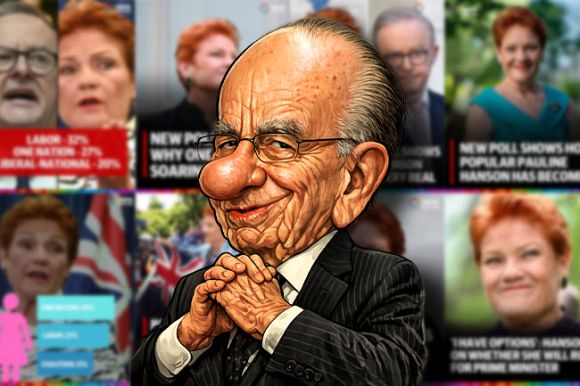
Political elections specialist Antony Green has a further story to tell:
Despite denials, I find it hard to believe that this week’s split in the Coalition doesn’t stem from the reported surge in support for One Nation. Perhaps this week is not all about One Nation, but what has been building for months is about One Nation.
Voting intentions in this week’s Newspoll recorded One Nation on 22% of the national vote, for the first time polling ahead of the Coalition on 21%. Labor’s support slipped to 32% with the Greens on 12% and Others 13%.
We should just remember what kind of result the 2025 election meant for the ALP.
As I pointed out to ALP Senator Don Farrell recently:
‘Consider the results of the 2025 federal election. The ALP received 34.6% of the vote and 62.7% of the total seats (94 of 150). Hardly fair or democratic! The Greens got just one seat for 12.2% of the vote. Democratically speaking, that should have been 18.’
The case for reform surely is obvious. The Senator earlier responded to my 2025 submission to the Joint Standing Committee on Electoral Matters of the House (number 219). In that submission, I made the case for the introduction of proportional representation. The very polite answer did not mention the essence of the submission, however. This Standing Committee represents the interests of the “two major” parties and, it should be realised, is definitely not a commission for major reform at all.

The frequent claims that Australia has a brilliant electoral system, recently stated and restated on an otherwise credible ABC TV program, are just not realistic. While the electoral system has some excellent qualities in terms of machinery and administration, it is plainly not democratic and the Government has to examine this and correct it.
This multicultural society needs a democratic electoral system. The ALP made significant improvements in 1918 and in 1948 again. For the Senate, now is the time for reform again.
Green added:
Similar results from lesser-known pollsters released since the start of January were dismissed. But when Newspoll starts reporting a surge in One Nation support, it gets more attention from the political classes.
Newspoll also reported a two-party preferred figure of Labor 55% to the Coalition 45%. But does a national two-party preferred figure make sense when primary vote support on the conservative side is so fractured?
And not just for the conservative side of politics.
Green continued:
The 2025 Election saw a record 35 seats finish with a contest that was not a traditional Labor-Coalition race. If the Newspoll figure were repeated at a general election, the number of non-traditional contests would shoot through the roof.
And everything we know from past elections tells us that One Nation’s support is strongest outside the nation’s capital cities, precisely where the Coalition’s remaining representation is concentrated after last year’s defeat. One Nation is now polling strongly enough to eat further into Coalition representation, particular National Party representation.

However, Green knows that I have long campaigned for proportional representation, but I don’t think that he has ever suggested that system as an improvement himself. He was an excellent reporter of what happened in the existing system, election after election, but I do not recall that he has ever suggested that Australia could do much better than this.
It would seem to me that that very moment has now clearly arrived. Will the ALP finally come to that conclusion? Will Australian political scientists take up that case, which they seemed to examine seriously in the late 1990s, without any final reform proposals to follow that I can recall?
Green continued:
‘The rise in One Nation support could hurt Labor in some of its own seats, but the record of elections over several decades is that whenever One Nation support surges, it tends to hurt the Coalition. It is too early to make predictions for the next election, but if the trend in this week’s Newspoll continues, Labor could be comfortably re-elected with the biggest change being the Coalition losing seats to One Nation.’
I suggest that the ALP can do much better for Australia. Introduce party-list proportional representation and do away with single-member districts. It is not new. Ninety countries in the world use it. The Nordic countries are the best example.
As it stands, we may end up with One Nation forming government with 34.6% of the vote. However, is the ALP up to it? Seriously, I doubt it.
Dr Klaas Woldring is a former associate professor at Southern Cross University and former convenor of ABC Friends (Central Coast).
 This work is licensed under a Creative Commons Attribution-NonCommercial-NoDerivs 3.0 Australia License
Support independent journalism Subscribe to IA.


Related Articles
- One Nation’s immigration policies: Confusion, copycats and costly myths
- Pauline's ON in polls but can't PHON a friend... at the AEC
- Trumpism, but make it Australian: One Nation’s migration fantasy
- EDITORIAL: EXCLUSIVE — One Nation only wants to control women’s bodies some of the time
- Pauline Hanson launches Ashbygate James towards the Keppel wrecks