The case for a four-year electoral term for the federal government presents as entirely winnable, but the loss of the Voice Referendum has turned Anthony Albanese off holding another referendum, writes Dr Klaas Woldring.
THE ALBANESE GOVERNMENT HAS CONCENTRATED thus far on the difficult housing and migration issues. These are important and require time to achieve sound solutions.
However, sadly, following the failure of the Voice Referendum, it has virtually abandoned considering constitutional issues.
The campaign for an Australian Republic seems to have been buried altogether.
Considering a more democratic electoral system appears to have become foreign to this ALP Government, hopefully just temporarily.
It does not help, of course, that the ABC presents an otherwise interesting and important TV program telling viewers that Australia has one of the best electoral systems in the world, while there really is massive room for improvement.
Environmental protection has been reduced to tokenism, postponed or has almost entirely been abandoned. Given that it now also has to deal with One Nation as a serious additional opponent, the ALP could consider governance system renewal much more seriously.
To begin with, the case for a four-year term for the federal government presents itself as a positive, logical, and entirely winnable proposition.
The loss of the Voice Referendum, which turned Anthony Albanese off holding another referendum, can be explained as a consequence of Australia's existing polarised political culture ("If you don’t know, vote NO").
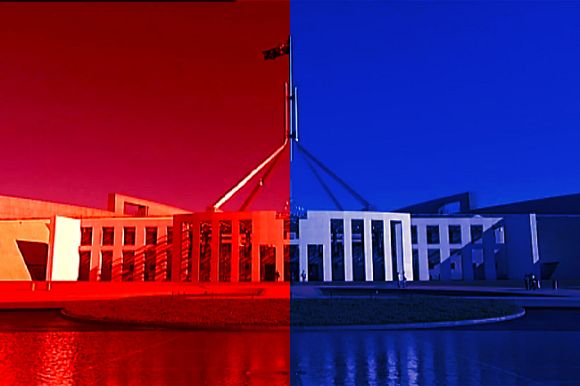
Section 28 of the Australian Constitution states that each House of Representatives formed after a federal election:
"will continue for 3 years from the date of the first meeting, but not any longer".
Since all State Governments already have four-year parliamentary terms, the general argument for four-year federal parliamentary terms makes perfect sense.
It would certainly give any Federal Government much greater capacity to carry out its legislative programs; therefore, the case for a successful referendum on this issue is strong. It seems impossible to suggest any serious argument against it.
Success would certainly be a plus for the ALP, which could well be helpful for the 2028 general election.
Of course, the cost of a referendum is high, and it would therefore make perfect sense to present an additional question, or perhaps even two, to test the electorate’s views.
These could be issues not actually requiring constitutional change, for instance, the electoral system.
Changes to the electoral system are essentially parliamentary or governance decisions, as is stated in several clauses of the 1901 Federal Constitution.
However, to include this in a referendum session is an opportunity to stimulate wider debate on the electoral system with a view to replacing it.
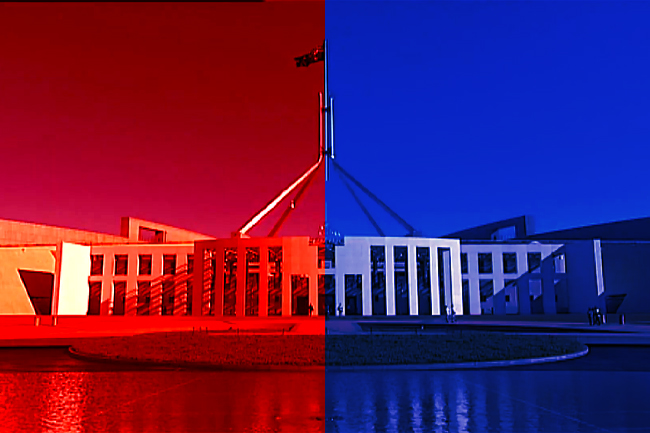
As is quite obvious now, the Single Member District electoral system no longer results in a two-party system.
The entire Anglo-polarised political culture, based on two major parties, is likely to disappear even in the UK following the recent change in Prime Ministership there.
The new British PM, Andy Burnham, is a strong supporter of Proportional Representation, and has been for several years. He recently stated that Proportional Representation is “an idea whose time has come”. Apparently, he is a good friend of Australian PM Albanese.

Such a change would also result in a culture change, as the emphasis would no longer be on the polarisation between two major parties, seated opposite one another.
Even the seating arrangements of politicians should change and the continuous need to concentrate on the differences between two major parties, real, exaggerated, or even made up, should disappear. This would only be a plus in itself.
The emphasis should be on finding an effective majority from among a number of parties, after the election. This can take some time but presents a more harmonising and much more flexible political culture.
A further issue for a referendum could address the need to establish a Commission to examine the options for a Republican Constitution.
There are a number of possibilities here. Should the federation continue, or should it become a national state with provinces, for instance? After all, better communications and faster transport systems have considerably reduced the cost of the current federation.
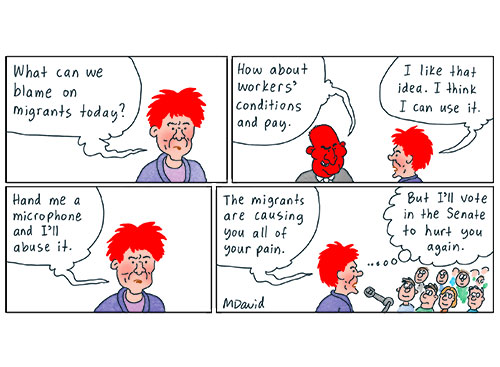
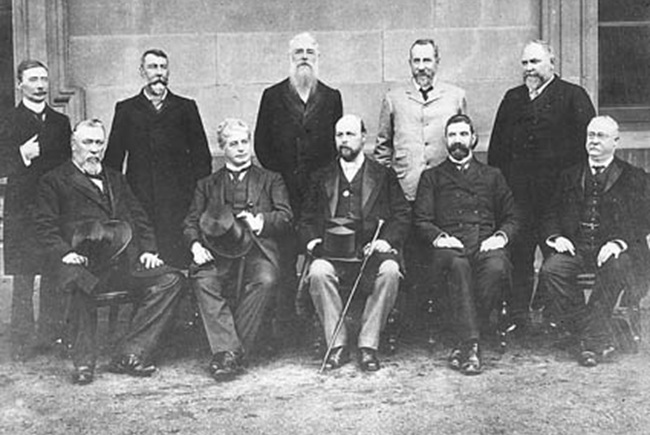
Federation made perfect sense in 1900, but we are now 130 years later. The important immigration issue could also be dealt with in such a way that it prevents major disagreements as are currently experienced.
The reluctance by the Australian PM to hold another referendum during the current three-year period beat is understandable, but why did this failure happen?
The main reason was the existing federal electoral system based on Single Member Districts providing the official Opposition Party with the power, even the expectation, to block the proposal.
“Vote NO if you don’t know” was their message.
At the very least, the Opposition could have adopted a neutral position, better still, pro-ALP support for the amendment.
The position in fact adopted fits the polarised culture of the two-party system, but it did not do any good to the quality of the Australian Government and the position of the Indigenous people.

The situation has changed altogether.
The two-party system has failed, and to continue to remain in Government, the ALP will need at least the support of the Greens in the House of Representatives. That PM Albanese is not keen on this idea is not a good reason not to prepare for such a referendum, sooner rather than later.
The recent election of One Nation’s MP David Farley suggests that the party's immigration policy could be adjusted significantly.
One Nation could well be the party to beat. Surely, this development has shifted the political reality.
However, a referendum on four-year terms is likely to succeed and should benefit Australian politics altogether.
Dr Klaas Woldring is a former associate professor at Southern Cross University and former convenor of ABC Friends (Central Coast).
 This work is licensed under a Creative Commons Attribution-NonCommercial-NoDerivs 3.0 Australia License
Support independent journalism Subscribe to IA.