Year after year, Broome Prison remains overcrowded, degrading and overwhelmingly Indigenous — not through oversight, but through sustained political indifference. Gerry Georgatos writes.
BROOME PRISON is a place of uninterrupted, slow violence in the Kimberley.
There are places in Australia where the passage of time does not bring progress, only repetition. Broome Regional Prison is one of those places. Year after year, inspection after inspection, media report after media report, the same story is told with minor variations, as though suffering itself has become routine, administratively absorbed, politically tolerated.
Broome Regional Prison sits at the edge of the Kimberley, far from the corridors of power, far from the daily gaze of the public and seemingly far from the urgency that should accompany the deprivation of liberty in a democratic society. It is a prison that has long been described as unfit for purpose, yet it continues to operate as if its failures were incidental rather than structural. Unfit for what purpose — incarceration? Even at its most carceral core, it is abominable as a human habitat.
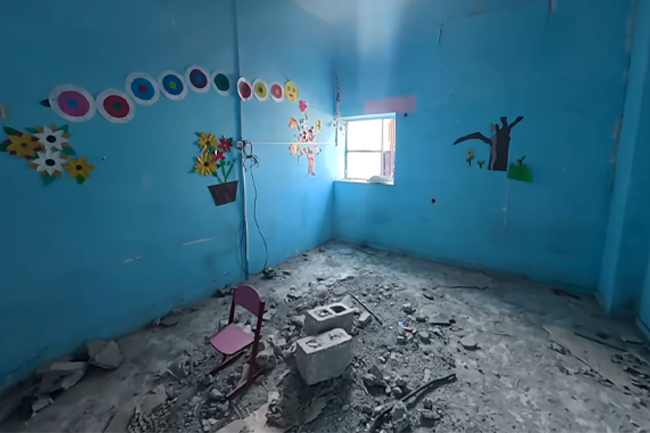
Overcrowding is not an aberration here; it is the organising principle. Men sleep on mattresses laid directly on the floor, bodies arranged around the limits of space rather than any notion of dignity. Cells are worn, unhygienic and in a visible state of decay. Cockroach infestations are not sporadic but persistent, a symptom of neglect rather than surprise. This is not the imagery of a system under strain for a brief moment. It is the portrait of a system that has settled into dysfunction and learned to live with it.

Independent oversight has been unambiguous. The Office of the Inspector of Custodial Services has, for decades, warned that Broome Prison’s infrastructure is obsolete, overcrowded and incapable of meeting even minimum custodial standards. These warnings have not been whispered; they have been formally published, repeatedly, with increasing alarm. And yet, little has changed in substance.
What gives this situation its particular moral weight is not only the condition of the prison, but the identity of those confined within it. The overwhelming majority of people incarcerated at Broome are men of the First Peoples, with women of the First Peoples also detained in conditions that breach basic custodial norms. In effect, this is almost entirely a prison for First Peoples. The comparison with Derby Prison, often described by former detainees and advocates as “all Black”, is not a rhetorical flourish; it is a demographic reality.
This concentration of imprisonment of First Peoples cannot be divorced from history, nor from the present. When substandard conditions persist in a facility where nearly everyone detained is of First Peoples, it raises an unavoidable question: would these conditions be tolerated if the population were different? The answer is uncomfortable, but it is increasingly difficult to avoid.
Former prisoners speak of the experience with grim resignation. They say it was horrific, but then add, quietly, that they did not expect anything else from prison. That sentence alone should stop us. It reveals how low the bar has been set, not only by the system, but by those forced to endure it. When people enter custody already stripped of the expectation of humane treatment, the failure is no longer just institutional; it is civilisational.
Rehabilitation, in any meaningful sense, is absent. There are no consistent education programs, no vocational pathways, no sustained therapeutic offerings. Access to programs, where they exist at all, is sporadic and overwhelmed by numbers. People are left to meander through days that offer no structure, no purpose and no preparation for life beyond the razor wire. This is not correction. It is warehousing.

The language of government, by contrast, is full of intention. Announcements have been made. Funding has been promised. Plans have been referenced. Years pass and still no new facility stands, no transformative upgrade has occurred, no comprehensive program suite has been implemented. The distance between promise and reality grows wider and with it, cynicism deepens.
This inertia is not neutral. It produces consequences. A prison without rehabilitation produces recidivism as predictably as a factory produces output. A prison that offers no means of stabilising one’s mental state, no opportunity to learn, no sense of dignity, returns people to the community more damaged than when they entered. It is, in this sense, an expensive machine for social failure.
What is required is not another report, nor another announcement framed in the future tense. What is required is immediate and sustained investment in infrastructure that supports humane, communal living; facilities designed for education, health and cultural safety, and programs that genuinely transfer skills needed on the outside. Rehabilitation cannot be an abstract ideal. It must be resourced, structured and delivered.
There must also be a reckoning with the deeper context. Any response that does not place First Peoples leadership, cultural authority and community involvement at its centre will fail again, just as previous efforts have failed. This is not an optional add-on. It is foundational.
Broome Prison, as it exists today, functions less as a place of correction than as a quiet repository for people society has decided not to see. It is an asylum of neglect, a warehouse of discarded lives, maintained not by accident but by indifference. Until that indifference is confronted, openly and honestly, nothing will change.
And the slow violence will continue, out of sight, but very much on our behalf.
Gerry Georgatos is a suicide prevention and poverty researcher with an experiential focus on social justice.
 This work is licensed under a Creative Commons Attribution-NonCommercial-NoDerivs 3.0 Australia License
Support independent journalism Subscribe to IA.