A protest vote wrapped in fear and frustration is pushing Australia beyond its two-party comfort zone, writes Dr Klaas Woldring.
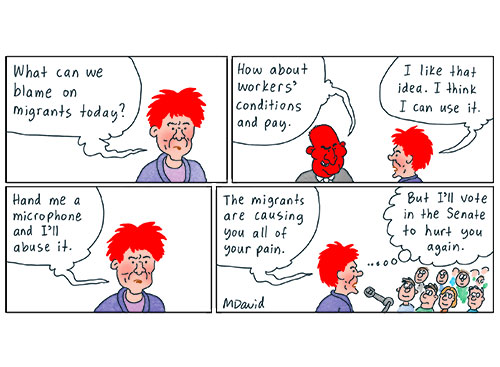
THE RECENT SUPPORT of the One Nation party appears to be mostly related to the growing concern about the entry of immigrants who are non-White and/or have religions and cultures not wanted by some far-right-wing Australian citizens. It is more than that, though.
The current war raging in the Middle East is a religious war above all and the murders of 15 Jewish Australians were very likely a consequence of that. At least in part, that explains the sudden growth of the One Nation Party.
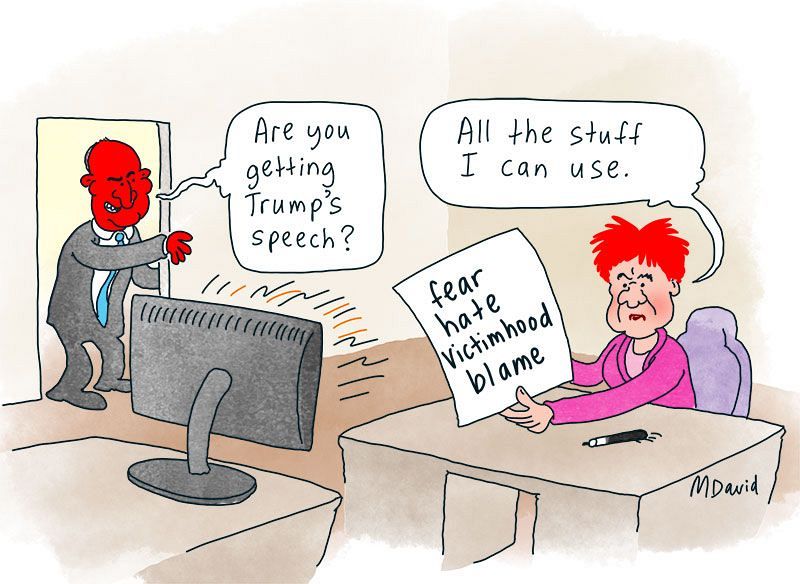
The extension of that conflict by the involvement of the Trump-led U.S. Government has added a major extension to that war. Many European countries, as well as Australia, have tended to stay out of the conflict, but the issue of Australia’s future immigration policy remains an important domestic issue requiring a rational approach.
One would think that most Australians would want to ensure that the Government avoids adding to that potential in any way. Many Jewish and Islamic migrants are peace-loving individuals, possibly even desirous of escaping the Middle Eastern religious wars. It may have little to do with racism, but one thing should be clear — Australia does not want to have another violent upheaval like what happened in Bondi.
It was therefore quite surprising that the Prime Minister decided to invite Israel’s President Isaac Herzog. No doubt well-intended, but Herzog might have been attacked, even murdered, the consequences of which would have been disastrous, to say the least.
How this decision was reached, many must have wondered. It was probably an executive decision by the Government, actually elected by a minority of voters, we should remember. Some of those who campaigned for a republic in the late 1990s particularly stressed the need for parliaments that are not dominated by political executives. That still makes good sense and may require replacing much of the Westminster system and introducing a proportional election system.
The predominantly One Nation idea that Australians should stop relying on immigrants from many other cultures appears to be racist in nature. It is hard to say if this attitude represents just a misguided conservative attitude or a fear of other cultures. Or just plain racism. It could be all three.
In any case, there is, in reality, no shortage of room for newcomers, despite the current temporary housing shortage. Immigrants from non-Anglo cultures have been welcomed in large numbers for many years and they have mostly adapted quite quickly in the past, with very low rates of return to their home countries. A large majority of Australians have generally been satisfied with the growth of population due to immigration.
Increasingly, foreign qualifications have also been accepted more readily than in the past, since WWII. In the main, Australia has been a remarkably successful immigration country. The attitude that this has now suddenly changed, for some, would seem to have been generated primarily by recent international upheavals mentioned above. The growth potential of Australia remains enormous.
Also disturbing are the related advertisements of one extremely rich Australian, Clive Palmer, who, as chairman of the United Australia Party, wants to stop all immigration. This “new deal”, as he proposes it, can hardly be taken seriously, as this rich continent is still very sparsely populated.

However, the actual effect of these large adverts by wealthy individuals, thus far at least, seems to have been almost negligible. Most Australians ignore these efforts altogether, with the exception of One Nation. This financial support will support One Nation.
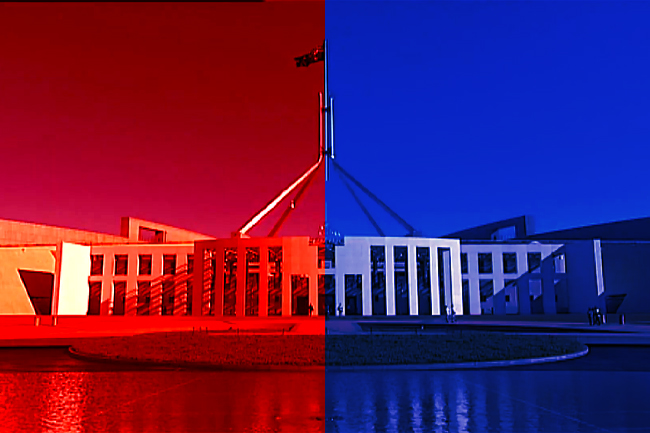
However, real motivators for genuine governance system renewal will also be motivated by a growing dissatisfaction with the major parties. The governance system is still dominated by at least one major party, the ALP, but the opposing “Coalition” has been weakened considerably and One Nation has fairly unexpectedly gathered support as a third significant party.
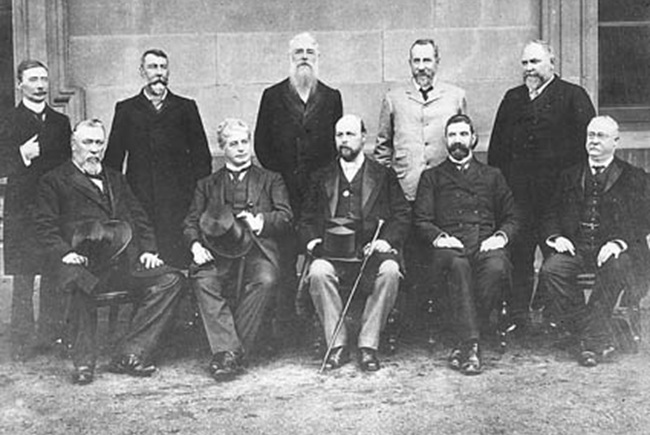
Surprisingly, no further effort has been made to move towards a republic at all since 1999. Isn’t it high time to democratise the governance system beyond the colonial structures following the failure of the Republic Referendum in 1999? Why has the ALP not shown that initiative? Why is it not forming a coalition with the Greens instead of avoiding them? Who are the innovators and reformers in the ALP? Let them speak up.
The Australian Republic Referendum held on 6 November 1999 was a two-question referendum to amend the Constitution of Australia. The first question asked whether Australia should become a republic, under a bipartisan appointment model where the president would be appointed by the Federal Parliament with a two-thirds majority. This was the model that was endorsed by the Constitutional Convention, held in Canberra in February 1998.
The second question, generally deemed to be far less important politically at the time, asked whether Australia should alter the Constitution to insert a preamble.

An excellent text leading up to that Republic Referendum was published by Professor George Winterton under the title We, the people, including contributions by Donald Horne and Elaine Thompson, former colleagues of mine at The University of New South Wales (UNSW).
A remarkable contribution also came from Campbell Sharman, who argued that the debate over a republican form of government would:
‘... only be of value if it turns its attention to that part of our constitutional structure most in need of change: the limited role of representative institutions in checking the exercise of executive power.’
Essentially, this also concerns the electoral system, even more so now than at the time. The ALP needs to recognise that the decline of the two-party system requires progressive action. The question of major constitutional change is also part of that issue.
The New Zealanders saw this need much earlier, in the early 1990s, and acted accordingly and effectively. The emergence of the One Nation party reflects the failure of the governance system. The time for renewal is right here.
Dr Klaas Woldring is a former associate professor at Southern Cross University and former convenor of ABC Friends (Central Coast).
 This work is licensed under a Creative Commons Attribution-NonCommercial-NoDerivs 3.0 Australia License
Support independent journalism Subscribe to IA.


Related Articles
- 'Gutter politics' and rape: The Black history of One Nation
- Trump, One Nation and Reform voters are perpetrators not victims
- Why Pauline Hanson's One Nation will never win government
- The current electoral system actually favours One Nation
- One Nation’s immigration policies: Confusion, copycats and costly myths