Labor’s Budget priorities are under fire as conservation groups warn biodiversity funding cuts, weakened protections and fast-tracked approvals could deepen Australia’s environmental crisis, writes Sue Arnold.
THE AUSTRALIAN Land Conservation Alliance (ALCA) doesn’t mince words in its description of the Federal Budget — words shared by a significant number of Australians:
‘The Federal Budget puts funding for nature on life support.’
ALCA details the $2.2 billion cuts to the Department of Climate Change Energy, the Environment and Water (DCCEEW) portfolio over the next 14 years, including cuts of $67 million over seven years from uncommitted funds in the National Environmental Science Program.
ACLA’s Policy Lead Michael Cornish said:
“Nature underpins so much of our economy, our prosperity and our wellbeing, but the Government has just put nature funding on life support.”
Last month, the Australian Government released its second National Ecosystem Accounts. These reconfirm just how valuable nature is, showing that healthy ecosystems store billions of dollars’ worth of carbon and protect hundreds of thousands of homes and people from storms and tidal surges.

Mr Cornish said:
“Many ecosystems are on the pathway to collapse, with more animals being added to the threatened species list every year. Yet the Australian Government’s trend of chronic underinvestment continues.”
Scientists, conservation organisations and environmentally aware Australians are now faced with a disastrous political scenario. The May Federal Budget is the stuff of environmental nightmares.
Many Australians voted for Labor in the firm belief that the party’s policies would reflect the significant across-the-board concern over the impacts of climate change and the catastrophic loss of biodiversity. Yet the enormous destruction caused by the 2019-2020 bushfires, with an estimated 3 billion animals lost, has drifted into the political dead zone.
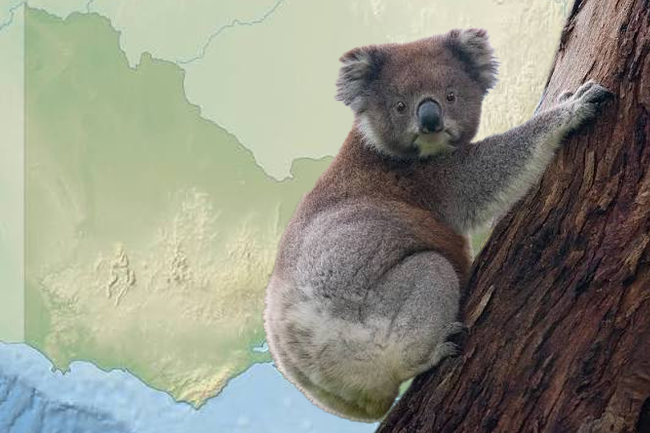
Ecosystems were wiped out, flora and fauna, riparian zones and invertebrates were incinerated. WWF estimated 60,000 koalas were lost in the fires.
In response to this global catastrophe, the Albanese Government, Coalition Opposition and One Nation continue to ignore the extensive long-term damage and scientific concern. Australia’s rapidly disappearing biodiversity is, apparently, of no consequence to the powers that be and would be.
The Federal Budget potentially sounds the death knell for wildlife populations struggling to survive as their habitats are increasingly destroyed by climate change impacts, massive urbanisation projects, fossil fuel projects and population growth.
Environment Victoria sums up one of the most alarming policies. Provisions in the Budget will accelerate the handover of federal environmental approval powers to state and territory governments, fast-tracking decision-making and establishing a new “pay to destroy” offsets scheme.
The Federal Budget allocates $153.5 million over four years to progress bilateral agreements with states and territories that would see decision-making under the newly reformed Environment Protection Biodiversity and Conservation Act 1999 handed to state and territory governments, and enhance the use of AI in environmental approvals (Portfolio Budget Statements, Budget Paper 1.3, page 18).
If bilateral agreements are made, state and territory governments will be able to greenlight mining, energy and land clearing projects under federal laws as they impact nationally significant environmental values like critically endangered species, world heritage areas, and Ramsar wetlands.
Given the record of state governments’ appalling environmental approvals, the bilateral agreements amount to a blank cheque for developers.
Labor’s record on biodiversity demonstrates a significant change in political direction, favouring growth and greed at any cost over environmental concerns.
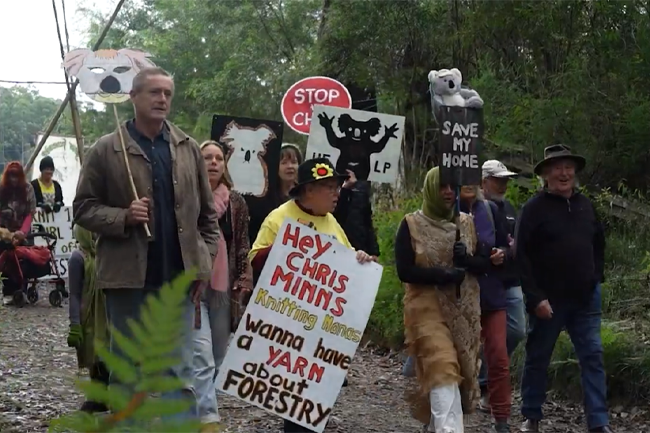
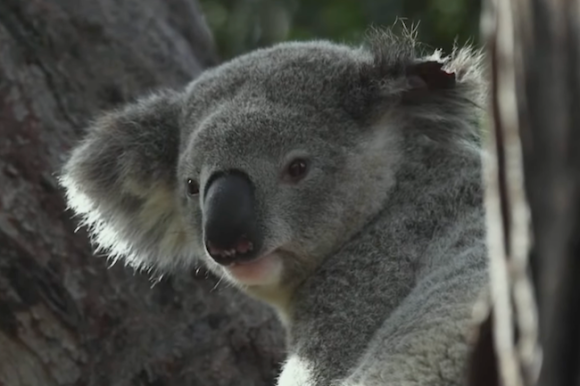
In NSW, the Labor Party first promised the creation of the Great Koala National Park in January 2010, launched by then Opposition Leader, Luke Foley. Given that one-fifth of the state’s koalas live within the 175,000 hectares of state forests, which constitute the proposed park, together with 100 forest species, the promise to create the park was met with huge public support, which has continued to grow exponentially.
In 2023, the Labor Party promised to create the park if it won government. In 2025, the Labor Government confirmed the proposed boundary of the Park and an immediate temporary moratorium on timber harvesting within the proposed boundary.
In May 2026, Minister for the Environment Penny Sharpe affirmed that the final creation of the park is now dependent on the successful registration of a carbon project under the proposed improved Native Forest Management (NFM) method.
Meantime, large areas of crucial koala habitat in state forests have been excluded from the proposed Park boundaries and remain open to logging.
According to the Native Conservation Council, Forestry Corporation continues to log and process harvest plans within the 175,000-hectare proposed park footprint.
According to the NSW Government’s website explanation of the NFM:
The proposed method aims to generate greenhouse gas abatement by stopping or reducing harvesting in multiple-use public native forests (i.e state forests). Projects registered under the proposed method can generate Australian Carbon Credit Units (ACCUs).
The proposed method allows a project proponent (i.e. a state government) to impose a temporary moratorium on timber harvesting while the feasibility of its ACCU project is assessed.
The method is to be considered by the Commonwealth Government’s Independent Emissions Reduction Assurance Committee (ERAC).
Getting down to any reasonable understanding of the mountain of schemes relevant to forests, carbon credits and greenhouse emissions is not for the faint-hearted. But they provide evidence of the latest Labor ploy to detract any significant public attention from critical environmental issues.
Labor governments are publishing paper after paper, creating themes for discussion, public comments on endless schemes, holding round tables that fail to deal with the substantive issues, and ignoring peer-reviewed scientific research and scientific concern.
Instead of ending native forest logging, now forests will only survive if there’s money to be made by valuing the trees for their carbon reduction. At the political level, the only value of forests will be monetary. There’s zero consideration of ending forest logging.
Instead, the long-standing exemptions for the logging industry under federal environmental laws will now apply. Native forest logging will be subject to national environmental standards that ‘set clear goals for environmental protection’.
More loosey-goosey language.

Yet scientists have confirmed that protecting native forests from harvesting is the most effective way to bring down Australia’s carbon emissions.
As Professor David Lindenmayer says:
There is a straightforward way to avoid the ecological, administrative, and financial problems created by native forest logging — stop it altogether.
The evidence shows ending native forest logging would deliver significant benefits for biodiversity, forest ecosystems and reduce fire risks.
It also would benefit government finances because taxpayers would no longer need to subsidise an economically unviable industry that currently loses large amounts of money.
According to the Biodiversity Council, investment in on-the-ground biodiversity programs for 2026-27 amounts to just 0.06 per cent of the Federal Budget. Allowing for inflation, this represents a 9 per cent decline in real terms compared to 2025-26.
Investment to speed up development and streamline environmental approvals will be equal to half of all on-ground nature funding over the next two years
Over $500 million was allocated to streamline environmental assessments. Over $100 million was committed to modernise environmental data systems, integrating AI to speed up housing and development approvals.
When governments and political parties ignore science, increasing biodiversity loss, climate impacts and the fundamental combination of globally recognised threats to the planet, our nation is in deep trouble.
The trouble is, governments no longer listen. Nor do opposition parties.
Sue Arnold is an IA columnist and freelance investigative journalist. You can follow Sue on Twitter @koalacrisis.
 This work is licensed under a Creative Commons Attribution-NonCommercial-NoDerivs 3.0 Australia License
Support independent journalism Subscribe to IA.


Related Articles
- Australia's volunteer crisis threatens frontline climate action
- SA’s ‘underwater bushfire’ devastating marine life and threatening human health
- New environment minister a win for industry but a loss for environment
- Morrison Government re-election would be an environmental catastrophe
- Bayer ends U.S. sale of glyphosate herbicides