Elections this year could continue the drift away from democracy, or reverse it, as Alan Austin reports.
OF THE 40 or so elections to be held worldwide in 2026, several will significantly impact the direction of global alliances and the fortunes of people everywhere. Some could change Australia’s future, but for good or ill, remains to be revealed.
First, let’s review the year just ended.
2025 over — at last
Twelve months ago, this column pondered three issues regarding the year then beginning. Would dissatisfied voters worldwide continue to punish incumbent governments as in 2024? Would Australians emulate their American cousins and turf out a successful progressive party after a malicious campaign of blatant lies? How will a lifelong criminal grifter again leading the USA impact that nation and the world?

The answers are not as discouraging as they might have been. Elections in 2025 yielded mixed results, with setbacks for social progress in Chile, Germany and Singapore but encouraging results in Canada, Australia, Norway, Ireland and Romania.
Australian philosopher and global election analyst Charles Richardson dissects all elections on his website, The World is Not Enough.
He told IA that future prospects remain bleak:
‘...but objectively, you'd have to say things improved in the course of 2025. Partly because every year that we avoid destruction is a step forward. But also because of several positive developments. Anti-democratic forces were defeated in Romania, South Korea and the Netherlands. The ceasefire in Gaza, while imperfect, is better than nothing. Peace mostly continues to hold in Libya and Syria.’
Changed administrations
Voters exchanged progressive governments for conservatives in Germany, Ecuador, Bolivia, Chile and Honduras. They did the opposite in South Korea, Norway, Ireland, the Netherlands, Romania and also in the New York mayoral race, where the young, charismatic, Muslim socialist Zohran Mamdani took charge of the city.
Conservative administrations were re-elected in Portugal, Singapore and Hong Kong, while reformists were returned in Canada and Australia — emphatically in both cases.
OECD countries that now have a woman representative as head of state or prime minister (or both) are Australia, Italy, Denmark, New Zealand, Ireland, Japan, Mexico, Greece, Iceland, Estonia, Latvia, Lithuania and Slovenia.

Democracy still threatened
Destructive wars continued in 2025 in Ukraine, Sudan and Palestine.
On the latter, Dr Richardson noted:
‘Peace of a sort was arrived at in Gaza, after a brief regional escalation in the middle of the year, but terrorists remain in power both there and in Israel itself.’
One feature of 2025 elections, including in Australia, was that most Trumpists were unsuccessful.
Richardson observed:
‘Candidates allied with Donald Trump did badly almost everywhere outside South America, and even there, the record was mixed. That alone won’t be enough to save the world, since the whole point of an anti-democratic movement is that it doesn’t care what voters think.’
Through 2025, the USA experienced dramatic declines in internal social cohesion, the economy, respect for the Constitution and the rule of law, and its global authority.
Such indicators as we have suggest this has been the worst year since World War II for the U.S. economy. Inflation is surging, unemployment is increasing, manufacturing is declining, travel to the USA has plummeted, household debt is soaring and consumer confidence is close to an all-time low.
This is masked by President Trump having sacked the professional statisticians and installed loyalists who are credibly suspected of falsifying published figures.

Looking forward to 2026
New Zealanders will vote in October either to persevere with the conservative coalition led by PM Christopher Luxon’s Nationals or return to Labour under Chris Hipkins, who was defeated in 2023.
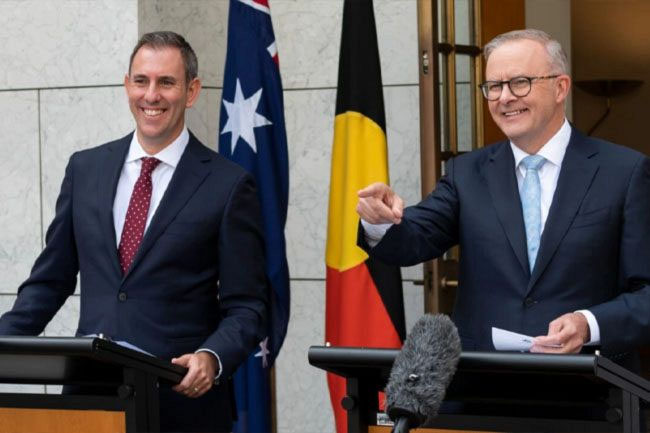
Neither result should impact relations with Australia, as the Albanese Government seems able to deal with anyone, as proven last August when Albo’s long-dreaded personal meeting with Trump was hailed as a triumph.
Hungary may reject authoritarian leader Viktor Orbán, who scored a strong victory four years ago and has now been Prime Minister for two terms, totalling nearly 20 years.
The United States mid-term elections next November offer Americans the chance to shift control of the House of Representatives and the Senate from the Trump-dominated Republican Party to the Democrats.
Should this eventuate with strong Democrat majorities, Trump’s power to destroy his country and undermine global peace and prosperity may be curbed. He could conceivably be impeached for offences he has committed since resuming the presidency, then removed and subjected to criminal prosecution.
This makes the November midterms undoubtedly the 2026 main act.
Other parliamentary elections are scheduled for Russia, Israel, Thailand, Vietnam, Scotland and France. General elections, which will determine both the parliament and the national leader, will be held in Sweden, Denmark, Brazil, Colombia, Costa Rica and Peru. Presidential elections are slated for Portugal and Iraq.
Looming risks for global security
According to Dr Richardson, Brazil is a major concern for 2026:
‘I think President Lula da Silva is repeating Joe Biden's mistake of 2024, and while ex-President Jair Bolsonaro can't run, his son probably will and, of course, will pardon his father if he wins. That could lead to a block of far-right powers in South America supporting Trump’s worldview.’
The greater danger, Richardson says, is that:
‘Trump's pro-Russian strategy in Europe will lead to either (i) European capitulation and far-right governments installed, which will be difficult to dislodge even after Trump is gone, or (ii) push Europe to resist and give serious military assistance to Ukraine, which could edge Putin closer to using nukes. If London, Paris and Berlin are still standing at the end of the year, it will be an achievement.’
As this is written, early reports of the USA attacking Venezuela are being aired.
Buckle up. This will be an exhilarating ride.
Alan Austin is an Independent Australia columnist and freelance journalist. You can follow him on Twitter @alanaustin001.
 This work is licensed under a Creative Commons Attribution-NonCommercial-NoDerivs 3.0 Australia License
Support independent journalism Subscribe to IA.


Related Articles
- Democracy, on the Government's terms
- 2025: Democracy under threat again, notably in the Americas
- Every vote is precious