
Australia is making a critical mistake by relying on global cloud providers and expanding its data centre footprint without a national infrastructure strategy, writes Paul Budde.
FOR MUCH OF THE WAR in Ukraine, the focus has been on tanks, missiles and drones. But beneath the visible battlefield, a quieter transformation is taking place — one that may ultimately prove more decisive than any weapon system.
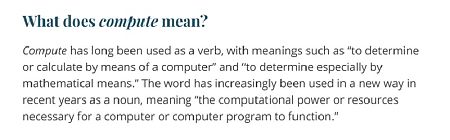
The war is becoming a contest over "compute".
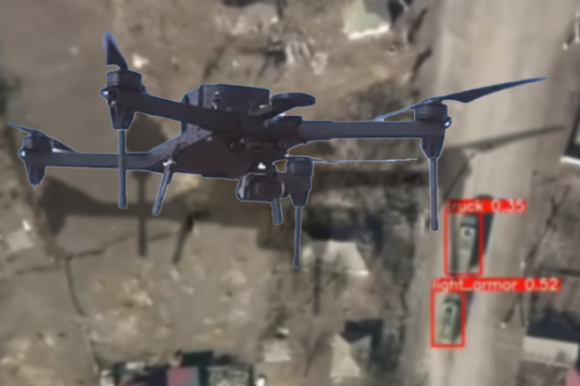
Behind every drone swarm, targeting system and real-time battlefield decision lies an invisible layer of infrastructure: data centres, cloud platforms, communications networks and energy systems. What Ukraine is demonstrating – often under extreme pressure – is that modern warfare is no longer just about firepower, but about the speed at which data can be processed, decisions can be made and actions can be coordinated.
When those systems fail, everything else begins to unravel.
As highlighted by Clara Kaluderovic, a senior fellow at the Atlantic Council’s Eurasia Center, the critical vulnerability is not a lack of computing power itself – Western cloud providers have more than enough capacity – but the ability to access that compute under attack. When connectivity is disrupted, even the most advanced systems degrade rapidly. Autonomous platforms lose coordination. Data becomes unusable. Decision-making slows to a crawl.
In other words, without resilient compute infrastructure, advanced military capability becomes little more than stranded hardware.

This is not just a Ukrainian problem. It is a preview of a much broader shift in what constitutes strategic infrastructure in the 21st Century.
For decades, governments have treated data centres as commercial real estate — important for economic development, but not fundamentally different from other private-sector investments. The Ukraine war challenges that assumption. Compute is now as critical as energy, logistics, or industrial capacity.
Yet in Australia, this shift has barely registered in policy thinking.
We remain heavily dependent on global cloud providers – largely American – for the core infrastructure that underpins our digital economy. While this has delivered efficiency and scale, it has also created a structural dependency that is rarely acknowledged, let alone addressed. There is little serious discussion about what happens if access to those platforms is disrupted, restricted or politically constrained.
This is not theoretical. The Australian Department of Defence has already embedded U.S. data analytics firm Palantir Technologies into its systems through a series of contracts. These platforms sit at the heart of data integration and operational decision-making — precisely the layer on which modern warfare increasingly depends.
The controversy surrounding such systems – from surveillance concerns to questions of sovereignty – reflects a deeper issue. When compute becomes strategic infrastructure, the risk is not just dependence on foreign platforms, but dependence on how those platforms process data and shape decisions.
At the same time, Australia is expanding its data centre footprint at an unprecedented rate, largely driven by artificial intelligence and hyperscale cloud demand. But this expansion is being treated primarily as an economic opportunity – attracting investment, creating jobs – rather than as part of a national infrastructure strategy.
That is a critical mistake.
Data centres are not just buildings filled with servers. They are energy-intensive facilities that sit at the intersection of digital capability and physical infrastructure. A single large facility can consume as much electricity as a small city. As AI adoption accelerates, these demands will grow exponentially.
This creates a convergence that policymakers have yet to fully grasp: compute, energy and national security are becoming inseparable.
Australia already faces challenges in energy resilience, grid stability and long-term planning. Adding large-scale compute demand into this system without a coherent strategy risks compounding those vulnerabilities. At the same time, the absence of distributed, resilient compute architectures – including edge and locally controlled systems – leaves us exposed to disruptions that could cascade across both the digital and physical economy.
The lesson from Ukraine is not that every country needs to militarise its data centres. The lesson is that resilience must be designed into the system from the outset.
That means rethinking how and where compute is located, how it is powered, and who ultimately controls it. It means moving beyond a model of centralised cloud dependence towards a more distributed architecture that can continue to function when networks are degraded or disrupted. And it means recognising that energy policy and digital policy can no longer be developed in isolation.
Most importantly, it requires a shift in mindset.

For too long, we have treated digital infrastructure as something abstract — a layer that sits above the “real” economy. Ukraine shows that this distinction no longer holds. Compute is now embedded in the core functioning of modern society, from defence and communications to finance, healthcare and critical services.
The uncomfortable reality is that Australia, like many other countries, is still operating with a peacetime understanding of infrastructure in a world that is rapidly moving beyond it.
As I have argued before, societies tend to act only when a crisis forces them to. The danger is that by the time the importance of compute infrastructure is fully recognised, the opportunity to shape it proactively may already have passed.
The next war may not begin with a missile strike or a cyberattack. It may begin with something far less visible: the silent disruption of the systems that turn data into decisions.
And if that happens, those who control resilient compute – and the systems that shape those decisions – will hold the decisive advantage.
Paul Budde is an IA columnist and managing director of independent telecommunications research and consultancy, Paul Budde Consulting. You can follow Paul on Twitter @PaulBudde.
 This work is licensed under a Creative Commons Attribution-NonCommercial-NoDerivs 3.0 Australia License
Support independent journalism Subscribe to IA.