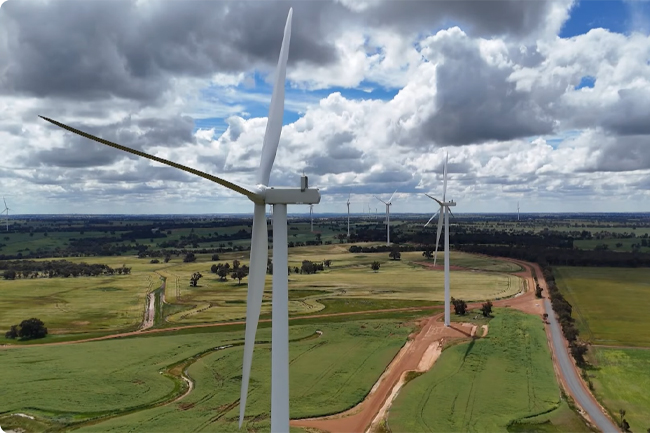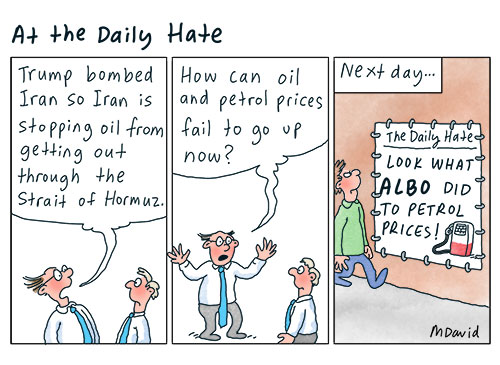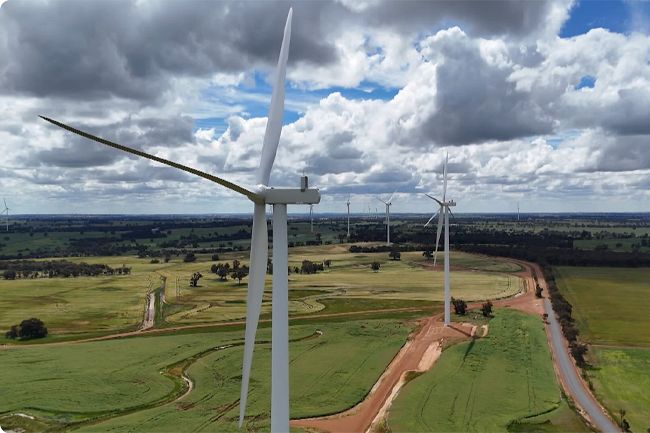
As global instability and fuel insecurity deepen under Trump’s escalating conflict, Australia’s vast wind and solar resources are emerging as the nation’s most reliable path to energy resilience, writes Dr Norm Sanders.
IT IS EASY to fall into a pit of despondency while watching U.S. President Trump carelessly swinging a wrecking ball through the world order.
Trump’s attitude is in a league with Marie Antoinette’s legendary “Let them eat cake” response when asked about the bread shortage in the French Revolution.
President Trump has stated on Truth Social that the U.S. is not worried about oil shortages because the country has “plenty” of its own supply. Trump advised allies, particularly the UK, to “go get their own oil” from the Strait of Hormuz, suggesting they either buy from the U.S. or secure it themselves, as he claimed the U.S. would no longer “bail them out”. (Conveniently ignoring the fact that he had started the war in the first place.)
However, there is light at the end of the tunnel and it is getting brighter all the time. Trump’s war has shown the need for Australia to stop importing fuel over vast distances using vulnerable supply chains. The Bass Strait oil fields are almost played out and new developments like the Taroom Trough in Queensland won't be producing for at least five years.
Of course, Australia has lots of natural gas, but we need liquid fuel at the moment. The other problem is that both political parties have given away most of our gas. Australia is ranked as the world's third-largest exporter of liquefied natural gas (LNG), consistently competing with the United States and Qatar for the top positions. (Trump has recently knocked Qatar out of the race with his blockade.)
But the politicians haven’t yet found a way to sell off Australia’s extensive wind and solar resources.
Some of them would have done so if they had the chance. The then Liberal Energy Minister, Angus Taylor, thought there was too much wind and solar on Australia’s grid in 2018. We haven’t heard too much from him on that subject recently as renewables power ahead.
In just the last three months of 2025, nine wind and solar projects added 2.1 gigawatts (GW) of new electricity-generating capacity to the grid, and 1 GW, 2.3 gigawatt hours (GWh) of battery storage, according to the latest data from the Clean Energy Council (CEC).
The report states that more renewables were “switched on” in the dying months of 2025 than in any other quarter on record, leaving the previous record – 1.3 GW added in the third quarter of 2021 – well behind.
The Albanese Government is spending billions of dollars on alternative energy projects. This was happening before Trump’s war, but has now taken on more urgency. According to a recent press release, the Government is actively funding and implementing policies to support solar and wind energy as part of a broader "Future Made in Australia" strategy, with significant investments announced through early 2026.
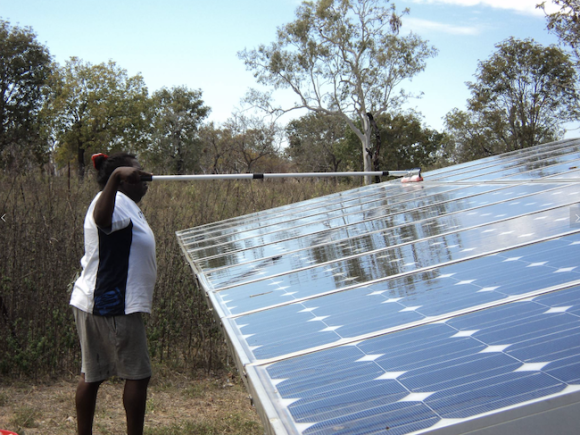
Key initiatives and funding, as of April/May 2026, include:
- $6.15 Billion Package (April 2026): The Government brought forward $6.15 billion in funding to support businesses in decarbonisation and supply chain resilience. This includes:
- $5 Billion Net Zero Fund: To support manufacturing and energy efficiency, including projects for solar, wind and storage.
- $1 Billion Economic Resilience Program: Providing zero-interest loans for critical supply chains.
- $1 Billion Solar Sunshot Program: Announced to boost Australia's solar manufacturing capabilities, focusing on solar panel production and supply chains, with $550 million for manufacturing projects.
- $500 Million for Wind and Clean Energy Manufacturing (Feb 2025): A $500 million investment to fund wind tower fabrication and other clean energy components, such as batteries and electrolysers.
- $25 Million Solar Initiative for Apartments (Feb 2025): Jointly funded with the NSW Government to assist apartment owners with shared rooftop solar installation.
- $2 Billion for Clean Energy Finance Corporation (Jan 2025): Additional funding to boost investment in renewable technologies and help businesses and households switch to cleaner energy.
- $840 Million for Critical Minerals (March 2024): Funding to support a rare earths mine and refinery in the Northern Territory, vital for manufacturing renewable technologies like wind turbines and EV motors.
- $45 Million for Faster Approvals (May 2026): Investment to speed up environmental approvals for environmental and renewable projects.
The Government is pushing for higher domestic manufacturing of renewable components to reduce reliance on imports and to create jobs, particularly in regions that formerly relied on coal-fired power. While the Government has significantly increased investment in renewables, some reports indicate that new funding measures may be constrained in the upcoming May 2026 Budget to focus on existing initiatives.
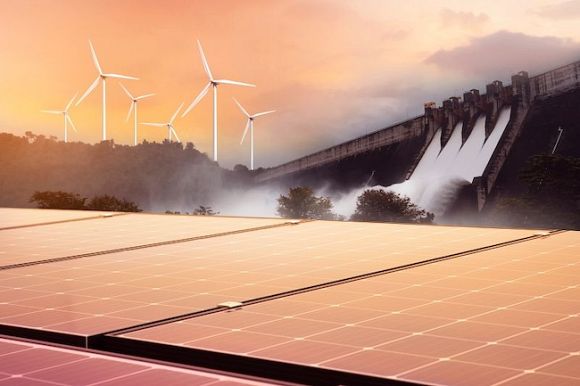
Australia is already using solar and wind power to replace coal-fired plants if they go offline due to fuel shortages or because of the increasing unreliability of ageing coal stations. Renewable energy (including solar, wind and storage) supplies a massive share of the grid at present. These alternative energy sources often provide over 45 per cent of total power. At the same time, coal plant availability has fallen to record lows.
Australia has some of the world’s best solar and wind resources. Major investment in utility-scale solar and wind projects is taking place in New South Wales, Victoria and Western Australia.
“Firmed” renewables are essential to the emerging industry. This involves pairing solar and wind with storage technologies like batteries and pumped hydro. Massive batteries are now under construction, including the $200 million Brendale battery in Queensland.
These batteries charge during the day and discharge in the evening or any other time when needed due to high demand. Utility-scale battery storage is expanding rapidly, with discharge capacity tripling in early 2026 compared to the previous year. The Australian Energy Market Operator has developed models that showed that 100 per cent renewable energy with sufficient transmission connectivity (power lines) can provide the same level of reliability as the current system.
Australia is in for a rough time over the coming months due to Trump’s war. But all this chaos is heralding the end of Australia’s “just in time” dependency on fuel shipped halfway around the world. The solution is, quite literally, on our doorsteps in the form of sunshine and wind.
Dr Norm Sanders is a former commercial pilot, flight instructor, university professor, Tasmanian State MP and Federal Senator.
 This work is licensed under a Creative Commons Attribution-NonCommercial-NoDerivs 3.0 Australia License
Support independent journalism Subscribe to IA.


Related Articles
- How Renewable Energy Is Empowering Remote Indigenous Communities in Australia
- Spain's blackout a warning Australia can't ignore
- Australia-Asia Power Link pivotal in renewable energy future
- Unlocking the path toward a sustainable energy future
- Work towards Asia-Pacific renewable energy targets gains momentum