Israel’s destruction of Gaza may have strengthened short-term dominance, but it is deepening the demographic, economic and moral pressures that threaten the long-term stability of its state project, writes Yuki Lindley.
SETTLER COLONIAL STATES are always genocidal in nature because their very legitimacy rests on the displacement and destruction of the land's original inhabitants.
From the initial waves of frontier violence to the further annexation of the best lands and water sources, settler colonialism works by removing the very means for Indigenous life to continue. Thus, it is innately violent and genocidal in its intent; however, over time, that genocidal intent is embedded in the structures of society, in the colonial legal systems, public policies and other social structures.
The settler colonial state seeks to stabilise itself by moving from overt state violence to a more pernicious structural violence that seeks to finish the job of eliminating and assimilating the remaining natives.
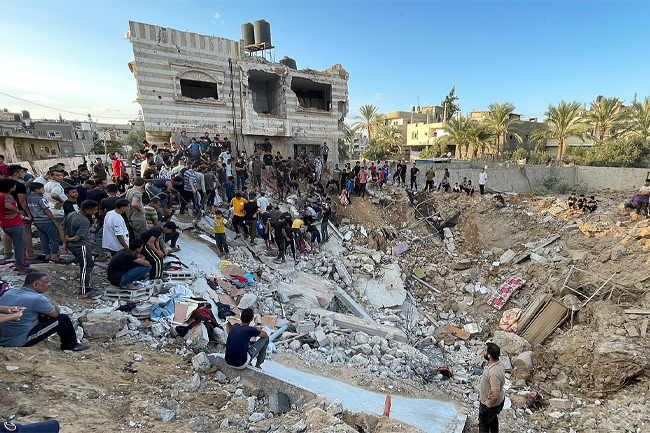
In a wave of terrifying rage, Israel decided to unleash its genocidal wrath on the entire Gazan population. The impunity with which this was done shocked even those well-versed in Israel's violence. Israel Defence Forces (IDF) soldiers filmed themselves committing war crimes and shared it with the world, senior government officials openly declared their genocidal intentions to the Western media.
And most famously, Israeli Prime Minister Benjamin Netanyahu called for a religious war: “You must remember what Amalek has done to you, says our Holy Bible. And we do remember.”
In doing so, has Israel destroyed any hope for its long-term settler colonial project? Has it unleashed the very conditions that will lead to the end of its settler colonial project?
If we examine the circumstances under which settler colonial states fail, we can identify some of the precursors to their failure. For example, as Israelis flee the country in droves, finding the prospect of life in the diaspora a more appealing option, there will be a demographic shift in the numbers of settlers in proportion to Indigenous Palestinians.
When settlers are unable to maintain a sizeable majority over the Indigenous population, they are unable to move to the next phase of settler colonialism, the inclusion of the native within larger society, because the Indigenous population remains too sizeable a political threat to the ruling settlers.
Importantly, the most capable and educated Israelis are the ones who are leaving, creating a brain drain that could have an impact on the ongoing viability of the nation. Only the most zealous, radicalised Zionists are moving to Israel at this time, a terrifying reality for Palestinians facing increasing settler violence in the West Bank, but perhaps bad news for Israel’s long-term interests.
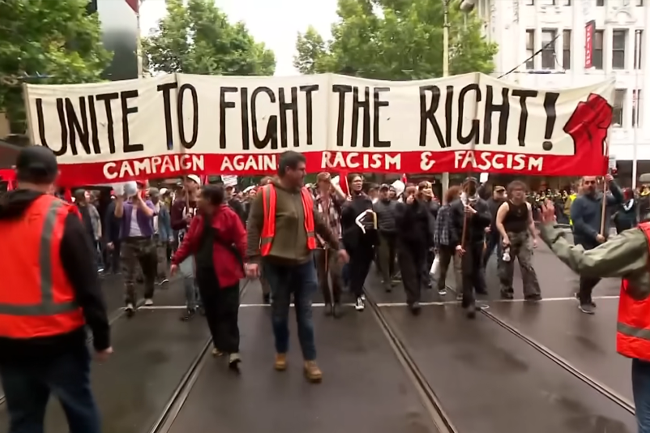
International pressure and sanctions are another set of precursors to failed settler colonial states. While it seems unlikely that Western nations and the Arab states will bow to the continuing pressure from their own citizens in the short term, there is a growing solidarity between activists in the global north and global south countries to apply pressure, both in terms of cultural boycotts like Eurovision, the use of international law, and economic pressure through the Boycott, Divestment and Sanctions (BDS) movement, something that contributed to the undoing of South Africas apartheid state.
Over time, Israelis will likely become pariahs as they move throughout the world, the stains of their live-streamed war crimes unable to be washed clean.

Sustained Indigenous resistance is another bad sign for settler colonial states and Palestinians have remained steadfast in their refusal to leave their lands. This refusal perhaps baffles many Israelis, but is the cornerstone of Palestinian identity and resistance. “I will remain steadfast on my land, until the last blood drop in my soul, until my last breath,” is a common refrain from those still living through such unimaginable acts of genocide.
Indigenous resistance can take many forms, from legal claims for accountability, international lobbying or boycotts, as well as armed resistance from those in the diaspora and those still living under illegal military occupation.
The protracted genocide in Gaza is already seeing unity within Israeli society beginning to fracture. Within the larger Jewish diaspora, increasing numbers of young Jewish people are waking up to the Zionist indoctrination they have been subjected to, with films like Israelism finding audiences in the Jewish diaspora around the world.
In New York City, home to the largest population of Jewish people outside of Israel, the city recently elected Mayor Zohran Mamdani, a Muslim man who has been steadfast in his criticism of Israel and his support for Palestine. Indeed, the tides of approval for the state of Israel are shifting significantly and the fracturing of Zionism seems to be underway.
While Israel has always relied on its significant military and surveillance technology advantage to dominate the Indigenous population, this is an expensive and, in the longer term, perhaps unsustainable way to maintain a settler state. Indeed, Israel’s economy is already struggling under the mounting costs of its destruction of Gaza, making it ever more reliant on U.S. aid. Since its inception, the US has spent hundreds of billions of dollars in aid for Israel.
The question is whether this generosity can be sustained over the longer term in a changing geopolitical landscape. America’s economy is in decline and Israel is becoming an increasingly costly enterprise as the international fallout from its live-streamed genocide begins to mount.
Settler colonialism is most stable when there is the facade of reconciliation; in this sense, the Oslo Accords were perhaps the high point of Israel's settler colonial project.
In Australia, we speak the language of reconciliation and recognition of Indigenous peoples to embed the stability of the settler colonial project. Having reduced the Indigenous population to a non-threatening demographic minority, we can comfortably incorporate Indigenous difference and work towards a normalisation of relations between settlers and Indigenous peoples to legitimise the settler colonial state.
But in Gaza, Israel shredded any possibility of a return to the idea of “peace talks” and a reconciliation between the settlers and the Indigenous population. In returning to the Nakba, only with vastly more deadly modern weaponry, Israel has perhaps destroyed the very possibility of its existence as an enduring settler colonial state.
Yuki Lindley is a student of philosophy of race, colonisation and Indigenous sovereignty.
 This work is licensed under a Creative Commons Attribution-NonCommercial-NoDerivs 3.0 Australia License
Support independent journalism Subscribe to IA.


Related Articles
- Australian super funds quietly fuelling Israel’s war machine
- Israel expands attacks across Middle East amid muted Western response
- Israel loses ground in propaganda war as Gaza toll shocks global conscience
- How Israel’s allies hijacked U.S. democracy
- No bomb, no peace: Israel and Iran collide