The Budget's current settings indicate favourable conditions and an enviable economic outlook, writes Stephen Koukoulas.
BUDGETS are about policy choices.
Labor’s fourth budget has chosen to deliver a macroeconomic framework that sets Australia up for a near textbook economic future.
Economic growth is recovering with annual GDP growth on track to return to 2.75%. This rate of growth delivers solid ongoing and sustained job creation to the point where the unemployment rate holds at a very favourable 4.25%, a level that is considered to be consistent with full employment.
At the same time, the 2025-26 Federal Budget sets out a continuation of this recovery in wage growth with annual increases of 3.25% expected over the next three years. This is an optimal level of wage increases for both workers and employers, and as noted in the Budget Papers, is consistent with the maintenance of full employment. Wages growth at this level is critical when it comes to improving real wages, given that inflation is set to be locked in at 2.5%.
In other words, the scenario is for an improvement in living standards, reversing the near decade of falling real wages and the slump in per capita economic output.
These are the big-picture issues that policymakers aim for and here we are! They are being delivered under Labor's current budget settings.
As is always the case, there are areas in the economy and distributional issues that are always on the reform agenda that were not addressed in this budget.
Tax policy relating to the treatment of housing, superannuation, incomes and companies are fruitful areas of discussion and ideas for reform. But as we have seen with proposed changes to negative gearing, capital gains tax concessions and franking credits have been unambiguously rejected by voters when they have been faced with the choice of reform in these areas. This is even though such reforms are economically sound and fair.
At the same time, the level of JobSeeker payments, pensions, social housing, funding for aged and health care, roads, education and training – to name a few critical areas – can always be enhanced. This Budget saw progress in these areas but more can be done.
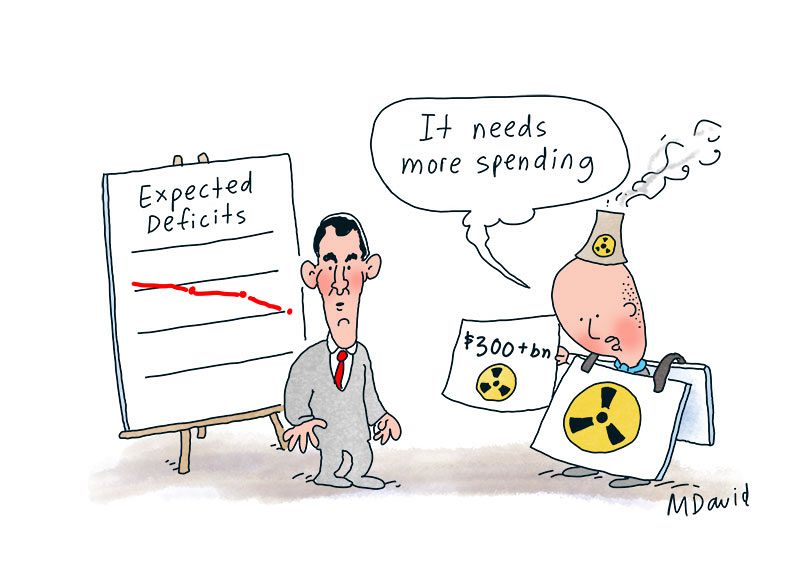
This issue for governments when considering additional funding in such critical areas is the constraint of the budget bottom line. In other words, medium-term efforts to balance the budget often limit what the government can do, which is an important part of macroeconomic management.
It is also important to note that budgets and policy decisions have a cumulative effect — a softly-softly approach to implementing important policy changes.
Take the Albanese Government’s income tax cuts in this budget.
While they total "just" $10 a week when fully implemented over the next two years, they are building on the tax cuts delivered in the last budget — meaning that the total reduction in income taxes for low-income earners will be a very meaningful $50 a week, when context is given the cumulative effect of the changes.
So, too, with education and skills training. These measures are extended and expanded over time and by necessity are amended to allow changes in labour market factors.
In terms of how budgets are put together, the government is always presented with a smorgasbord of issues to consider as it frames economic policy and the budget. This happens day in and day out and there is a proverbial filing cabinet full of "good ideas" for the next budget.
The task for government as it frames budgets is to include the best ideas, within the constraints of finance and the budget bottom line — the size of the surplus or deficit in other words.
This week’s 2025/26 Budget has delivered that.
While there are always issues with budget priorities, the current settings are consistent with favourable economic conditions, whilst having budget deficits at a moderate 1 to 1.5% of GDP over the period of the forward estimates and with net government debt at a low 20 to 25% of GDP.
If these macroeconomic indicators can be sustained over the long run, Australia will be in a very good place.
Stephen Koukoulas is an IA columnist and one of Australia’s leading economic visionaries, past chief economist of Citibank and senior economic advisor to the Prime Minister.