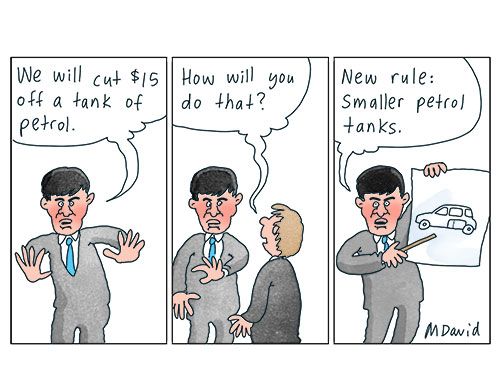
The Reserve Bank could kill talk of recession stone dead if it wanted to, writes Stephen Koukoulas. The fact it isn't is a serious concern.
RECESSIONS are bad news.
For the vast bulk of economists, they are an economic hammer-blow that makes tens of thousands of businesses fail and close, hundreds of thousands of people lose their jobs, it spreads uncertainty and human misery across the nation.
Good economists know that recessions should be avoided at all costs.
It seems like an obvious thing to say, but it is a sad reflection of many in the economics profession that some are actual advocates for a recession in the current climate of booming global oil prices and a slightly uncomfortable up tick in inflation.
The lessons from past recessions that were avoided
The lessons from past recessions in the 1980s and early 1990s have shown up in the past two decades, in a broadly bipartisan approach to economic policy when recessions looked inevitable.
In the Global Financial Crisis from 2008 to 2010, when almost all industrial countries sank into a recession, Australia managed to avoid one. This was done via huge cuts in interest rates, a raft of financial support measures for the banking system and some fiscal policy stimulus from the government, largely directed to the household sector.
While a recession was not avoided with the COVID pandemic in 2020-2022, similarly, aggressive easing in interest rates, liquidity and financial support for banks and businesses, plus an array of fiscal policy measures, ensured the economic downturn was short-lived and the rise in the unemployment rate was well contained. It was a short, sharp recession.
The policy approaches in both these episodes were well-directed and successful, and continue to provide a template for the next time the economy looks like heading towards a recession.
Where are we now?
Talk of recession in Australia is building.
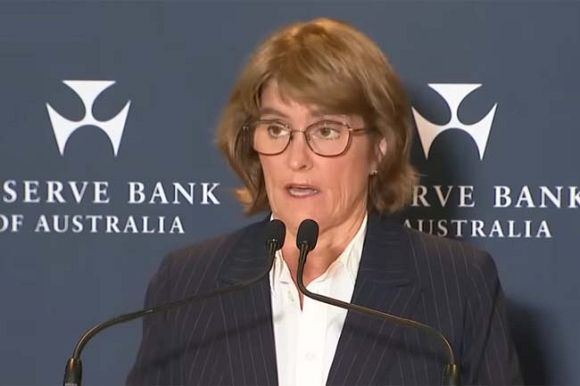
The fact that recessions are being spoken of now by credible economists in the wake of the global oil shock and the currently oppressive interest rate settings from the Reserve Bank of Australia suggests a lot is going wrong in the economy.
Signs pointing to a growing probability of recession in Australia, while still fuzzy and somewhat limited, are starting to emerge.
After the economy ended 2025 on a positive note, with annual GDP growth at a healthy 2.6 per cent, the unemployment rate edging lower and indicators like the stock market hitting record highs in February 2026, there are now concerning signals in the Australian economy.
While the bulk of data is yet to reflect any impact of the petrol price shock and earlier aggressive interest rate hikes, consumer confidence and some housing data relating to auction clearance rates are dismal. House prices in the two biggest cities, Sydney and Melbourne, are falling. The stock market is volatile, but in recent weeks has been generally moving downward.
The latest Roy Morgan ANZ measure of consumer confidence, which includes the impact of the petrol price shock, crashed to a 53-year low last week.
For those worried about the path of the economy, this is a staggeringly horrendous result.
Compared to now, Australian consumers were more upbeat about the economy during the worst point of the early 1980s recession, the Asian economic crisis in the late 1990s, the tech wreck and heightened terrorism activity in the early 2000s, the Global Financial Crisis of 2008-2010 and even at the most pessimistic point of the pandemic.
To reiterate — this current level of consumer confidence is extraordinary.
This matters because when consumers are pessimistic, undeniably worried about their finances, their jobs, their superannuation and other investments, they have a strong inclination to severely curtail their spending.
These are the seeds for a recession.
What can be done?
Recessions are, in the end, a choice for policymakers.
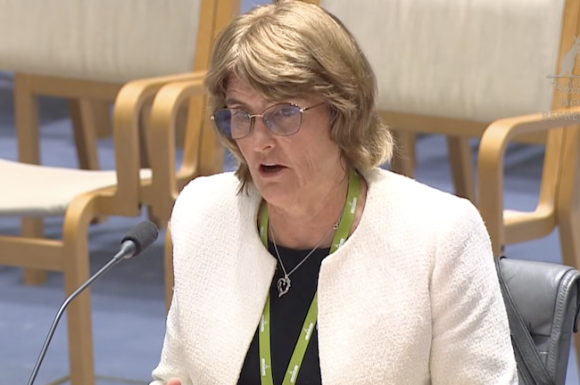
Talk of a recession could be killed stone dead by the RBA if it wanted.
While it is clearly worried about inflation, the RBA can provide support for the economy if it chooses to cut interest rates — plain and simple. Much as it did during the GFC and COVID.
It can flirt with recession and drive the economy into the ditch if it keeps monetary policy tight or, worse still, further tightens monetary policy with yet more interest rate increases.
A recession in 2026 and into 2027 is very much at the beck and call of the RBA and its interest rate settings.
To be sure, this would mean inflation running higher for longer, but ultimately the choice evolving for policy makers now is whether to add a few hundred thousand people to the ranks of the unemployed via a heightening risk of recession or to note a temporary period of inflation above target.
It is as simple as that.
Stephen Koukoulas is a past chief economist of Citibank and senior economic advisor to an Australian Prime Minister. You can follow Stephen on Twitter/X @TheKouk.
 This work is licensed under a Creative Commons Attribution-NonCommercial-NoDerivs 3.0 Australia License
Support independent journalism Subscribe to IA.