The latest interest rate hike is a sign of the Reserve Bank's overreach, writes Stephen Koukoulas.
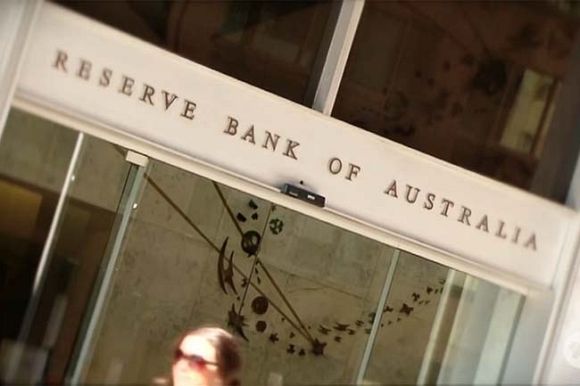
HIKING INTEREST rates to 4.10% at its latest meeting is a dangerous ploy.
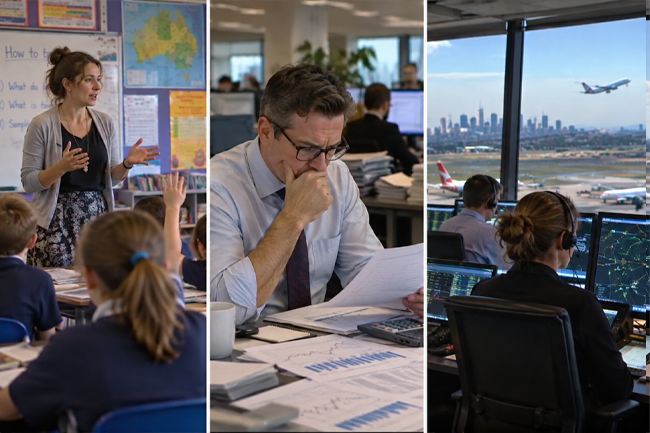
This is because there is clear and unambiguous evidence that consumer sentiment is collapsing, business sentiment is turning negative, workforce participation is dropping, new dwelling construction is stalling and is running at only a moderate level, wage growth is subdued and geopolitical ructions are presenting a sharp downside risk to the global economy.
Treasurer Jim Chalmers has also indicated that the Budget on 12 May will see a fiscal tightening, which will further dampen the economy over the next year or two.
Over the last 14 years, it has been rare for Australia to have interest rates this high.
Indeed, in that timeframe, it was only in the short 13-month period from November 2023 to December 2024 that the official cash rate has been higher and this was when the RBA was tackling inflation near 8%, the unemployment rate was 3.5% and the global economy was picking up a head of steam following the COVID pandemic.
In announcing the rate hike, RBA Governor Michele Bullock emphasised the inflation rate as being too high and being likely to remain too high unless remedial policy action was taken.
Hence the interest rate rise.
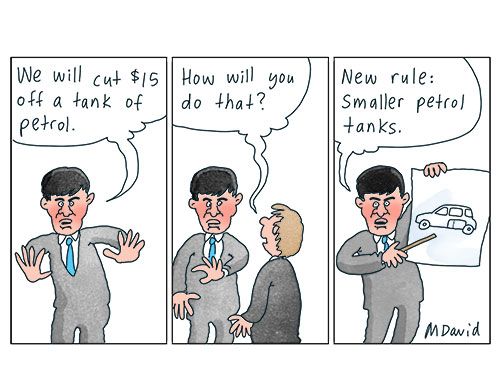
To be sure, inflation is above target and the higher petrol price will mechanically feed into a higher consumer price index and, for now, a higher rate of inflation.
But that risks downplaying the contractionary effects of higher petrol prices.
There was a time when a significant rise in petrol prices was seen as "a tax on economic growth". In other words, high petrol prices were as effective as an interest rate or tax hike in reducing overall demand and, with a lag, inflation in all areas not impacted by rising oil prices. This is because demand or the usage of petrol is inelastic — that is, people have to buy it and pay whatever the price is, with a limited short-term ability to alter their transport options.
This is true now. For a householder, that extra $40 or so for a tank of petrol means $40 less for spending elsewhere. Treasury estimates that GDP growth could be reduced by up to 0.6% with high oil prices for a prolonged period.
For the 30% of the population with a mortgage, the 50 basis points of interest rate hikes in the last eight weeks will only compound that cash flow squeeze. Weaker growth in household spending is all but certain through 2026.
The starting point of where the economy is currently placed is vitally relevant in this discourse on the effects of the interest rate hikes.
Economic growth has only just picked up through 2025, a welcome five minutes of economic sunshine that had, surprisingly, kept unemployment reasonably low.
That said, the labour market was showing signs of fatigue before the interest-rate/oil-price double whammy.
Employment growth has slowed, the workforce participation rate has fallen, meanwhile the employment to population ratio has fallen even more. The unemployment rate has been tracking around 4.25% in recent months, up from around 3.5% at the low point in the cycle.
As a sign of the softness in the labour market, it is worth noting that if the participation rate were unchanged rather than falling over the past year, the current unemployment rate would be just below 5%, not 4.3%. This is because a large number of people have dropped out of the labour market rather than joining the ranks of the unemployed.
What if the RBA is wrong?
Thankfully, the path for the RBA is not all bad.

If, as is increasingly likely, it finds economic growth stalling, the unemployment rising and inflation dropping quickly back to target, it can slash interest rates.
Indeed, there is a strong smell of 2007 and 2008 about the current RBA action.
Back then, it was hiking with gay abandon, with 100 basis points of hikes between August 2007 and March 2008, as the global financial crisis was unfolding. But with the global economy dropping in the wake of the financial debacle, between September 2008 and April 2009, it cut interest rates by a stunning 425 basis points.
This was a remarkable about-face, but it was necessary.
We could see a carbon copy of this sort of scenario over the next year or two if growth weakens too much and, dare we say it, a recession looms.
In the meantime, hunker down and get ready for a sharp slowing in the economy.
Stephen Koukoulas is one of Australia’s most respected economists, a past chief economist of Citibank and senior economic advisor to an Australian Prime Minister. You can follow Stephen on Twitter/X @TheKouk.
 This work is licensed under a Creative Commons Attribution-NonCommercial-NoDerivs 3.0 Australia License
Support independent journalism Subscribe to IA.


Related Articles
- RBA interest rate cuts are needed
- Interest rate cuts could quietly rescue the Federal Budget
- The RBA says one thing, its pictures and graphs say another
- CARTOONS: Mark David takes a hike
- CARTOONS: Interest rate rises — it's just not cricket