Australia should measure security by the crises it prevents, not the wars for which it prepares, writes David Higginbottom.
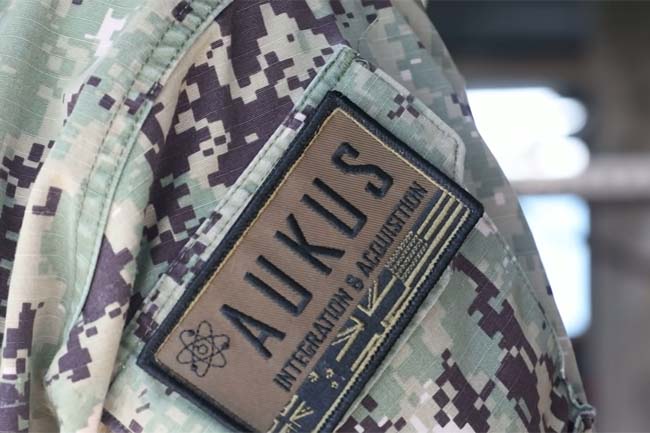
THE ARGUMENT about AUKUS is framed as though Australians must choose between being well armed and being naïve about the world. Why do we accept this dichotomy?
Whilst Australia needs the capacity to defend itself, it also needs a security policy that asks a more basic question: What would make conflict less likely, communities more able to survive disruption and people less likely to be driven from their homes in the first place?
This matters because refugees are not a threat to be used in an “invasion” metaphor. They are people living with the failure of security. A person who crosses a border after a war, persecution, drought, crop failure, or the destruction of a water system is evidence that prevention failed somewhere earlier. A humane country must offer protection.
A serious country must also ask what policies reduce the pressures that make displacement, humanitarian crisis and regional instability more likely.
The United Nations High Commissioner for Refugees (UNHCR)’s current assessment of climate, conflict and forced displacement provides the necessary caution.
Conflict remains a primary driver of displacement. Climate change is not a simple explanation for every war, nor does it mechanically produce refugees. It aggravates existing vulnerabilities: homes are destroyed, livelihoods collapse, essential services are strained and communities already affected by violence have less capacity to recover.
UNHCR estimates that more than 120 million people are now forcibly displaced and calls for climate-smart, conflict-sensitive and peace-responsive action.
That is a security problem in the fullest sense. It belongs alongside the protection of territory, but it is not solved by the protection of territory alone. If climate hazards, food and water stress, economic shocks and political exclusion make a crisis harder to contain, then emissions reduction, climate adaptation, conflict prevention, humanitarian capability and respectful regional partnership are not charitable extras — they are preventive forms of defence.
The Pacific has been saying this for years. The Pacific Islands Forum’s 2050 Strategy describes a regional future of peace, security, inclusion and prosperity, while placing climate resilience, cooperation and the wellbeing of Pacific peoples at its centre. Its members understand that the region cannot be made safer simply by becoming a forward map for great-power competition. Australia will be a better neighbour and a more secure country when it treats Pacific priorities as security priorities in their own right.
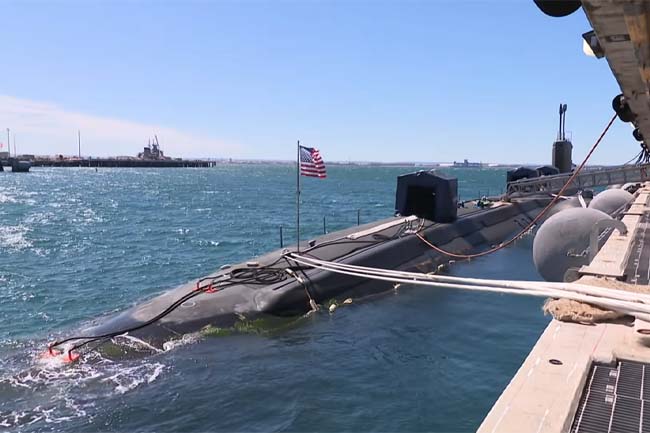
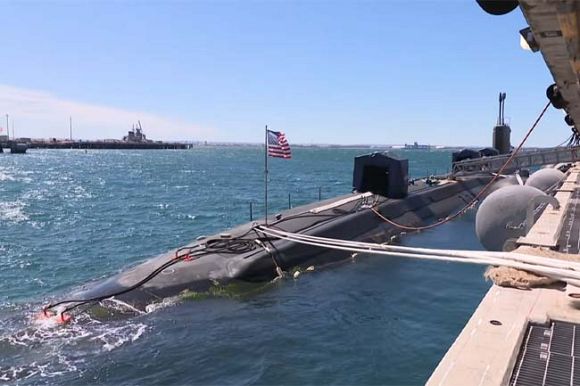
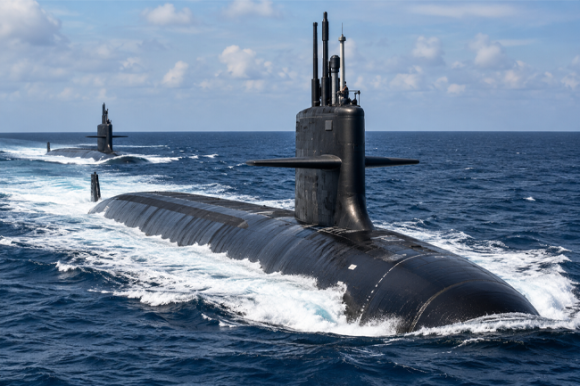
This is not a call for unilateral disarmament and it does not require pretending that coercion and aggression have disappeared. Military capability has a role in deterring and responding to particular threats. A nuclear-powered submarine may be valuable in a high-end maritime conflict, where long range, endurance and stealth matter. But the question for a mature public debate is not whether such a capability can have a role. It is whether we allow that role to become the definition of security.
The costs of such a narrow definition are visible even before anyone fires a shot near Australia. Recent disruptions to fuel, shipping and fertiliser have shown how quickly conflict affects freight, food, farmers, small businesses and household budgets.
A country that can send an advanced military platform far from its shores but cannot keep energy, communications, transport and essential inputs functioning under stress has not solved its security problem. It has simply defined the problem in a way that suits a particular institution or procurement plan.
This is where the defence-industry argument needs more honesty. Defence work can provide skilled jobs, technical capability and regional economic activity. They also divert scarce resources from other projects — they don’t create any new resources; they poach them from other projects.
Large, opaque and long-term programs also create powerful constituencies among contractors, consultancies, universities, agencies and political leaders. Those institutions can have a legitimate interest in the work. But their interests do not automatically establish the public interest.
That is why every major security decision needs a transparent prevention and resilience statement. Before government commits the next tranche of money, it should state what danger is reduced, whether the commitment itself creates tensions and whether other civilian measures could address the same or related danger.
Parliament should be able to see whether fuel security, critical infrastructure, disaster preparation, climate adaptation, food resilience and regional diplomacy are being protected alongside the military budget, not left to compete for scraps afterwards.
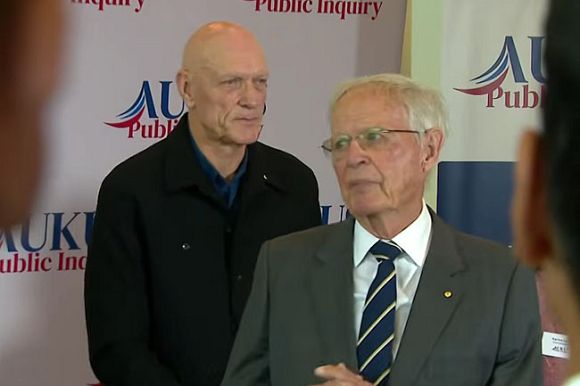
On 4 November at the National Press Club, and broadcast live by the ABC, the Independent AUKUS Public Inquiry will release its report. This presents an opportunity to apply that test.
The Inquiry itself is not a parliamentary inquiry and it cannot substitute for democratic decision-making, yet its questions are exactly the questions government and Parliament should answer:
- what is Australia buying;
- what risks follow;
- what alternatives were considered;
- who controls the capability; and
- what public purpose does it serve?
The response should be more than a defence of “sunk” costs or a recital of strategic slogans
Make Peace a Priority has proposed a practical institutional beginning. The Minister for International Development should also be responsible for peacebuilding. The conflict-prevention, humanitarian and international-security functions that now sit in different parts of government should be coordinated under one senior official.
Australia’s work with the United Nations Peacebuilding Commission, and its capacity for diplomacy, regional dialogue and early prevention, should be properly resourced. These are modest organisational reforms, but they would put peacebuilding where it belongs: inside the machinery of national security rather than at the edge of it.
The Make Peace a Priority programme does not ask the Australian Defence Force to become a development agency or ask diplomacy to carry the burden of territorial defence. It asks each arm of government to do the work it is best placed to do before a crisis reaches the point at which military force is the only remaining option.
Defence can deter and protect. Diplomacy can build relationships and de-escalate. Development and climate policy can reduce destabilising hardship. Humanitarian institutions can protect people when prevention fails. Parliament can require candour about the trade-offs.
Wars do not end when the firing stops
There is a moral reason for this approach, but there is also a hard-headed one. Wars do not end when the firing stops. They leave destroyed services, debt, displaced families, damaged land, interrupted education and grievances that can fuel another conflict.
The money spent after a collapse is often far greater than the money needed to reduce risk before it. That does not mean prevention always succeeds. It means governments should stop treating failure as the only serious policy and prevention as a sentimental afterthought.
Australia’s security should be measured by whether ordinary people can remain safe and able to live their lives: whether homes withstand hazards, food and fuel keep moving, hospitals and water systems work, communities can recover, neighbours trust us and people are not forced to flee because politics found it easier to prepare for war than to prevent one.
That is not softness. It is the purpose of defence.
David Higginbottom is a member of the coordinating committee of the Independent and Peaceful Australia Network (IPAN) and coordinator of the Make Peace A Priority campaign (mpap.au).
 This work is licensed under a Creative Commons Attribution-NonCommercial-NoDerivs 3.0 Australia License
Support independent journalism Subscribe to IA.


Related Articles
- AUKUS and the dangerous illusion of national security
- Public executions, AUKUS and the right of Australian communities to say no
- AUKUS Inquiry exposes the great submarine deception
- AUKUS public inquiry asks what Parliament won’t
- AUKUS serves America at Australia’s expense