A proposed U.S. public execution raises questions about AUKUS and Australian communities’ right to refuse military engagement, writes Carl Gopalkrishnan.
Withdrawing social consent without withdrawing civility
The proposed public broadcast of an American military execution raises serious questions about human dignity and the responsibilities of military leadership.
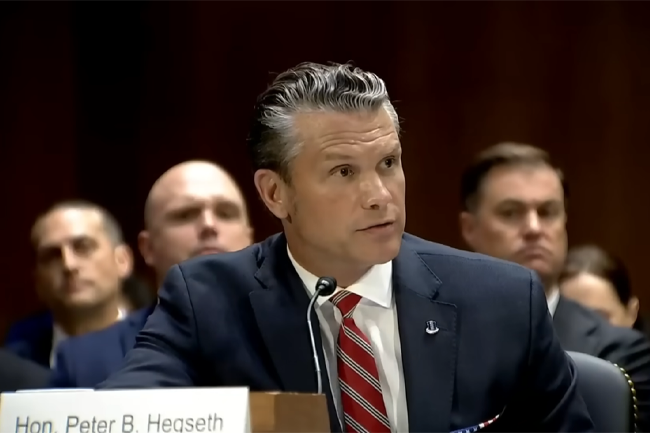
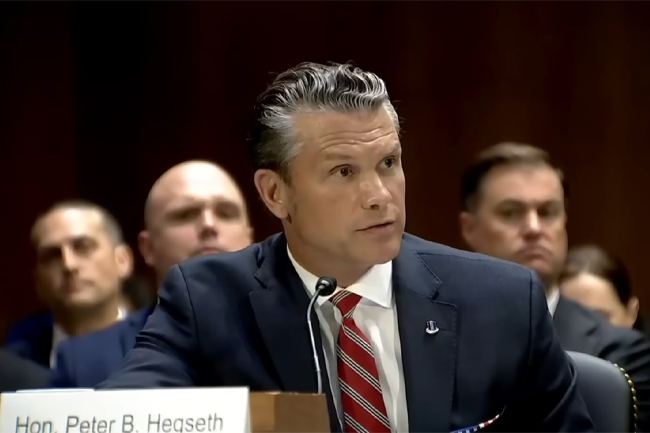
Public executions as spectacles have long attracted international condemnation, including from human rights organisations and the United Nations. U.S. Defence Secretary Pete Hegseth’s proposal to livestream the execution of Nidal Malik Hasan on 3 December brings these concerns directly into Australia’s relationship with the United States.
The Australian Government should make its objections clear. But if the execution proceeds, verbal disagreement alone will not be enough. As American military activities expand in Australia under AUKUS, particularly in Western Australia, we must also consider how Australian communities respond through their own civic institutions.
For me, this is a deeply difficult question. As a person of faith, I believe in treating others with dignity, including those whose governments or institutions act in ways I cannot support. My faith also informs my civic values, but it does not require me to set them aside.
American military personnel and their families coming to Australia deserve to be welcomed as neighbours. Their families should feel safe and included in our schools and communities. They are not personally responsible for the decisions of their military leadership. But welcoming people does not require us to endorse the institutions they serve.

The right to say “no”
Having worked with community organisations for decades, I know how essential they are to managing public perceptions of consent and support for government policies. I also know how difficult it can be to decline requests when organisations depend on government grants and support. We can all believe in sincere engagement and cooperation while refusing cooperation forced on us by the threat of funding cuts.
This becomes particularly important as U.S. military public relations and community engagement activities grow alongside AUKUS. Community organisations, schools and cultural groups may receive requests for visits, photographs, interviews and promotional partnerships.
These activities can encourage friendship and understanding. But they can also be used to suggest wider community acceptance of a military presence. We must distinguish between the two. No organisation should feel obliged to provide publicity or institutional endorsement because it fears losing government support. And no individual organisation should have to defend that independence alone.
Much of my professional work has involved drafting and recommending policies and guidelines that help governments, community organisations, sectors and industries work together. I know the value of clear, practical guidance, particularly when organisations face unequal relationships of power and resources.
That is why I have drafted the following guidelines and am sharing them through Independent Australia, a publication I know is read by many people working across our communities.
I offer these guidelines as a starting point for not-for-profit organisations, community services, educators and faith groups to ask difficult questions, discuss their responsibilities, or adopt them in their current form. Their purpose is not to discourage engagement with American families, but to protect the conditions under which genuine engagement can take place.
The right to say no protects the sincerity of saying yes.
Proposed Community Guidelines for Engagement with U.S. Military Representatives under AUKUS
For discussion and voluntary adoption by Australian community organisations, schools and community networks
These guidelines support sincere engagement between Australian communities and American military personnel and their families. They recognise the importance of friendship, hospitality and mutual respect.
They also protect the right of Australian organisations, parents and community members to make informed decisions about participation in military public relations activities.
1. Exercise your right to say “no”
Accept or decline invitations, meetings, partnerships, publicity requests and official military visits according to your organisation’s own values and responsibilities. You do not need to oppose the United States or AUKUS to decline an activity. Your organisation’s independence is reason enough.
2. Ask who is making the request
Request the name, position, organisation and purpose of anyone seeking engagement on behalf of the U.S. military or associated agencies. Ask how the proposed activity will be recorded, publicised or reported and who will receive the information. Obtain written details before making a decision.
3. Tell members and parents what they are agreeing to
Inform members, parents and guardians when an event, school visit or community activity involves U.S. military representatives acting in an official capacity. Explain whether the activity includes photography, filming, interviews, media coverage or military public relations. Do not assume that attending a school or community event means consenting to military publicity.
4. Obtain specific permission before using photographs or recordings
Seek informed permission from each identifiable adult before allowing their image, words or participation to appear in military publicity.
For children, obtain appropriate parental or guardian consent and respect the child’s wishes. Tell parents where images or recordings may appear, including military websites, social media, recruitment materials and overseas publications. Make clear that a school or community organisation’s agreement does not replace individual consent.
This is especially important where children or families from minority communities may be presented as evidence of broader community support for a military presence they have never been asked to endorse.
5. Protect community information
Keep membership lists, contact details, demographic information and internal community discussions confidential unless you have a lawful basis and appropriate consent to disclose them. Ask why information is requested, who will use it and whether it will be shared with other agencies or contractors.
6. Separate hospitality from endorsement
Welcome American personnel and their families as neighbours without allowing ordinary community activities to be represented as support for U.S. military policies or AUKUS. Correct any public statement or promotional material that inaccurately suggests your organisation or its members have endorsed a military position.
7. Protect your organisation from funding pressure
Record any suggestion that declining military engagement or publicity could affect grants, services, government relationships or future funding. Ask for any funding-related condition or concern in writing. Seek independent advice before responding to a threat or changing your organisation’s position.
8. Report coercion or improper political pressure
Document any inappropriate pressure from ministers, MPs, government departments, funding bodies or public agencies. Report concerns to the appropriate state ombudsman, parliamentary standards body, integrity commission or other authority with jurisdiction. Share concerns with your peak community organisation where appropriate, while protecting confidential information.
9. Adopt these guidelines across community networks
Discuss the guidelines with your board, members, partner organisations, schools and community networks. Encourage organisations to adopt a common position so that smaller, funding-dependent groups do not face institutional pressure alone. Collective adoption gives organisations greater confidence to exercise their independence.
10. Review and explain your decisions
Keep a record of institutional requests, approvals, refusals and publicity permissions. Explain significant decisions to members and provide a way for them to raise concerns. Do not claim to represent the views of an entire community without consulting the people concerned.
Our shared principle
Welcome people. Protect their dignity. Encourage friendship and cooperation, but make institutional engagement a matter of informed, freely given consent.
The right to say “no” protects the sincerity of saying “yes”.
Carl Gopalkrishnan is an Australian artist and policy practitioner with long-standing experience in multicultural policy, social cohesion and community engagement.
 This work is licensed under a Creative Commons Attribution-NonCommercial-NoDerivs 3.0 Australia License
Support independent journalism Subscribe to IA.


Related Articles
- AUKUS Inquiry exposes the great submarine deception
- AUKUS public inquiry asks what Parliament won’t
- AUKUS serves America at Australia’s expense
- AUKUS — controversial, secretive but given a bipartisan blank cheque
- AUKUS offers Australia a nuclear solution to climate change