Political failures, misinformation and poor leadership have fuelled anti-immigration sentiment and eroded public trust, writes Dr Abul Rizvi.
FOR DECADES, successive Australian politicians have declared we are the most successful multicultural nation on the planet.
Since 1991, they have credited immigration with keeping us out of recession for the longest period since the war.
But politicians don’t seem to say that anymore. They and many parts of the media are now much more likely to link immigration with all sorts of ills in our society and in our economy. That includes the rising cost of living; low levels of productivity; the housing crisis; and crime rates.
Now don’t get me wrong, there are many problems with the way the current visa system is being managed. But much of the finger-pointing at immigration is too often done with limited analysis or evidence.
As a guy with black skin and a Muslim name who has lived in Australia for over 60 years and worked for a large part of his career in the Immigration Department, I worry about that.

The polls say that Pauline Hanson and One Nation are now more trusted on managing immigration than either Labor or the Coalition. That is not because One Nation has put forward a cogent immigration plan – they haven’t – but because both Labor and the Coalition are viewed as having failed on immigration and multicultural policy.
Anti-immigration sentiment in Australia is not new, however.
I have watched many instances in Australia’s history when there was an increase in anti-immigrant sentiment. The Whitlam Labor Opposition promised to cut immigration after it had hit record levels under Holt, Gorton and McMahon. It was a time when Australians started seeing more people like me migrating and, entirely coincidentally, the economy starting to deteriorate.
We had a rise in anti-immigrant sentiment when we saw Indo-Chinese boats coming to Australia in the mid-1970s. That was around the same time we were facing a deep economic recession and Net Overseas Migration (NOM) fell sharply.
There was also a rise in anti-immigrant sentiment around the time of the 1982 recession and the 1991 recession. At those times, the government again acted to reduce immigration.
After the Labor Government gave permanent residence to over 40,000 Chinese students in the mid-1990s (post-Tiananmen Square), we saw the first emergence of Pauline Hanson. The Howard Government cut immigration soon afterwards.
The surge in boat arrivals in the late 1990s and then the Tampa incident was another time when anti-immigration sentiment increased.
After the Global Financial Crisis and despite Kevin Rudd declaring he believed in a big Australia, the Labor Government cut NOM significantly but allowed a major increase in boat arrivals. That, too, led to an increase in anti-immigration sentiment.
Rudd Mark 2 re-introduced offshore processing, which slowed boat arrivals significantly. But that was not enough to win Labor the election.
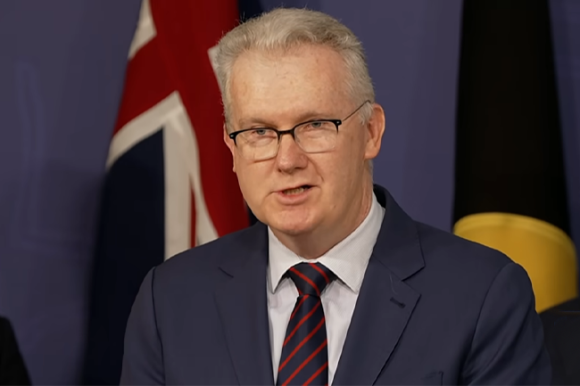
Tony Abbott came to power promising to “stop the boats” even though they had largely been stopped by Rudd Mk 2. NOM fell during the Abbott Government largely due to a rise in unemployment. In recent years, Abbott tried to take credit for that fall in NOM until he realised it was due to a surge in Australian citizen departures and a fall in New Zealand citizen arrivals.
In 2015, the Immigration Department was incorporated into the national security and law enforcement-focused Home Affairs portfolio. That was designed to make us more suspicious of migrants; to fear migrants. But even that did not raise anti-immigration sentiment to current levels.
NOM again fell sharply at the start of COVID when PM Morrison told temporary entrants to go home because of rapidly rising unemployment and because he was not going to give them access to JobKeeper.
Towards the end of COVID, Morrison reversed his messaging and encouraged temporary entrants who had remained in Australia to work in as many jobs as they could. He stomped on the immigration accelerator like no prime minister before him. NOM zoomed to over 500,000 in 2022-23. Bizarrely, the Coalition started blaming Labor for the NOM boom that it had triggered.
The Labor Government started making excuses for the NOM boom, including that it was just “catch-up” and everything would soon go back to normal. Another excuse was that the Government didn’t have a policy for managing NOM so it couldn’t be blamed. No explanation was given as to whose job it was to manage NOM.
Those excuses didn’t work and the Prime Minister has, in 2026, at last promised that the Treasury NOM forecasts will be delivered. They will now be treated as targets — which is a good thing.
Unfortunately, that has now started a political auction on how low NOM targets can be set with little regard to the questions of why any particular target is the most sensible; or how it will be delivered; or the consequences of any particular target.
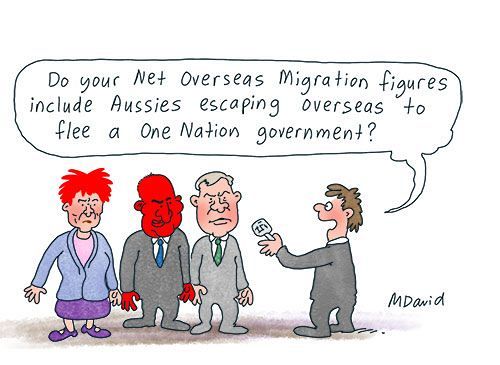
The lack of any intelligent debate on these targets is just astonishing. So what can we learn from this chequered history?
The first is that when Australians are finding life financially difficult, they are much more open to political messaging blaming immigration for those difficulties. In the past, that has been much more the case in countries in Europe and America where borders are more porous and the ability to target immigration in the way Australia has done for decades is less effective.
Today, working Australians are finding managing their budgets increasingly difficult. With interest rates and unemployment also now rising, they have become much more receptive to political messages that their problems are due to immigration.
But that cannot be the whole reason for the rise in anti-immigration sentiment. We have had many instances in the past when working Australians were finding life tough. As Malcolm Fraser once famously said in the early 1980s, “Life wasn’t meant to be easy”.
So why has anti-immigration sentiment increased to such a degree that a large portion of Australians think Pauline Hanson and One Nation would be best at managing immigration policy?
While a small portion of longstanding One Nation voters would support Hanson due to her core racist beliefs, I doubt the bulk of new One Nation supporters are racists.
I put it down to three factors additional to the cost of living.
First, Australians expect their government to be in control of the intake. They do believe in Howard’s famous statement that “we will decide who comes to this country and the circumstances in which they come”.
In 2022-23, the Federal Government clearly lost control of the intake when NOM was 300,000 over the Treasury forecast. But rather than assuring Australians it would act quickly to get the intake back under control, the Government persisted in making excuses, none of which were convincing. The actions it did take seemed haphazard and knee-jerk. There was nothing that suggested the Government had a long-term migration plan.
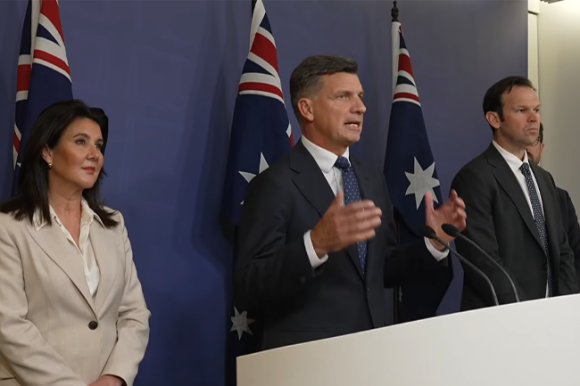
Second, the Government ceased proactively talking about the merits of its immigration policy. I cannot remember an immigration minister in at least the last decade talking about the merits of the Government’s immigration policy. While all ministers have a responsibility for explaining their policies, that is particularly important in the area of immigration from a social cohesion perspective.
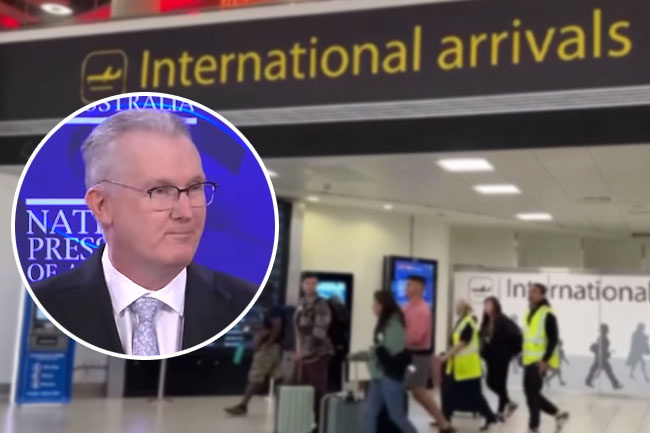
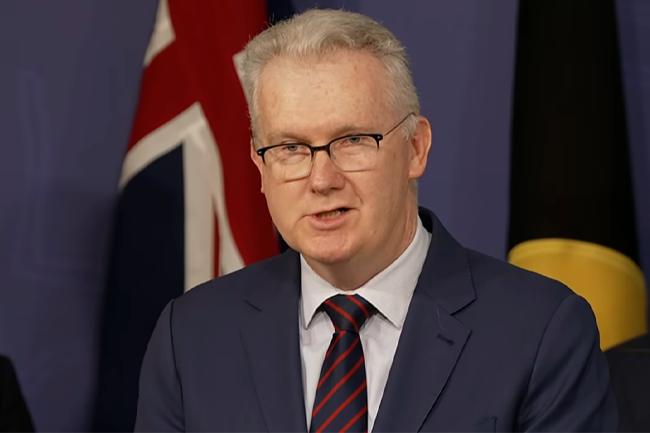
Home Affairs Minister Tony Burke’s recent speech to the National Press Club was long overdue. But in that speech, he did not explain the merits of his policies in terms of Australia’s long-term future. Australians are hungry for the Minister to explain to them why the Government’s immigration policies, policies that will determine the size and composition of Australia’s future population, are being conducted in the national interest.
Third, the Government has allowed all sorts of myth-making on immigration to be peddled without a response. While Burke corrected some of these in his recent speech, a once-off speech to the National Press Club is completely insufficient.
Now I am not suggesting the Minister has to respond to every bit of nonsense put out on social media. But when the Leader of the Liberal Party issues a press release such as in April 2026 asserting that, and I quote, ‘immigration levels are exploding’, you would think the immigration minister would respond loudly and frequently.
That press release was based on highly misleading data used by the Institute of Public Affairs (IPA) and repeated by many, many media outlets for well over a year.
But the Government let that press release and the rubbish put out by the IPA go through to the keeper. If the Government doesn’t correct the record on matters such as that, it is not surprising many in the public will think Pauline Hanson may well be more trusted on immigration policy.
The fact is, maintaining social cohesion is a central role of the Immigration Minister, if not the Prime Minister.
That requires a long-term migration plan, including delivery against well-explained NOM and permanent migration targets. It requires constant communication with the public on how immigration and settlement policy is being managed in the national interest. It also requires explanation by the Government of how its immigration and settlement policy is benefiting all Australians.
Former Immigration Minister Philip Ruddock used to conduct a series of town hall-style meetings for 2-3 months every year in every capital city and in many regional centres where he would explain his immigration policies. Anyone could attend and anyone could ask the Minister a question on his policies.
As there are now many other ways to conduct such meetings with today’s technology, there is no reason the Minister could not make himself available to the public in such a way.
Without that type of communication and engagement, the Government has no one to blame other than itself if a large number of Australians trust Pauline Hanson on immigration more than the Prime Minister and Minister Burke.
Dr Abul Rizvi is an Independent Australia columnist and former Deputy Secretary of the Department of Immigration. You can follow Abul on Twitter @RizviAbul or Bluesky @abulrizvi.bsky.social.
 This work is licensed under a Creative Commons Attribution-NonCommercial-NoDerivs 3.0 Australia License
Support independent journalism Subscribe to IA.


Related Articles
- Politicians ignore permanent migration program planning at their peril
- Migration numbers fall as political promises face reality
- Student visa crackdown puts international students and families in limbo
- NSW DAMA to test One Nation and the Coalition
- Coalition and One Nation migration plans built on false assumptions