Pauline Hanson’s proposal to abolish parent visas overlooks the economic contributions of migrant families and the substantial costs of implementing such a policy, writes Dr Abul Rizvi.
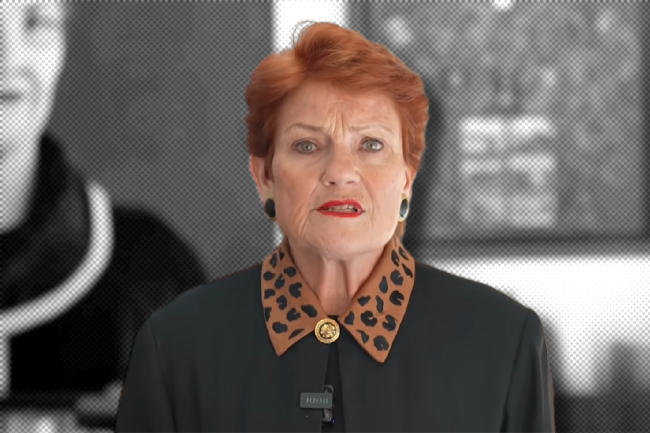
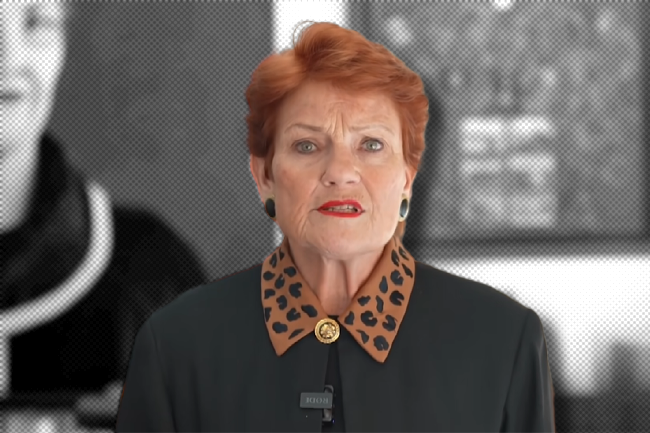
SENATOR Pauline Hanson’s One Nation has announced it would abolish parent visas, saving billions of dollars in health and aged care services. But is it that simple?
Hanson did not submit her policy for costing by the Parliamentary Budget Office (PBO) because:
“You can't do this modelling – humanitarian and parents – you can't do it.”
Hanson appears not to have asked the PBO if it could or couldn’t do this costing. She has simply made up this claim. There is no question the PBO is entirely capable of doing the costing. If she had the courage, she would submit her policy for PBO costing — something she hates to do.
Hanson then goes on to rely on earlier Treasury life-cycle modelling, which is also used by the PBO, to claim a massive budget saving from abolishing parent visas based on the life-time cost of parents and humanitarian entrants. It seems the contradiction went over her head.
It is also notable that Hanson makes no mention of the same Treasury modelling that identifies the significantly positive budget contribution of the much, much larger skill stream of the migration program. That is the people who sponsor their parents.
Current parent visa policy
There are four aspects of parent visas that need to be considered.
First, Australia’s approach to parent visas is significantly tighter than a comparable nation such as Canada. In its most recent planning announcement, Canada has allocated 15,000 places for parents. A figure it is highly likely to exceed given the way it manages parent visas.
Australia has allocated 7,000 places — a figure it will not exceed because of the way parent visas are managed in Australia.
Since the late 1980s, Australia has used a “Balance of Family” test to determine eligibility for a parent visa. For example, if a parent has three children, then two of those three children must be either Australian citizens or permanent residents for a parent visa applicant to be eligible.
Australia uses an “Assurance of Support” mechanism that covers income support payments during the first ten years a parent visa holder is in Australia — even if they take out citizenship.
Centrelink says to the Australian sponsor that under the Assurance of Support:
‘You are expected to provide support to your assurees so they will not rely on any Centrelink payments. You’ll need to pay us back if your assuree gets any recoverable income support payments while under the Assurance of Support period.’
This significantly reduces the short-term (first ten-year) costs of parent visas.
Parents do have access to Medicare, but it should be noted that they must first pass a stringent medical examination. If they have a significant health condition that would impose costs on the health system, their parent visa application would be refused.
Contributory parent visa applicants must pay a two-part visa application charge. The first part is $6,300 per person, which is paid at the time of application and the balance of $49,900 at the time of visa grant. So around $100,000 per couple.
The second aspect of parent visa policy that needs to be considered is the timeframe. Because of the above, most new parent visa holders would have a significantly positive budget impact over the first ten years. Some would work and pay taxes. Many would provide childcare to their grandchildren, thus enabling their adult children to work and pay taxes while taking pressure off the childcare system.
It is towards the end of life that parents impose high costs on the health and aged care system.
It would make sense for the PBO to be asked to analyse the above based on the most recent data on parent migrants released by the Australian Bureau of Statistics (ABS).
The third aspect of Hanson’s parent visa policy is the cost of implementation. There would be two major costs. The first instalment application fees would need to be refunded as part of any legislative change to abolish parent visas. As the current parent visa application backlog is over 161,000 and the first instalment charge is $6,300, the Government would need to repay around $1 billion soon after implementation of the policy.
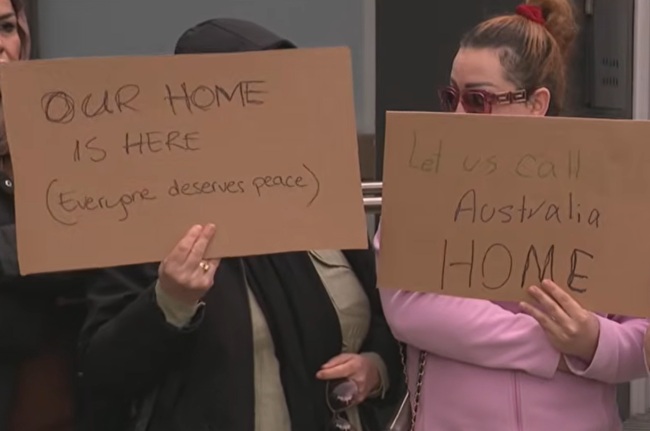
The second major cost would be enforcement of the policy for parent visa applicants who are onshore and on a bridging visa. Of the current 161,000 backlog, many tens of thousands would have been onshore for many years on a bridging visa. Taking tens of thousands of parents and grandparents from their children and grandchildren and putting them into detention ahead of removal from Australia may sound simple on paper, but it is nothing of the sort.
Hanson appears not to have considered the cost of enforcement. The PBO would be able to help her with that.
How should Government proceed?
The growing size of the parent visa backlog (it has grown from 140,615 at end June 2023 to 161,240 at end June 2026) makes it clear that the Government should act to tighten policy, but with a lot more nuance and deep consideration than Hanson’s ham-fisted approach.
To begin that process, it would make sense for the Government to seek an update on the short- and long-term economic and budget impact of parent visas from the Treasury. That should draw on the recently published ABS data on permanent migrants to Australia since 2000 and be made public.
The analysis should take into account the economic and budget contributions parent visa holders make in providing childcare and enabling greater participation in the labour market by their adult children.
In terms of actions going forward, it would make sense to close off the non-contributory parent visa to new applications. While there have been previous attempts to do that, those did not succeed due to a lack of support in the Senate. It would certainly make sense to again seek senate support to close off the non-contributory parent visa to new applications.
In terms of tightening policy on the contributory parent visa, there are several options the Government could consider.
One would be to tighten the Balance of Family test to make it a Majority of Family test. That would mean that a parent with two children would require both children to be Australian citizens or permanent residents before they would be eligible to sponsor their parents.
Another would be to index the visa fees (currently $100,000 per couple) back from the point they were last increased.
A further option would be to extend and broaden the Assurance of Support to perhaps 20 years and to extend it to include the costs of any Commonwealth subsidies for aged care.
But perhaps most importantly, the Government should consider these actions as part of a long-term migration plan. The lack of such a plan has left a vacuum that makes it much easier for Hanson to put forward ham-fisted proposals.
Dr Abul Rizvi is an Independent Australia columnist and former Deputy Secretary of the Department of Immigration. You can follow Abul on Twitter @RizviAbul or Bluesky @abulrizvi.bsky.social.
 This work is licensed under a Creative Commons Attribution-NonCommercial-NoDerivs 3.0 Australia License
Support independent journalism Subscribe to IA.


Related Articles
- CARTOONS: Pauline Hanson dishes it out but can't take it
- Hanson's plan will thwart Australia's potential
- One Nation's immigration plan: A dystopian future for Australia
- CARTOONS: Pauline's primitive penance
- Happy 30th Anniversary Pauline Hanson — thanks for nothing