As Labor’s Cabinet remains silent on the $368 billion AUKUS deal, questions mount over its enormous cost, lack of scrutiny and the political courage needed to demand a rethink, writes Paul Begley.
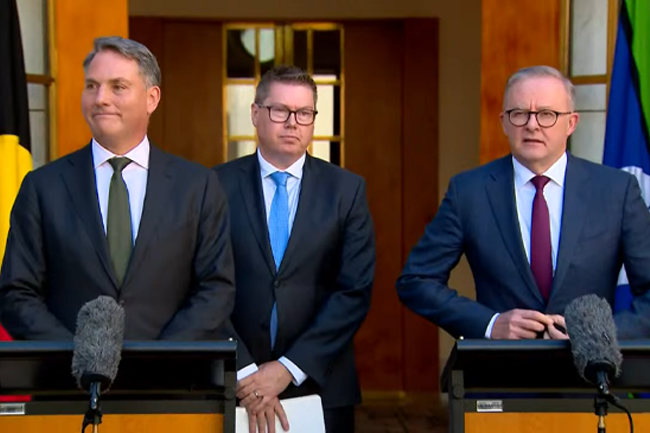
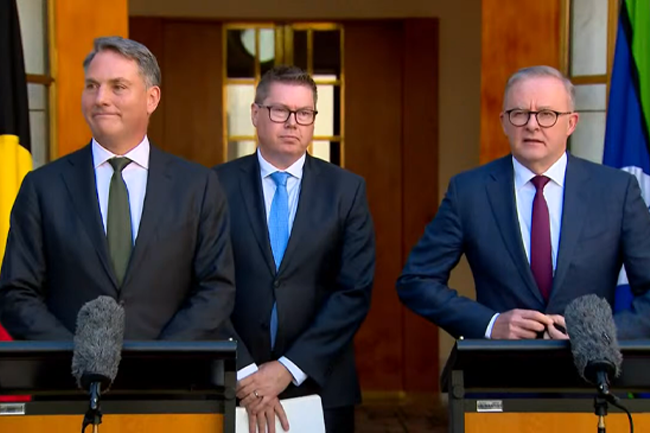
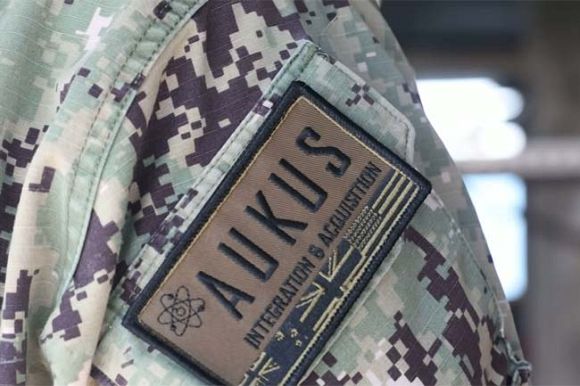
DESPITE THE COLOSSAL $368 billion cost of AUKUS impeding progressive policy initiatives in numerous ministerial portfolio areas, Australian voters have been asked to accept that Labor’s cabinet ministers have no misgivings about the policy.
When the “father of AUKUS”, Scott Morrison, announced the deal on 15 September 2021, he kept it secret from his cabinet, except for his defence and foreign affairs ministers.
Within 48 hours, eight months before an election, Opposition leader Anthony Albanese agreed to sign up to Morrison’s policy, leaving no time for meaningful consultation with his shadow front bench.
AUKUS was not on the ballot when Albanese took government, so there is no reason to conclude that he consulted on AUKUS with his cabinet before or after winning power in May 2022.
It is widely accepted that Albanese’s cabinet is tightly disciplined. Leaks don’t emerge and ministers tend to stick to issues related to their portfolio responsibilities rather than freelance. Ministers owe their jobs to the Prime Minister and are unlikely to take them for granted.
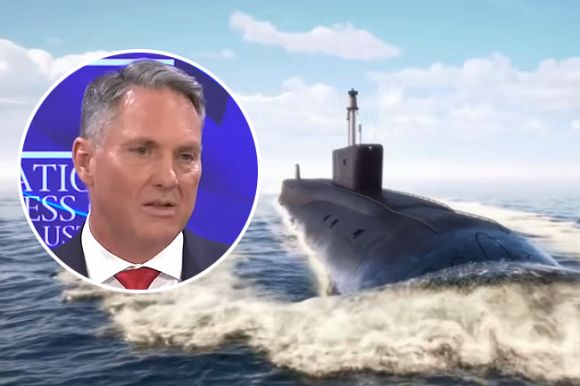
If there is any doubt about that, the sudden demise of two competent former ministers, Ed Husic and Mark Dreyfus, following the 2025 Election would give them pause, thanks to factional machinations orchestrated by Defence Minister Richard Marles.
For Marles, the AUKUS issue is disarmingly simple. We “share values” with the United States, so it follows that the alliance and AUKUS are good things. His trysts with U.S. war secretary Pete Hegseth to hand over $800 million AUKUS down payments must therefore be categorised as value for money.
In 20 years we will know what Albanese’s cabinet discussed about AUKUS, or didn’t discuss, because the cabinet papers will then be made publicly available for scrutiny by the National Archive.
On that matter, Graeme Dobell wrote an Inside Story article on the cabinet records released in 2023 about John Howard’s cabinet deliberations prior to entering the 2003 war in Iraq.
The records revealed that the PM framed the cabinet agenda items and Australia’s “self-invitation” to join the Iraq war in terms that foreclosed discussion about why Australia might do so.
The “why” perspective was framed as an unspoken assumption and discussions that could prompt ministers to question the assumption were verboten.
Discussion items were therefore restricted to matters relating to “how” Australia would conduct its participation in the Bush-led war, not “why”. And Howard's cabinet ministers let him get away with it.
Dobell put it this way:
‘Before the conflict, not a single submission went to cabinet making the case for or against war, and none assessing the strength of intelligence reports on Iraq’s alleged weapons of mass destruction, or WMD.’
Like his deputy Marles, Albanese lacks the intellectual and rhetorical capabilities to lead cabinet by argument and persuasion. That leaves him two options for exercising prime ministerial control. The first is ensuring that contentious policy questions do not come up for discussion. The second is fear; look at Husic and Dreyfus.
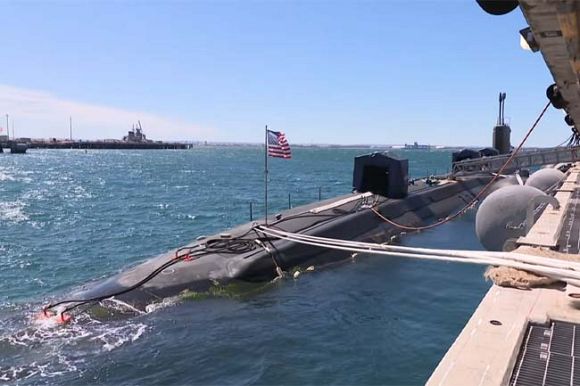
Cabinet ministers might never have been trusted to discuss whether a forward defence posture against Australia’s main trading partner, in league with an increasingly capricious U.S. Administration, is a defence posture more in America’s interest than Australia’s. They might not have discussed whether U.S. bases in Perth and Adelaide, which are part of the AUKUS deal, might make those locations nuclear targets.
And given there is no known solution to the problem of safe disposal of weapons-grade nuclear waste produced to generate nuclear-propelled submarines, as required under AUKUS, discussion by cabinet would be problematic and a bit pointless.
The fate of Senator Fatima Payman in 2024 is sufficiently front of mind for Labor caucus members to refrain from raising a taboo subject.
The mainstream media have tended to steer away from connections between the massive public spending on AUKUS and the shortage of money to pursue visionary policy areas in health, education, social security and infrastructure. And Albanese himself seems content to live with the idea that any trace of a Labor vision is not part of the legacy he will leave as prime minister.
Not surprisingly, much the same could be said of the Opposition under Angus Taylor. Taylor’s predecessor, Peter Dutton, uncharacteristically offered to assist the Government to find budget cuts to public spending in 2023, making it clear that the National Disability Insurance Scheme (NDIS) was expendable, but not AUKUS.
Little has changed in the years that have passed. Neither Albanese nor Taylor appear to see anything about AUKUS that might call for a debate, much less a rethink.
Neither the Government nor the Opposition recognised the release in early November of a report from a public inquiry into AUKUS led by its principal commissioner, Peter Garrett. That said, political figures from both sides of politics made submissions to the Inquiry, notably former Foreign Ministers Gareth Evans and Bob Carr, former Defence Ministers Christopher Pyne and Kim Beazley, and former Prime Minister Malcolm Turnbull.
Commissioner Chris Barrie, a former defence chief and navy admiral, indicated that sources within the Pentagon have made it known that there are well-placed figures in the U.S. military establishment who would not be unhappy to see the end of AUKUS.
In the wake of the U.S. midterm elections, there are a number of fronts opening up for rethinks within America and abroad. That said, questions as to whether the window has closed on Australia doing an AUKUS rethink get back to whether pressure can be applied inside cabinet.
There is an impressive talent pool on the Labor front bench, and so it is not beyond the bounds of possibility that cabinet ministers might question the AUKUS commitment and call for a rethink. Were that to happen, it would take more courage than they have appeared to be capable of showing to date.
Paul Begley is a Melbourne writer who worked for many years in public affairs roles, most recently as general manager of government and media relations with the Australian HR Institute.
 This work is licensed under a Creative Commons Attribution-NonCommercial-NoDerivs 3.0 Australia License
Support independent journalism Subscribe to IA.


Related Articles
- AUKUS Bill hands sweeping powers to Defence Minister
- Beyond AUKUS: Rethinking what makes Australia secure
- AUKUS and the dangerous illusion of national security
- Public executions, AUKUS and the right of Australian communities to say no
- AUKUS Inquiry exposes the great submarine deception