AUKUS is costing Australia billions while serving U.S. strategic interests, undermining sovereignty and making the nation less secure, writes Russell Rollason.
AUKUS WAS NEGOTIATED in secret and announced without parliamentary debate or public discussion.
Australians have been left with serious doubts about the largest single defence expenditure in our history. It is time to ask a simple question: Who is AUKUS for? Whose interests does it serve?
AUKUS is an American child
From its conception, the U.S. Navy was deeply involved in advising Australia. The Washington Post reported that retired U.S. admirals and former Navy leaders were paid high-value consultancies during negotiations over nuclear submarine technology.
Andrew Fowler concludes in his book, Nuked: The Submarine Fiasco that Sank Australia’s Sovereignty, that wedding Australia’s military to the United States was always the aim. The submarines were merely the vehicle.
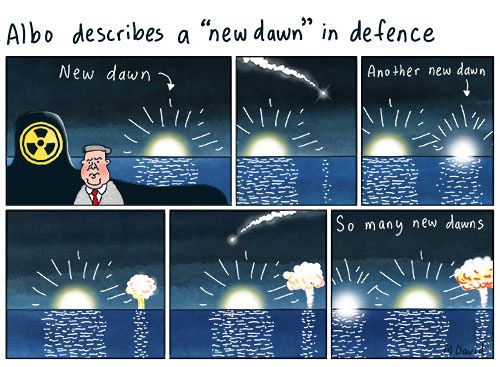
The Americans had strong interests in seeing AUKUS adopted and had their eyes on a U.S. Indian Ocean naval base at Stirling in Western Australia. Former Foreign Minister Gareth Evans has drawn attention to U.S. deputy secretary of State Kurt Campbell’s comment that ‘we (the U.S.) have Australia locked in for the next 40 years’.
Elbridge Colby, a senior U.S. official in the Pentagon, has said delivery of Virginia-class submarines would be ‘highly imprudent without “an iron-clad guarantee that they can be deployed at the will of the United States”?’
Former Defence Minister Christopher Pyne was equally candid. He told an AUKUS hearing that AUKUS is creating a new U.S. submarine base in the Indian Ocean, a massive strategic advantage for America. The United Kingdom is a partner, but not the driving force. AUKUS serves U.S. interests and U.S. military strategy. AUKUS is for the U.S.
The AUKUS feast
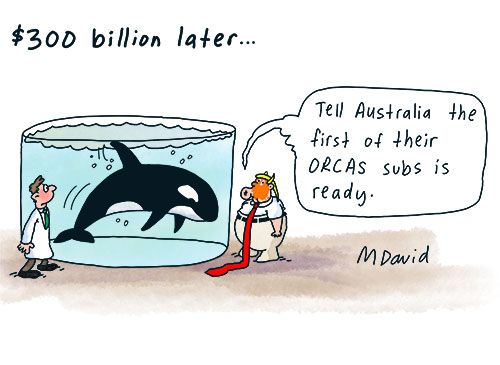
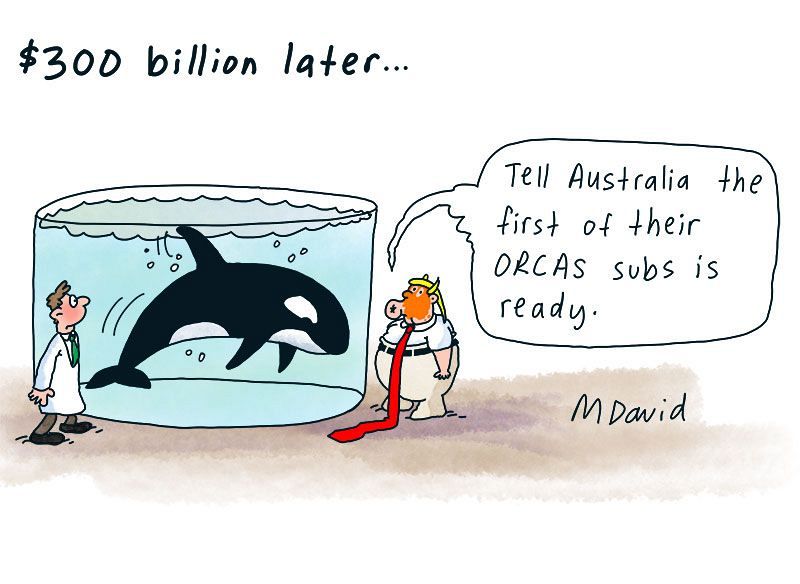
At $368 billion over 30 years, AUKUS is Australia’s largest defence project. It is a pot of gold for those who work in, or have an interest in, the arms industry. Senator David Shoebridge has called it a multibillion-dollar feast.
Unsurprisingly, lobbyists, consultants and advisers have lined up for a feed. Former PM Scott Morrison announced a role with military technology venture capital firm DYNE Maritime before leaving Parliament. He is now vice chairman of American Global Strategies, alongside former Senator Arthur Sinodinos, former Office of National Intelligence head Nick Warner and former Defence Minister Joel Fitzgibbon.
After leaving Parliament, Christopher Pyne, through his company Pyne and Partners, was quick to focus on AUKUS, hosting an all-expenses-paid bipartisan defence industry delegation that included Liberal Senator James Paterson and Labor MP Meryl Swanson to Washington, DC and New York to promote AUKUS business opportunities in March 2023.
Former Treasurer Joe Hockey built his consulting company Bondi Partners on the Washington relationships he developed as ambassador.
This revolving door is not illegal. But it raises ethical questions and lacks transparency. When Defence makes a procurement decision, Australians cannot know whether it reflects rigorous cost and benefit analysis or the persuasive power of an arms company representative who was recently sitting on the Government’s side of the desk.
In 1961, retiring U.S. President Eisenhower warned of the military-industrial complex and the acquisition of unwarranted influence. AUKUS is a generous gift to the lobby, advisory and consulting industry.
AUKUS is not for Australian sovereignty
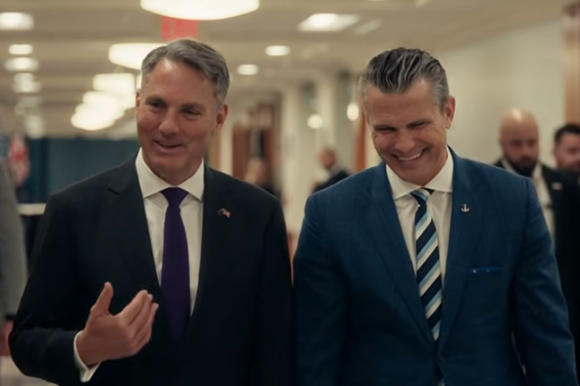
The Stirling base near Fremantle is becoming a U.S. base in Australia. Calling it a joint facility makes the fact more palatable.
The U.S. Navy announced in June that Naval Support Activity Stirling had been established for U.S. personnel, contractors and families assigned to Submarine Rotational Force – West. Australia has invested $8 billion to prepare Stirling.
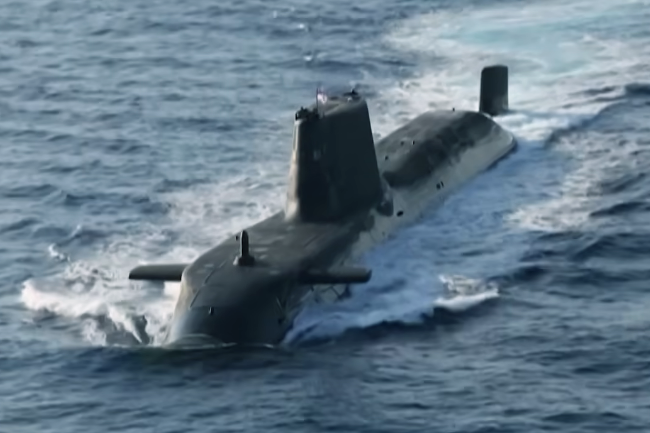
AUKUS has enabled the U.S. to establish, largely at Australian expense, a base from which U.S. and UK nuclear-powered submarines can operate in the Indo-Pacific. Its operation will depend on decisions outside Australia’s control. It supports the U.S. policy of containing China and maintaining U.S. hegemony.
As former Department of Foreign Affairs and Trade Secretary Peter Varghese has said, U.S. primacy in the Indo-Pacific is not a core national interest for Australia.
This is not an argument to end the Australia–U.S. alliance. It is an argument to re-evaluate it and decide what is in Australia’s best interests. As U.S. bases expand, Australia’s sovereignty is being gifted away.
AUKUS must not be for China
Some right-wing think tanks and parts of the media appear to think AUKUS is for China: to contain China. It ties Australia to U.S. strategic interests.
Australian National University (ANU) Professor Hugh White has said:
‘...America will only sell us Virginia-class boats if it is certain they will join U.S. operations in any war with China.’
In July 2022, the U.S. Chairman of the Joint Chiefs of Staff, General Mark Milley, expressed confidence on 7.30 that “Australia and the United States would be shoulder-to-shoulder if something occurred in Asia”.
From 1973 through until about 2010, Australia pursued broad engagement with China. The policy changed when the U.S. shifted during the first Trump Presidency from engagement to strategic competition and containment.
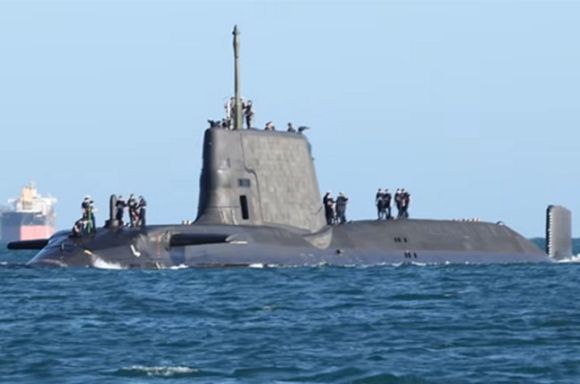
China is Australia’s principal trading partner and the major economic power in our region. It knows AUKUS is aimed at it and sees the pact as destabilising and provocative. So do several of Australia’s South East Asian neighbours.
AUKUS locks Australia into an aggressive U.S. stance towards China. The worst possible outcome for Australia would be a China–U.S. war in which Australia is dragged into by virtue of the U.S. bases here.
Australia should make clear that it will not go to war over Taiwan and should require host government approval for military operations launched from Australian bases.
AUKUS is a cover for state support for industry
AUKUS joins a security partnership to a new form of state support for military industry. Researcher Trissia Wijaya argues that it gives military agencies decisive influence over procurement and financing.
The Government talks of industrial transformation, 20,000 direct jobs and a comprehensive submarine workforce. But taxpayers may be paying around $18 million for each job created, while investment in renewable energy or education could create twice as many jobs or more.
Military spending is the least efficient way for government to create employment. It can become an investment in war-making rather than genuinely productive sectors.
Universities are being drawn into this project. Defence funding brings opportunity, but it is changing the focus of tertiary education and closing off criticism.
Researcher Sian Troath has concluded there is less energy going into understanding our region, building relationships and thinking creatively about peace. AUKUS may be for universities as a source of funding, but the public loses serious thinking about a peaceful future.
Is AUKUS for Australians?
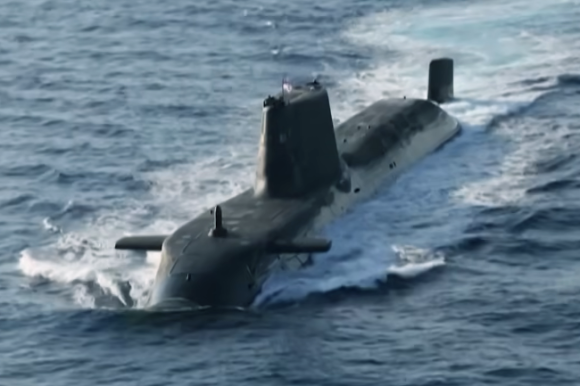
Australians have little information about their largest defence expenditure. For 30 years, sizeable portions of taxation are being committed to a project with no guarantee of delivery, no firm delivery date and no refund if the submarines do not arrive. Communities in Fremantle, Adelaide, Alice Springs, Darwin and perhaps Wollongong may find themselves with a large nuclear target on their backs.
The Navy may also have to protect highly enriched, weapons-grade uranium until it can be disposed of at a site still to be identified and protected for 700,000 years.
If the submarines arrive, the two or three operational submarines may be sent to the South China Sea at the direction of the U.S. It is hard to see how that provides security for Australians. AUKUS is not protective; it is provocative.
The Australian Government’s primary responsibility is to provide for the nation’s conventional defence and protection from nuclear attack. Yet the U.S. alliance contains no security guarantee or commitment to extended deterrence for Australia should we be attacked.
At stake is Australia’s survival, not America’s. AUKUS exposes us to attack by an enemy of the U.S., or to being held hostage to the threat of nuclear attack.
It is hard to see how AUKUS makes Australians safer. It is time to develop a comprehensive and independent peace and security strategy.
Russell Rollason AM is Secretary (honorary) for the Australian Peace and Security Forum.
 This work is licensed under a Creative Commons Attribution-NonCommercial-NoDerivs 3.0 Australia License
Support independent journalism Subscribe to IA.


Related Articles
- AUKUS — controversial, secretive but given a bipartisan blank cheque
- AUKUS offers Australia a nuclear solution to climate change
- Big Tech tightens its grip on Australia’s undersea cables
- CARTOONS: The AUKUS caucus is decidedly raucous!
- AUKUS: Its single point of obsolescence