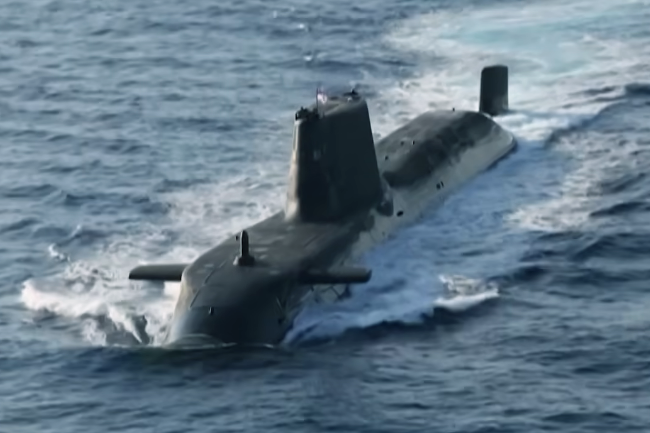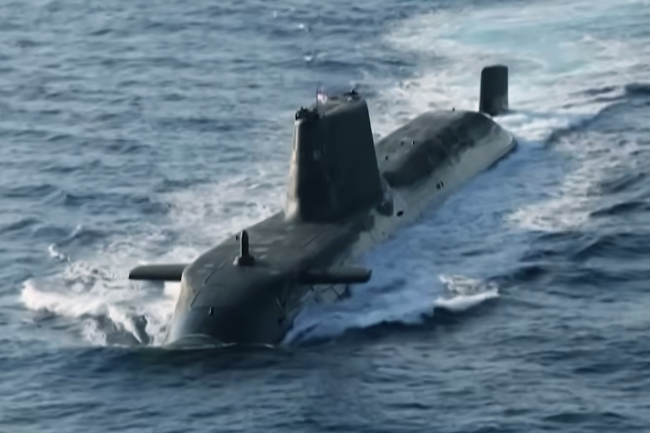
Our new series, WARFARE TO WEALTH, is a progressive critique of the Federal Government's defence and foreign policy trajectory. It provides in-depth analysis of Australia's $368 billion AUKUS commitment and the broader militarisation of our economy.
It is timed to precede the ALP national conference (23-25 July) – which will shape the Government's policy platform and strategic direction for at least the next two years – in the hope that, along with growing pressure from the broader community, the arguments against this militarisation may be compelling enough to make their mark.
This article is part six of the series, From Warfare to Wealth: Redirecting Australia's Future. You can read the other chapters in this series HERE. The next chapter will be published soon.
Part 6: The path to peace requires investment in conflict prevention
Australia cannot build lasting security through militarisation alone. Real peace demands sustained investment in diplomacy, development and conflict prevention, writes former diplomat Russell Rollason AM.
THIS REGION knows too well the cost of conflict and the value of peace. As great power competition intensifies, with rising risk of escalation and miscalculation, the conflict prevention project is more critical than ever.
Foreign Minister Penny Wong said as much in Kuala Lumpur in July 2025:
“Above all, our objective is to prevent conflict, preserve peace and maintain the agency of all countries in our region.”
In his address to the UN General Assembly in 2025, the Prime Minister reinforced the theme:
“The more we can do to reinforce the architecture of peace and prosperity, the more we remind nations of everything they stand to lose.”
The Albanese Government has often stated its commitment to conflict prevention, but the ideals are not being translated into strategies or programs. The Foreign Affairs portfolio budget showed little progress towards these goals and failed to even mention conflict prevention. Funding for Australian diplomacy was actually cut, even as the Department itself says ‘our nation’s front line is diplomacy’.
Defence now dominates the international affairs budget at approximately 82% of the total $76.18 billion. For every $100 in the Federal Budget, Australia plans to spend around 63 cents on aid and ten times as much on defence. Australia’s aid generosity remains around 0.17% of Gross National Income, among the lowest in the OECD, and aid has seen the weakest growth over the last 27 years, according to the Development Intelligence Lab.
But there was more money for AUKUS. An extra $400 million was added to the agreement over the next three years. As Rex Patrick reported, the Australian Submarine Agency’s total resourcing is now $2.35 billion over the next four years — a 37% increase on last year’s budget.
To date, Australia has contributed $2.76 billion to the U.S. and $863 million to the UK to strengthen their submarine-building industrial bases. Australia has now spent more on creating jobs in American and British shipyards than in its own.
When we commit $368 billion to submarines that may never arrive ... we are actively choosing not to fund the foundations of human security.
The cost of militarisation
Global military expenditure rose for the 11th consecutive year in 2025, reaching a record US$2.887 trillion (AU$4.1 trillion) – 2.5% of world GDP – according to SIPRI. Australia’s National Defence Strategy projects a near-doubling of our annual military budget over the next decade. This massive diversion of public wealth represents a profound opportunity cost.
The Institute for Economics and Peace estimates the global economic impact of violence at roughly 10.5% of global GDP — a powerful reminder of the vast human potential squandered when nations prioritise militarisation over cooperation.
When we commit $368 billion to submarines that may never arrive, or that may serve only to tether us to U.S. strategic objectives, we are actively choosing not to fund the foundations of human security: public health, climate resilience, education and the well-being of our citizens.
Reframing security
True security cannot be achieved by stockpiling weapons or acting as a forward operating base for a superpower. The UN Secretary-General’s report, The Security We Need, argues that ‘true and lasting security comes not only from protecting States but by creating conditions for individuals and communities to thrive’.
Three issues highlight the urgency to reframe our approach. First, climate change: Australia joined with Pacific nations in 2018 to sign the Boe Declaration, which declares climate change ‘the single greatest threat to the livelihoods, security and wellbeing of the peoples of the Pacific’.
Australia’s own National Climate Risk Assessment recognises that a combination of migration crises, resource shortages and more frequent natural disasters could lead to conflict or breakdowns in social cohesion. Climate change poses a far more immediate and certain threat to Australians than the prospect of a conventional military invasion.
Second, artificial intelligence: global investment in AI is projected to exceed US$2 trillion (AU$2.8 trillion) by 2026. Data centres will likely double electricity demand and further exacerbate climate pressures.
AUKUS Pillar 2 focuses on AI, autonomous weapons and hypersonics, but has yet to develop meaningful ethics and guardrails for these technologies. As UN Secretary-General António Guterres warned in early 2026, “weaponisation of technology and information are threatening the foundations of stability”.
Third, the militarisation of society itself: the military-industrial complex is actively recruiting the next generation. Lockheed Martin, the world’s largest arms company, is the prime partner of the National Youth Science Forum, promoted through schools across Australia.
As Dr Sue Wareham OAM (Medical Association for Prevention of War) has noted, while programs encouraging students to engage in military-related S.T.E.M. fields proliferate, peace research centres at our universities are being marginalised and defunded. Young Australians are at risk of being lured into the exciting world of technology and space, only to find themselves designing weapons of war.
Australia needs to affirm its commitment to nuclear conflict prevention and ratify the Treaty on the Prohibition of Nuclear Weapons immediately.
Building regional trust
Our current strategic posture also undermines our ability to build trust in the Indo-Pacific. When Australia treats the Pacific and Indian Oceans primarily as strategic geography for great-power competition, we alienate the island nations that call these regions home. The expansion of U.S. military facilities in northern Australia signals to our neighbours that we are preparing for war rather than working for peace.
The 2021 AUKUS announcement provoked serious concern across the region. Indonesia and Malaysia formally voiced unease that nuclear propulsion technology would precipitate an arms race. Malaysian Prime Minister Ismail Sabri Yaakob stressed his country’s commitment to Southeast Asia as a Zone of Peace, Freedom and Neutrality. China warned that AUKUS would “undermine regional peace and stability, aggravate arms races and impair international nuclear non-proliferation efforts”.
The argument that nuclear submarines will protect our trade routes strains credulity. With perhaps two operational submarines in the 2040s, Australia cannot realistically patrol thousands of kilometres of sea lanes. China is our largest trading partner and has the same interest as Australia in keeping those routes open.
Our goal is far more likely to be achieved through diplomacy and cooperation. Australia needs to affirm its commitment to nuclear conflict prevention and ratify the Treaty on the Prohibition of Nuclear Weapons immediately.
As former Federal Labor Minister Melissa Parke has said:
‘A different path for Australia is possible and necessary — a path that prioritises investments in peace and diplomacy over weapons and war.’
The peace alternative
The saying “if you want peace, prepare for war” is nonsense. The most powerful nation in the world, with the largest military by far, is not at peace. The United States has been at war almost every year since 9/11. The truth is that if we want peace, we have to work to prevent conflict.
Australia has a proud record in peacebuilding over the past three decades. Cambodia, East Timor, Bougainville and the Solomon Islands stand out as commitments in which Australia played a significant role in re-establishing peace. Australia has supported close to 100 UN peacekeeping missions — but in recent years, that commitment has tapered off, with only 62 Australian Defence Force (ADF) personnel currently serving in three missions.
The ALP National Conference offers a critical opportunity to pivot away from the destructive logic of AUKUS and embrace a security model built on human needs and regional trust.
By contrast, Australia currently has 85 ADF personnel in the United Arab Emirates with a surveillance aircraft as part of operations related to the war on Iran.
Reinvigorating Australia’s engagement in peace is overdue. It should start with a comprehensive peace and security strategy that integrates defence, climate, human and economic security. Conflict prevention and peacebuilding lack a clear focus within government and parliament. It is time to appoint a minister for peace and international development — a signal to the Indo-Pacific, to the international community and to the Australian people about where our true priorities lie.
The ALP National Conference offers a critical opportunity to pivot away from the destructive logic of AUKUS and embrace a security model built on human needs and regional trust. The peace dividend is not a utopian dream; it is a practical and necessary investment in a safer, more resilient, and more prosperous future for Australia and our region.
If we want peace, we need to prevent conflict.
Russell Rollason AM is Secretary (honorary) for the Australian Peace and Security Forum.
This article is the first in a multi-part series, FROM WARFARE TO WEALTH, examining the real costs of our current defence trajectory and exploring the alternatives proposed by the Make Peace a Priority (MPAP) campaign.
Read the other chapters in this series:
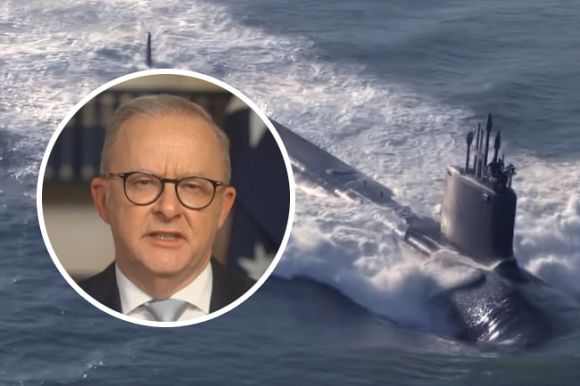
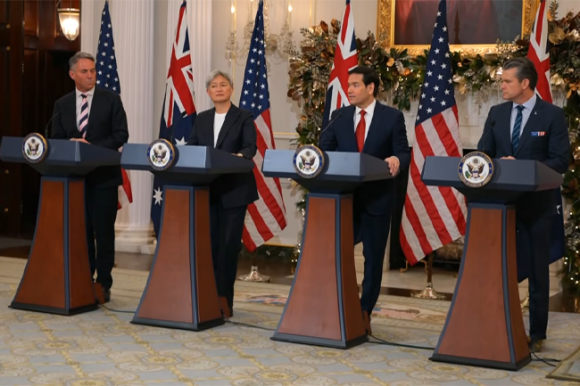

 This work is licensed under a Creative Commons Attribution-NonCommercial-NoDerivs 3.0 Australia License
Support independent journalism Subscribe to IA.


Related Articles
- FROM WARFARE TO WEALTH — Why parliament must decide before Australia goes to war
- FROM WARFARE TO WEALTH — The AUKUS illusion and the death of statecraft
- FROM WARFARE TO WEALTH — The myth of American idealism
- FROM WARFARE TO WEALTH — Australia's struggle for strategic independence
- FROM WARFARE TO WEALTH — The $368 billion question: What AUKUS is really costing us