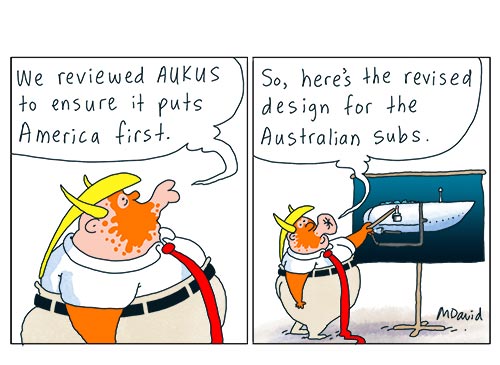
This week marks the fifth anniversary of the AUKUS announcement, a $368 billion defence project shrouded in secrecy with major party bipartisan support that fundamentally changed the Australian political landscape, writes Dave Sweeney.
FIVE YEARS AGO THIS WEEK, the Australian political landscape fundamentally changed when then Prime Minister Scott Morrison announced on September 15 2021, that our nation would join a defence pact with the U.S. and the UK based around the acquisition of nuclear submarines.
The decision was made without scrutiny, consultation, evidence or any Parliamentary process or review.
It was an idea conceived in secrecy and delivered in a highly politicised context, with then Labor Opposition leader Anthony Albanese given negligible time or information before positioning to avoid being wedged and portrayed as "soft" on national security ahead of the looming federal election.
Without clear detail, analysis, or consultation, the Labor leadership signed off on the deeply flawed plan, and since then a short-term political tactic has set the path for a long-term national error.
The years since have seen federal Labor inexplicably defend and extend AUKUS despite growing concerns and multiple opportunities to take an exit ramp.
State premiers in the frontline states of SA and WA have become project promoters, with talk of Class A predators and triple AAA economic ratings, while many trade unions have been seduced or enmeshed with the promise of union jobs.
The Australian Federal Police (AFP) have been granted special powers, and the Canberra song sheet is tightly scripted and enjoys bipartisan major party support
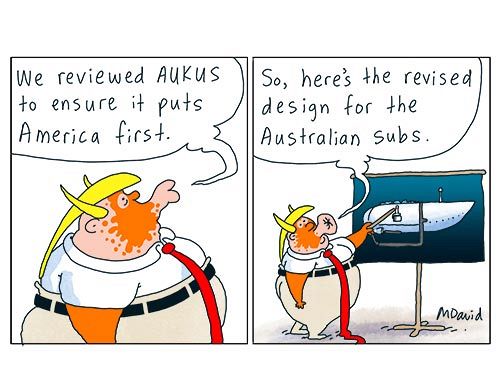
The intervening years since have also seen profound political changes here and with our AUKUS partners. The U.S. in particular has become increasingly unreliable and petulant.
The U.S. has also become increasingly enmeshed in Australian military positioning, with a recent Guardian report highlighting unfettered access to over 50 per cent of Australia's military bases.
Of particular concern to many is the fact that Australia currently accepts America's policy of nuclear ambiguity or "don't ask, don't tell" in relation to the presence of nuclear weapons.
The American B-52 bombers now based at RAAF Tindal near Katherine in the Northern Territory and Virginia-class submarines set to become a regular presence at HMAS Stirling near Fremantle have the potential to carry nuclear weapons.
There is currently no policy or legal protection for Australia against our nuclear-armed AUKUS partners bringing nuclear arms to our skies or seas.
Federal Labor has a national platform commitment to sign the UN Treaty on the Prohibition of Nuclear Weapons, and this is urgently needed to provide clear guardrails and a red line against our nation drifting towards being either a nuclear weapons enabler or target.
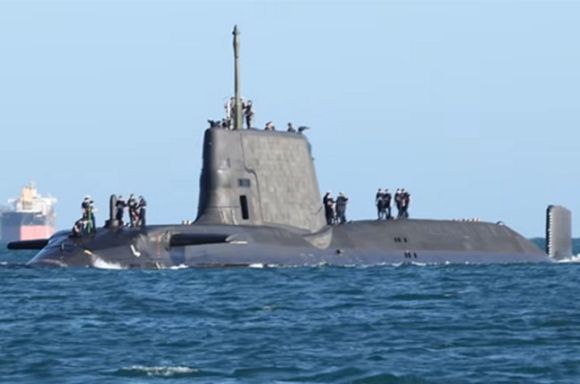
To date, Federal Labor has proven far more adept at managing AUKUS perceptions and protest than in managing the AUKUS program.
There are growing concerns over whether submarines will ever arrive and over the capacity of U.S. and UK shipbuilding yards. These are amplified by wider concerns including spiralling costs and the government's continued refusal to detail either plans or processes around weapons-grade radioactive waste management.
And it's not just the usual suspects — many military hawks are questioning the literal bang for the buck or surge in autonomous weapons while fiscal conservatives are aghast at the lack of scrutiny, constraint and the poor track record of Defence in delivering major projects.
Ahead of the July ALP national conference in Adelaide, which was masterfully curated to hide AUKUS concerns, the internal advocacy group Labor against War was joined by over 100 Labor branches in a call to scrap AUKUS.
In the absence of a Parliamentary inquiry into the plan, a citizen-crowdfunded public inquiry headed by former Labor minister and Midnight Oil frontman Peter Garrett has toured the country, taking hundreds of submissions and detailed evidence and is due to make recommendations and findings later this year.
Pacific Civil Society Groups have joined their Australian partners and allies, with over 170 formally endorsing a new civil society Declaration against nuclear weapons in Australia.
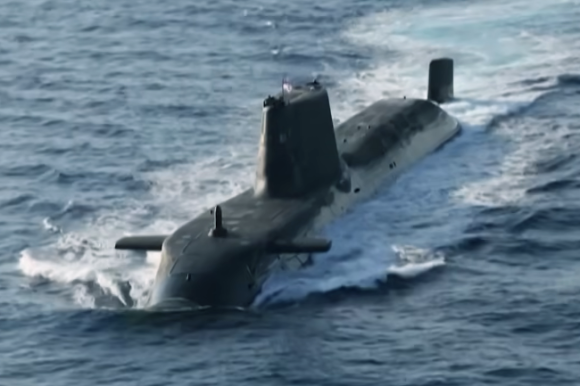
At the moment, these concerns are a slow burn compared to the fast rate of AUKUS, but the planning problems are growing and there is only so far that political spin can cover deep structural flaws.
Against a backdrop of cost-of-living pressure and escalating global tensions, more Australians are asking why this controversial and secretive process is being given a blank public-dollars cheque.
The concerns and questions are likely to grow — and as Australians know, a change in the wind can see a slow burn quickly turn into a firestorm.
Yesterday in Melbourne, a packed house gathered at the MCG to watch two American NFL clubs, but there was no such media attention or scrutiny of the wider American game.
Not all touchdowns are cause for celebration and when it comes to nuclear weapons, Australians have both the right to know and to say no.
Dave Sweeney is a former national campaigner with the Australian Conservation Foundation and a founding member of ICAN, which was awarded the 2017 Nobel Peace Prize. You can follow him on Twitter/X @nukedavesweeney.
 This work is licensed under a Creative Commons Attribution-NonCommercial-NoDerivs 3.0 Australia License
Support independent journalism Subscribe to IA.


Related Articles
- AUKUS offers Australia a nuclear solution to climate change
- Big Tech tightens its grip on Australia’s undersea cables
- CARTOONS: The AUKUS caucus is decidedly raucous!
- AUKUS: Its single point of obsolescence
- Independent AUKUS Inquiry ramps up pressure on Labor