The Hormuz crisis shows why Australia cannot fight this century’s war with last century’s weapons, writes David Higginbottom.
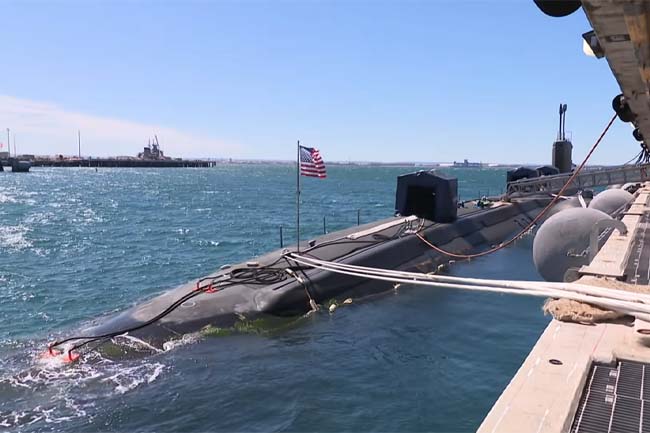
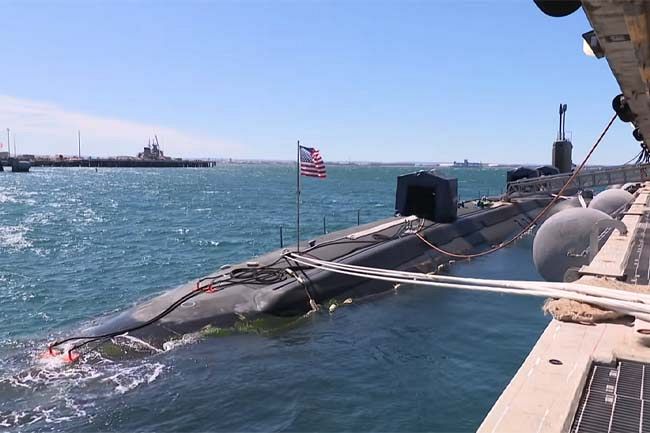
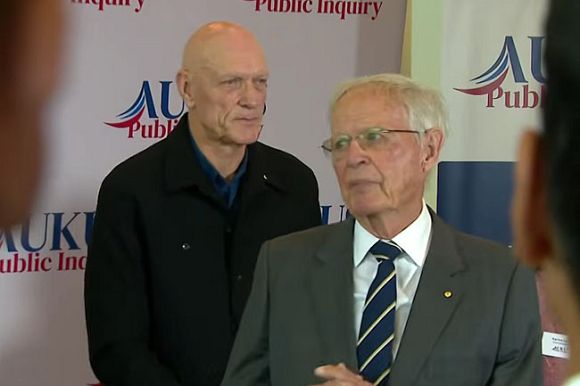
ON 4 NOVEMBER at the National Press Club and broadcast live by the ABC, the independent AUKUS Public Inquiry will release its report.
This will not settle the question of Australia’s security policy. It is a civil society inquiry, not a parliamentary committee and its conclusions should be tested rigorously. However, so should the Government’s case for AUKUS. Australians have been asked to accept far-reaching claims about deterrence, sovereignty, jobs, cost and regional security.
Those claims still require a transparent, independent public test of the assumptions on which they rest and of the alternatives Australia has set aside.
That is why the Inquiry has already mattered. It has widened the debate from submarines alone to transparency and democratic accountability, arms expenditure and public priorities, Parliament’s role, relations with China and the wider security choices Australia faces.
The 2026 Hormuz crisis makes that wider discussion urgent. A country can prepare for high-end naval conflict while remaining exposed to the civilian systems through which modern war reaches people.
For most Australians, the first experience of a distant conflict is unlikely to be an enemy warship off the coast. It is more likely to be a higher fuel bill, a delayed shipment, disrupted travel, a shortage of a critical input, pressure on food prices, or an interest rate decision that asks households to absorb an imported shock. This is how security succeeds or fails in a trade-dependent country.
The International Energy Agency says that about one quarter of the world’s seaborne oil trade and almost one fifth of global LNG trade passed through the Strait of Hormuz in 2025. When the 2026 conflict disrupted that route and damaged energy infrastructure, the effects were not confined to the Gulf. Oil and gas flows tightened, refining capacity was lost, freight costs rose and the market for refined products, especially diesel, came under acute pressure.
The shock is still moving through the systems that move goods, people and basic necessities.
The UN Trade and Development assessment makes the chain clear. Higher energy prices bring higher freight, fuel and insurance costs. Fertiliser becomes more expensive, then food. The most vulnerable countries and households have the least capacity to absorb the shock. The International Maritime Organisation records the human dimension: seafarers, crews and port workers were caught in the danger and uncertainty of a trade route that could no longer be assumed safe.
Australia is in that chain. The Government and Industry Fertiliser Supply Working Group reported in June that the conflict had forced Australia and other countries to seek alternative urea supplies in a more competitive global market. The Government’s fuel and fertiliser facility helped secure shipments, but it also acknowledged that recovery would take time and disruption would persist.
The lesson is not that Australia must produce, or hold emergency stores of, every item it consumes. It is that security must include dealing with an emerging conflict before it becomes a wider crisis and before people in the conflict zone bear the immediate cost. It must also include practical preparations for the effects that will otherwise be passed on to Australian farms, freight operators and households.
The IEA’s October Oil Market Report describes how Middle East product disruption has coincided with lower Russian refinery output and exports after Ukrainian drone attacks. The result has been severe pressure on global diesel supplies. This should not reduce Russia’s war against Ukraine to a fuel price story, or diminish the suffering it has caused.
It demonstrates that the consequences of different wars now converge in the same supply chains. A disruption in one theatre erodes the buffers needed to manage a disruption in another.
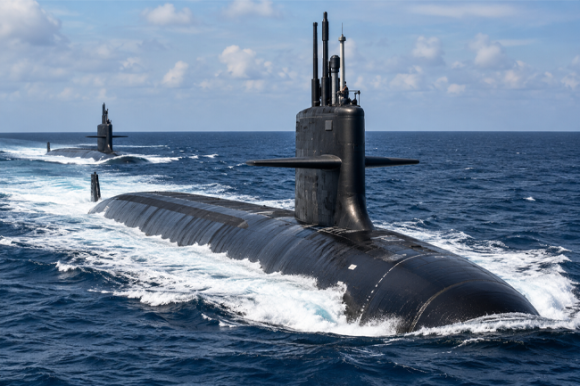
The point is not that conventional naval power has become irrelevant, or that an adversary could not threaten Australia by sea. That is the strongest version of the AUKUS case and it should be stated fairly.
But the reciprocal point is equally important. A submarine cannot substitute for civilian resilience. It cannot:
- reopen a damaged airport;
- deliver medicines after a cyclone;
- restore insurer confidence in a threatened waterway;
- replace a fertiliser shipment;
- repair a power or water system; or
- prevent supply shock from becoming a cost-of-living crisis.
If national security is measured only by the capacity to fight, Australia may spend extraordinary sums on a capability that performs a narrow task while underinvesting in the systems that keep society functioning under pressure. It may also underinvest in diplomacy and regional cooperation that reduces the likelihood of a crisis developing in the first place.
The Government’s 2026 National Defence Strategy and Integrated Investment Program recognises national resilience and civil preparedness as part of defence. Parliament should now require an annual public account of fuel and critical input security, port and freight continuity, electricity and communications recovery, disaster readiness, cyber resilience and the protection of households from shocks they did nothing to cause. They are the conditions that determine whether a nation can withstand coercion without breaking.
The same annual account should apply a harder public test to AUKUS itself. What exact contingency is the capability designed to address? When will it be available? What must Australia rely on the United States and United Kingdom to provide? What can Australia decide, maintain, repair, adapt and decline to use? What are the costs, workforce and schedule risks?
The UK Parliament’s Defence Committee has identified continuing United States submarine production constraints as a foundational delivery risk — these are questions citizens are entitled to ask before a commitment becomes too large to reconsider.
The 4 November report should prompt a wider public test, not another contest between slogans.
Every major security investment should be judged by the danger it reduces, the time it takes to provide protection, the degree of Australian control, its effect on civilian continuity, its potential to increase or reduce escalation and the alternatives that address the same harm. A capability may pass one part of that test and fail another. That is precisely why Australia needs a portfolio, not a single prestige answer.
Hormuz has shown what that portfolio must protect: safe and lawful trade routes, the confidence of crews and shippers, fuel and fertiliser supplies, energy and communications systems, essential infrastructure, regional trust and the diplomatic capacity to stop crises spreading.
Australia needs the capacity to defend itself. It also needs the political maturity to understand that the purpose of defence is not merely to survive a damaged world. It is to prevent one.
David Higginbottom is a member of the coordinating committee of the Independent and Peaceful Australia Network (IPAN) and coordinator of the Make Peace A Priority campaign (mpap.au).
 This work is licensed under a Creative Commons Attribution-NonCommercial-NoDerivs 3.0 Australia License
Support independent journalism Subscribe to IA.


Related Articles
- Public executions, AUKUS and the right of Australian communities to say no
- AUKUS Inquiry exposes the great submarine deception
- AUKUS public inquiry asks what Parliament won’t
- AUKUS serves America at Australia’s expense
- AUKUS — controversial, secretive but given a bipartisan blank cheque