I was at a birthday dinner when I received a message from my brother that immediately felt wrong. It was disjointed and unclear, as if something serious had happened but hadn’t yet settled into words. I rang him straight away.
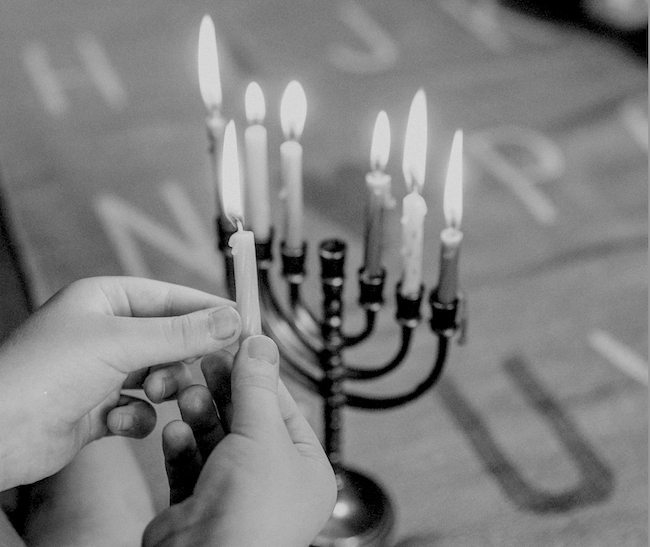
Minutes earlier, he had been at a Hanukkah celebration in Bondi with his wife and four children when gunfire erupted nearby. He moved. The bullets did not follow. That movement almost certainly saved his life and the lives of his children.
When we spoke, his voice was different. Not panicked, not composed, but altered. I also knew two of the people who were killed. They were not close friends, but people I had known. That alone makes it impossible for me to treat what happened as abstract or distant.
This article is written in the shadow of that moment.
It is important to say this clearly. My brother may not agree with many of the views expressed here. He holds his religious beliefs deeply and sincerely, and I do not write on his behalf. What follows is my own account, shaped by my own experiences and history.
I write as a Jew formed by two inheritances. On my mother’s side, I am the child of a Holocaust survivor from Poland. On my father’s side, I am a sixth-generation Sydney Jew, raised around Bondi.
My great-great-grandfather, Maurice Abraham Cohen, came to Australia and helped found the Hevra Kadisha — the institution responsible for burying Sydney’s Jewish dead.
That is not a historical footnote. It is present tense. The same institution my ancestor helped establish is now responsible for burying the victims of last Sunday’s massacre.
Jewish life here was never abstract or symbolic. It was built, organised, argued over and sustained by people who understood Judaism as a living culture, not a slogan or a test.
I grew up in a Jewish community that was moderate, plural and intellectually alive. Jews argued. They disagreed about God, politics, Israel, ethics, culture. Education mattered. Independent thought mattered. Judaism was not obedience; it was participation in an ongoing civilisation.
That was not incidental. It was the core of Jewish survival.
Over the past 40 to 50 years, Chabad-Lubavitch has steadily expanded its influence within Sydney’s Jewish institutions. This did not happen suddenly. It happened gradually – synagogue by synagogue, committee by committee – until much of communal life became centralised around a single ideological framework.
This expansion was not merely organic. It was strategic.
Chabad recognised that many Jews had become alienated from their own cultural and intellectual inheritance — from Jewish history, philosophy, ethics, language and debate. That alienation created vulnerability. Into that gap stepped a movement offering certainty in place of knowledge, authority in place of education and obedience in place of engagement.
What followed was not open competition of ideas, but domination through institutional control.
Community spaces were monopolised. Alternative voices were marginalised. Funding, legitimacy and access increasingly flowed through a single gate. Those who dissented were quietly frozen out.
What emerged resembled, metaphorically, mafia-like politics — not criminal in the literal sense, but in its methods: pressure, intimidation, monopolisation and the systematic elimination of rivals.
Creativity and free thought were not debated; they were suffocated. Independent Jewish expression was treated as disorder. Pluralism was framed as threat. Over time, the message was clear: fall into line, or disappear.
This is how a living culture is flattened.
What was presented as Jewish continuity increasingly functioned as its opposite.
Judaism as a lived culture – shaped by learning, disagreement, creativity, and moral reasoning – was reduced to technical status. Jewishness became something you qualified for rather than something you did.
If your mother, or your mother’s mother, was Jewish, you were Jewish. Everything else – education, ethics, intellectual inheritance – became secondary.
This is not continuity. It is erasure.
It flattens a civilisation into a checklist and calls the result preservation.
Chabad does not encourage independent Jewish thought. It discourages it. There is one authorised interpretation, one acceptable worldview, one sanctioned politics. Disagreement is treated as a problem, not a tradition.
Education outside the framework is viewed with suspicion. Creativity is tolerated only when it aligns.
This is not how Jewish culture survives. It is how it is hollowed out.
I do not write this as an outsider.
I became involved with Chabad. I know the internal dynamics — the certainty, the pressure to conform, the distrust of secular education, the discouragement of independent judgment. Jews are told not to think for themselves, not to question too much, not to trust moral instincts that fall outside the approved system.
At the same time, behind this moral absolutism, there is deep hypocrisy.
Sexual abuse was present and widely known within that environment. It was not treated as a moral emergency. It was treated as something to be contained. Authority figures closed ranks. Silence was enforced. The institution protected itself.
I was exposed to this directly. I was not the right person to be exposed to it. No one is. Whatever the psychological dynamics in my own family, it was fundamentally decent, and that contrast only sharpened the damage of what I encountered.
That exposure scarred me permanently.
A movement that claims moral superiority, discourages education, demands obedience and fails to protect its children has forfeited any claim to ethical authority.
This is not incidental. It is structural.
The ideology that enables this matters.
Central to Chabad theology is the Tanya, which teaches a fundamental distinction between Jewish and non-Jewish souls. When this idea is lived socially rather than treated as abstract mysticism, it produces a closed moral universe — one that discourages empathy, dissent and accountability.
This worldview also shapes politics.
For years, Chabad has promoted uncritical support for the most extreme elements of the Israeli right. Settler movements are celebrated. Force is aestheticised. Moral hesitation is framed as betrayal.
During the Gaza war, what many Jews experienced as grief or moral crisis was publicly met with cheering and absolutism.
I believe this posture has been disastrous — ethically, culturally and strategically.
When Jewish life is reduced to ideological certainty and public spectacle, it stops being understood as culture and begins to be perceived as a political symbol. Symbols attract opposition.
This is not about blaming anyone for violence. It is about understanding consequence.
Extremist movements recognise absolutism wherever it appears. They feed on certainty, purity and submission. Groups such as Islamic State operate on that logic.
When Jewish life is publicly flattened into a similar absolutist form, it becomes legible — and therefore targetable. That shift carries real risks.
Bondi did not become Jewish by accident. Long before it became an icon, and while always acknowledging the prior and continuing custodianship of the Gadigal people, Bondi’s history after white settlement was deeply Jewish.
It was initially subdivided by the English Sephardic Hart family. From the moment the Art Deco buildings went up, Jews lived in them. My own family, like many others, has lived in and around Bondi for generations. Australia does not tend to ritualise its local history in the way the United States does, but the fact remains: Bondi has been a Jewish suburb from the beginning of its modern life.
You may not be able to find much about the Hart family on the internet. They did not need to advertise or celebrate their Judaism with public ritual or spectacle. They simply lived as Jews, embedded in the life of the place. And despite that quiet presence, the continuity is real: the Hart family still has Jewish descendants in Australia today. I know some of them.
There is something tragic in what follows.
Without anyone seeking it and without anyone deserving it, this event has cemented Bondi’s public image as a Jewish place in a way that quiet habitation never did. What was once lived normally has been marked symbolically. That shift should trouble us.
Normality was a form of protection.
That protection now feels thinner.
This is not an abstract debate for me.
On Sunday night, while I was at a birthday dinner, I came close to losing my brother.
For Sydney Jewry to survive, it needs to rethink its relationship with the supremacist cult — Chabad. In fact, all of Jewry should take this as a warning.
Michael Cohen is a Sydney-based Jewish Australian writer who previously contributed extensively to international newspapers, offering both articles and conceptual material. He now focuses on human rights issues.
 This work is licensed under a Creative Commons Attribution-NonCommercial-NoDerivs 3.0 Australia License
Support independent journalism Subscribe to IA.


Related Articles
- Bondi terrorism delivers dive in journalism standards
- Using the slain: Israel exploits the Bondi beach shootings
- Bondi under fire: How Australia responded to terror and fear