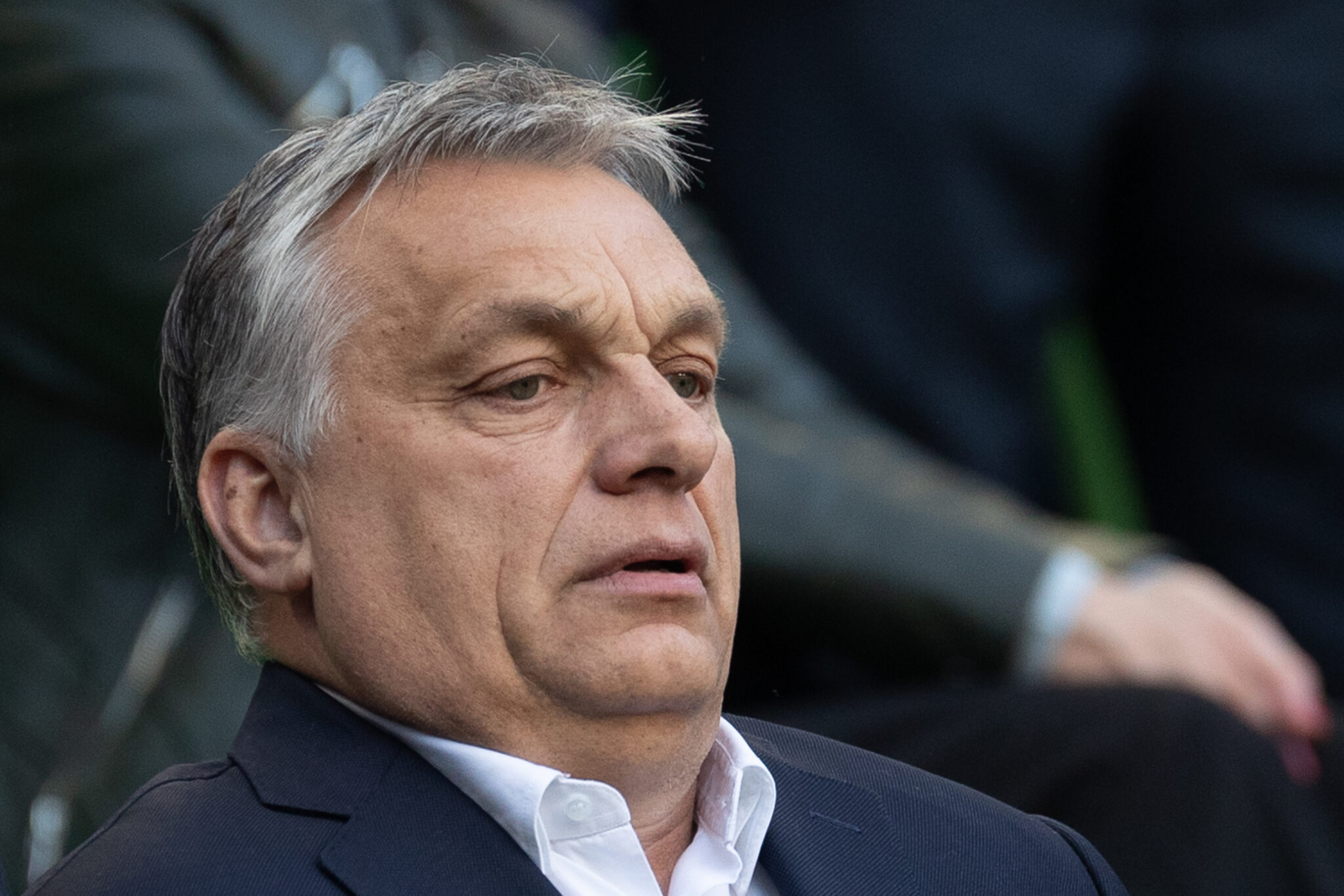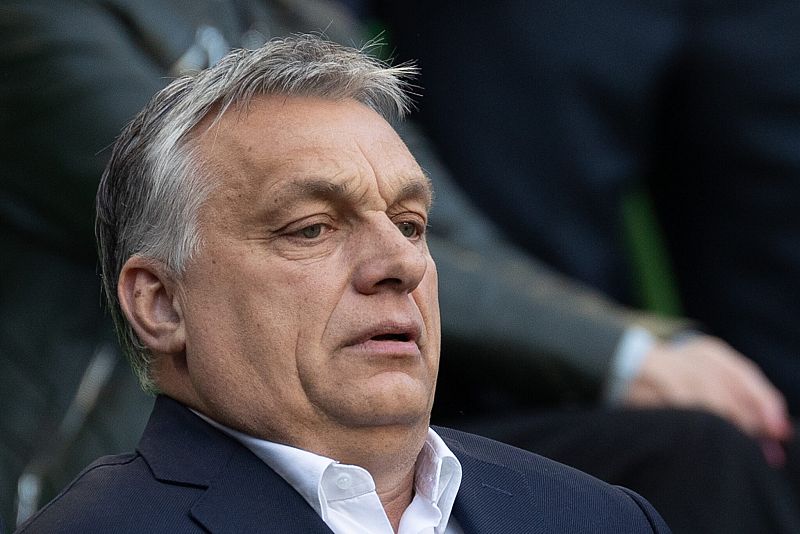
With the landslide defeat of the 16-year hardline rightwing Orbán Government, Hungary now has the chance to bounce back — but Israel won't have that chance, writes Michael Cohen.
When Viktor Orbán was finally voted out, it wasn’t because Hungary somehow avoided the darker currents of modern history. It didn’t. Hungary lived through fascism, war, occupation and decades of Soviet domination. It knows what ideological capture looks like.
And yet, it came back.
That’s the point. Hungary didn’t remain balanced — it lost balance and then recovered it. It moved in a hard direction and, crucially, retained the internal capacity to reverse course.
You could always feel that possibility in Budapest. Even under Orbán, Budapest never fully internalised his worldview. It remained outward-looking, culturally European, resistant in instinct if not always in policy. It carried within it a different version of Hungary — one that never disappeared, only receded.
Eventually, that version reasserted itself.
Hungary’s strength isn’t moral purity. It’s structural elasticity. A majority culture, deeply rooted, can drift without losing access to its alternatives. It can tighten without sealing itself shut.
Israel operates very differently
Israel is not just another country moving right. It is a society shaped by an ideology that is increasingly out of step with the liberal world it exists within — and, more importantly, losing the internal conditions that might once have allowed it to correct itself.
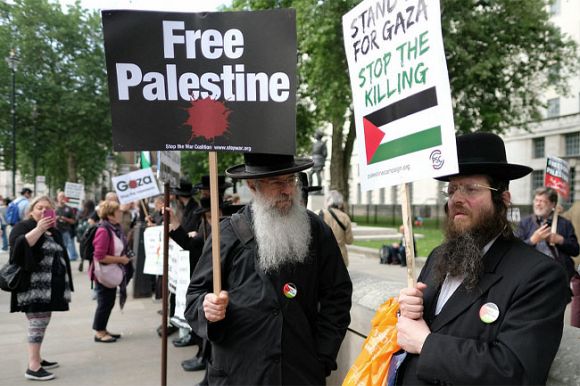
There was a time when Jewish political life contained a real, organised internal opposition. Not just individuals with liberal views, but entire movements – socialists, Bundists, secularists – who were deeply embedded in Jewish society itself.
And they couldn’t leave.
In Eastern Europe, Jewish identity wasn’t a lifestyle choice. It was imposed. Progressive Jews might reject religion, reject nationalism, reject tradition — but they were still Jews in the eyes of the societies around them. They were, in a sense, trapped inside that identity.
That constraint created something powerful: cohesion. It forced ideological struggle to happen within Jewish society rather than outside it. If you wanted to be progressive, you had to build a Jewish progressive politics. You couldn’t dissolve into the surrounding culture.
That is no longer the case.
Today, liberal and progressive Jews – especially in the diaspora – can opt out. They can assimilate, universalise, detach from Jewish political identity altogether. And many do. Not dramatically, not as a statement, but quietly.
They don’t disappear. But their collective presence does.
What this leaves behind is not a balanced system, but an increasingly narrow one. Because those who remain most invested in a specifically Jewish political framework are, by definition, those more comfortable with nationalism, religion, or both.
And that is where the dynamic shifts from imbalance to acceleration.
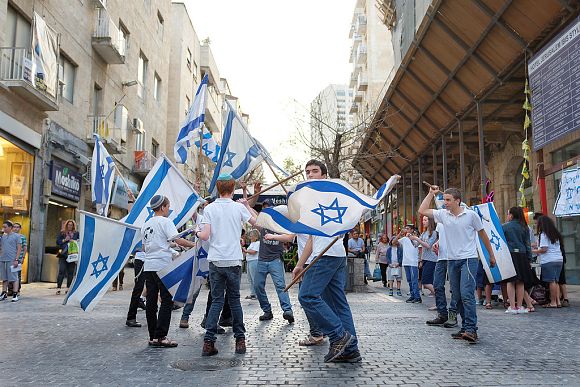
Inside Israel – where Jewish society is no longer a minority but a dominant, self-contained environment – a different psychological mechanism begins to take hold. The old minority psychology – shaped by vulnerability, caution, and often a kind of forced empathy –doesn’t simply carry over intact. It flips.
Without an external majority looking in, politics becomes a closed system. Jews are no longer negotiating their place within someone else’s society. They are negotiating status among themselves.
And in that environment, a new kind of competition emerges.
Who is tougher? Who is less naïve? Who is more willing to do what is necessary?
It doesn’t stabilise — it escalates.
Empathy starts to look like weakness. Restraint looks like hesitation. Doubt looks like disloyalty. Each generation inherits a slightly harder baseline and then pushes it further. What might once have been controversial becomes normal. What was normal becomes unthinkable.
This is not just ideology. It’s a social feedback loop.
A Jewish-only or Jewish-dominant environment creates a kind of internal echo chamber where toughness becomes the primary currency of legitimacy. And because there is no strong, cohesive internal counterweight – no equivalent of a Budapest holding onto an alternative instinct – that loop intensifies unchecked.
Meanwhile, the people who might have formed that counterweight are increasingly absent. Not silenced, not imprisoned — just gone from the system. They’ve opted out, psychologically or physically. They no longer see themselves as part of the project in a way that compels them to fight for its direction.
That absence matters more than any external pressure.
Because what fills the space is not moderation. It is the only set of ideas capable of sustaining cohesion under these conditions: religious certainty and uncompromising nationalism.
And those ideas don’t moderate over time. They compound.
This is where the comparison with Hungary breaks down completely.
Hungary moved toward a more illiberal, more nationalistic form of politics — and then reversed, because it still contained within itself a viable alternative. Its internal diversity never fully collapsed. Its majority culture remained broad enough to absorb and then reject a period of hardening.
Israel does not have that structural flexibility.
The more pressure it faces, the more it leans into the very ideologies that prevent reversal. The more those ideologies dominate, the less space remains for anything else. And the less space remains, the more total that dominance becomes.
It is not a cycle. It is a ratchet.
Orbán’s defeat shows that some societies, even after going a long way down a particular path, can still step back.
Israel’s trajectory is different.
It is not just moving in one direction. It is becoming a system that can only function by continuing in that direction — more religious, more nationalistic, more absolute.
And systems like that don’t self-correct.
They don’t bend back.
They keep tightening — until the contradictions they’ve learned to live with stop being manageable at all.
Michael Cohen is a Sydney-based Jewish Australian writer who previously contributed extensively to international newspapers, offering both articles and conceptual material. He now focuses on human rights issues.
 This work is licensed under a Creative Commons Attribution-NonCommercial-NoDerivs 3.0 Australia License
Support independent journalism Subscribe to IA.


Related Articles