Individualism didn't make us human. Cooperation did. And right now, we're letting that fact fester. Wayne Hawkins writes.
WE HAVE A MINUTE. Just one. So pay attention.
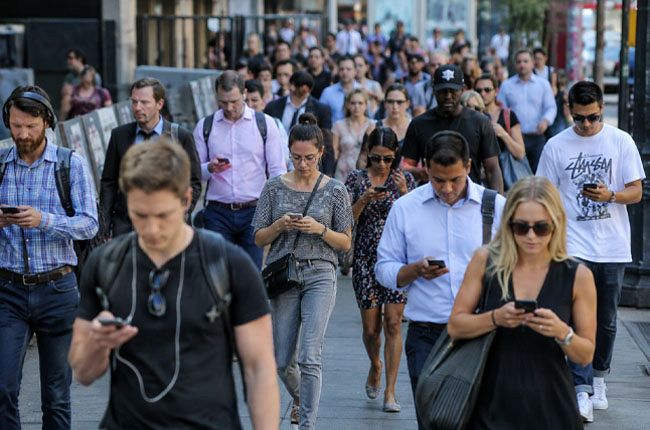
Somewhere between the smartphone and the think piece, we convinced ourselves that the individual is the fundamental unit of civilisation. That the self – your preferences, your identity, your ideology, your tribe – is the thing worth protecting above all else.
We built entire political movements around it. We built economies around it. We are now watching those economies hollowing out the communities that built them and still we defend the principle.
It is a lie we tell ourselves because the truth is harder to look at.
“You did not get out of the mud alone. Nobody did.”
Go back far enough – not to ancient philosophy, not to Enlightenment theory – just to the raw biological record of what humans actually are. We are not apex predators. We are not fast. We are not particularly strong. We survived because we organised. We shared fire. We warned each other. We buried our dead together and fed each other's children and coordinated hunts across terrain no single person could have navigated.
The species did not win by celebrating its outliers. It won by making outliers unnecessary.
That is not a romantic notion. It is a structural fact. The scope, scale, and variability of human cooperation greatly exceed that of every other animal on Earth — and that gap is not explained by our individual brilliance. It is explained by our collective architecture: division of labour, shared norms, cumulative culture and the willingness to sanction those who defect from the group.
So when we look at the ideological landscape today – the hyper-individualism of the market Right, the identity-fractured individualism of the cultural Left – what we are actually looking at is a single pathology wearing two different coats. Both traditions, in their current degenerate forms, have made the self the starting point and the ending point of political life.
The Right protects the individual from the state. The Left protects the individual from the majority. And in the space between those two shields, the collective – the actual engine of human survival – has been left to rot.
This is what an ingrown hair looks like at a civilisational scale.
An ingrown hair is not an infection. Not yet. It is a hair that has turned back on itself, burrowing into the tissue that grew it. It is caused by pressure in the wrong direction. It festers quietly. People ignore it because it is small and because dealing with it is uncomfortable. And then one day it is infected, and the infection spreads, and what was a minor irritation becomes a serious problem requiring serious intervention.
“We mistake the sophistication of our arguments for the health of our thinking.”
Ideology is that hair. Every major -ism we have produced in the modern era began as a response to a real problem and ended as a self-referential system that serves its own continuation more than it serves the people it was built for.
American sociologist Robert Bellah identified this decades ago: with the rise of radical individualism, we lose the very language required to express why we owe anything to each other at all. Liberalism, conservatism, nationalism, progressivism: each one a hair that turned inward. Each one a community talking to itself, refining its grievances, perfecting its language, losing contact with the organism it was meant to serve.

We mistake the sophistication of our arguments for the health of our thinking. We are not thinking clearly. We are thinking elaborately. Those are not the same thing. As individuals focus on their own identities and beliefs, society fragments into smaller, self-interested groups, leading to a breakdown in civil discourse that makes collective action and compromise increasingly impossible.
The family is the first collective. The neighbourhood is the second. The town, the region, the nation — each is a layer of collective capacity built on the one before it. Strip the collective from any of those layers, reduce it to a negotiation between competing individuals and you do not get freedom. You get fragmentation dressed up as freedom.
You get communities that cannot coordinate on a school bus route arguing passionately about national identity. You get nearly half of young Americans telling researchers they don't enjoy life or believe it is useful and a political class with no framework left to even name the problem.
Here is what perspective actually looks like: zoom out far enough and the difference between your ideology and your opponent's ideology is about three centimetres. You are both standing in the same civilisational project, arguing about which wall to paint, while the foundations are quietly compromised.
The ingrown hair needs to come out. That means pressure applied correctly — not the pressure of another ideology pushing back, but the pressure of shared reality. What do we actually need? What have humans always needed? Safety. Food. Shelter. Meaning. Community. Those needs do not care about your politics. They predate your politics by about 200,000 years.
The choice is not Left or Right, individual or state. The choice is whether we are serious about the collective project or not. Whether we treat the ingrown hair now, with some discomfort and discipline, or leave it until the infection makes the choice for us.
We have a minute. The question is whether we use it.
Wayne Hawkins is a small business owner in Hobart, Tasmania, and an independent candidate for the federal seat of Clark at the 2028 Election.
 This work is licensed under a Creative Commons Attribution-NonCommercial-NoDerivs 3.0 Australia License
Support independent journalism Subscribe to IA.