There's no single answer to remote and regional connectivity problems but strategically located towers, community engagement, roaming, infrastructure sharing and LEO satellites can steadily shrink the gaps, writes Paul Budde.
I HAVE BEEN WRITING ABOUT rural and remote telecommunications in Australia for more than 30 years. During that time, governments have conducted numerous inquiries, funded mobile towers and established the National Broadband Network (NBN).
The improvements have been enormous. Nevertheless, Australia remains a vast continent with a relatively small population concentrated mainly around the coastline. Providing fixed or mobile coverage everywhere is neither technically nor economically realistic.
The Telecommunications Industry Ombudsman’s (TIO) new report, Left behind: Experiences of telco consumers living in regional, rural and remote Australia, shows that connectivity remains a serious problem outside the major cities.
The TIO analysed 26,972 complaints across the past two financial years. Mobile accounted for 43 per cent of complaints in inner-regional areas, increasing to 55 per cent in very remote Australia.
This confirms what communities have said for decades: population coverage is not the same as geographic coverage. Things have improved but not changed.

What happened in Bucketty
I experienced this problem when I lived at Bucketty in the Hunter Valley.
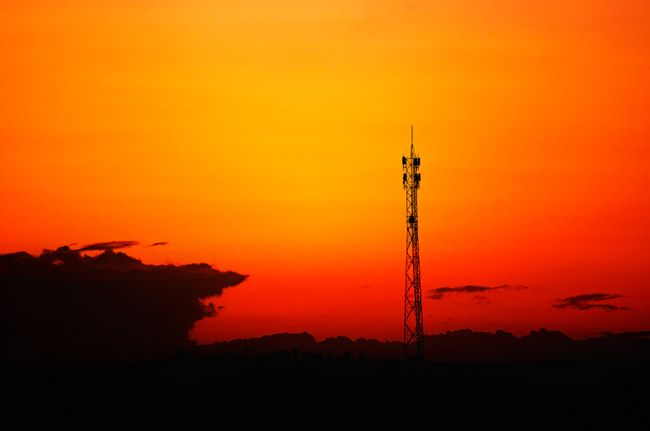
Mobile coverage was extremely limited. Through sustained community engagement, we eventually succeeded in having Optus construct a mobile tower. This substantially improved communications for residents and made the area safer and more accessible.
Our experience also showed that telecommunications companies are not always the only obstacle. A neighbouring community had concerns about having a tower in its area. The resulting opposition delayed improved connectivity by approximately ten years.
Communities are entitled to raise questions about tower locations, visual impact and environmental effects. However, rejecting infrastructure also has consequences. People cannot demand reliable coverage while opposing every tower required to provide it.
The Bucketty tower did not eliminate every blackspot. Tourists and others travelling through the district could still lose their signal. However, coverage became available at various points, greatly reducing the problem.
Strategically located coverage can therefore improve safety and accessibility even when continuous coverage is impossible.

Satellites are changing the equation
Low Earth orbit satellites are transforming regional connectivity. Starlink already provides high-speed broadband to homes, farms and businesses that could never economically be reached by fibre or conventional fixed networks. NBN Co’s planned transition to LEO satellites should provide further improvements and additional competition.
However, connecting a fixed property is different from connecting travellers. A household can install a satellite terminal, while experienced travellers may carry portable equipment, satellite phones or emergency beacons. Most tourists and motorists still depend on ordinary mobile phones and will continue encountering blackspots.
Direct-to-device satellite services will progressively reduce these gaps. As I discussed in an earlier article, phones will increasingly move between terrestrial and satellite networks, initially for basic messaging and voice and eventually for broader data services.
The proposed Universal Outdoor Mobile Obligation, scheduled to commence in December 2027, is intended to provide baseline outdoor voice and SMS access across Australia. It is a logical response, but satellite technology is not an instant or complete solution.
There is also a strategic concern. Starlink is a foreign-owned system operating beyond Australia’s direct control. Australia should be cautious about allowing one overseas company to dominate essential remote communications. Corporate decisions, geopolitical disputes or foreign government intervention could affect availability, pricing or access.
This does not diminish Starlink’s contribution. It means Australia needs competing providers, enforceable national obligations and sufficient sovereign control over essential communications.

No single solution
The ACCC is examining whether domestic roaming and shared infrastructure could improve regional coverage. Roaming could allow customers to use another carrier’s network where their own has no signal, while infrastructure sharing could reduce unnecessary duplication.
But roaming helps only where a network already exists. It cannot create coverage where there is no tower.
The TIO also identifies repair delays, cancelled appointments, charges for unusable services and inadequate consumer information. These problems deserve action, but better regulation cannot remove the physical and economic limits on coverage.
After more than 30 years, I remain convinced there is no single answer. More strategically located towers, community engagement, roaming, infrastructure sharing and LEO satellites can steadily shrink the gaps.
The realistic goal is not perfect coverage. It is reliable access in more places, better alternatives where terrestrial networks are unavailable and honest information about where Australians can – and cannot – expect to remain connected.
Paul Budde is an IA columnist and managing director of independent telecommunications research and consultancy, Paul Budde Consulting. You can follow Paul on Twitter @PaulBudde.
 This work is licensed under a Creative Commons Attribution-NonCommercial-NoDerivs 3.0 Australia License
Support independent journalism Subscribe to IA.