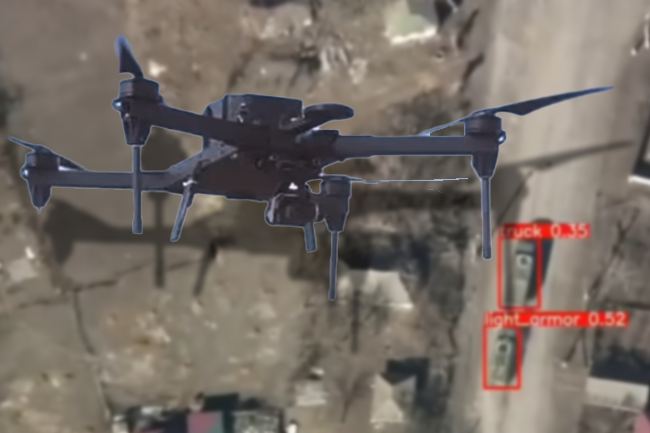
There is a quiet revolution unfolding over the battlefields of Ukraine — and it doesn’t roar like artillery or thunder like tanks.
It hums.
Small, cheap, buzzing machines – once dismissed as hobbyist toys – have become some of the most decisive weapons of the 21st Century. And in doing so, they are rewriting not just the rules of war, but the very economics of power.
The end of expensive dominance
For decades, military superiority was measured in steel and scale: tanks, fighter jets and aircraft carriers. Power belonged to those who could afford it.
Ukraine has shattered that assumption.

A first-person-view (FPV) drone costing a few hundred dollars can now destroy multimillion-dollar armoured vehicles, a shift widely documented in battlefield reporting. Guided in real time through goggles, these drones turn combat into something resembling a live-streamed strike — intimate, precise and relentless.
This is not just innovation. It is disruption.
From symbol to system
Early in the war, platforms like the Turkish-built Bayraktar TB2 captured global attention, symbolising a shift toward unmanned combat.
But the TB2 was only the beginning.
The real transformation came later, in the form of thousands of improvised FPV drones — cheap, expendable and devastatingly effective. Ukraine’s drone units now operate at scale, with rapid iteration and battlefield-driven design changes.
The shift is clear: from few and expensive to many and disposable.
The sea is no longer safe
Ukraine has deployed unmanned surface vessels – including the so-called “Sea Baby” drones – to strike Russian naval assets and infrastructure in the Black Sea.
These low-profile, high-speed systems are difficult to detect and harder to stop. They challenge a centuries-old assumption: that naval dominance belongs to those with the largest fleets.
A billion-dollar warship can now be threatened by a weapon costing a fraction of that.
The message is unmistakable — no domain is immune to low-cost disruption.
The transparent battlefield
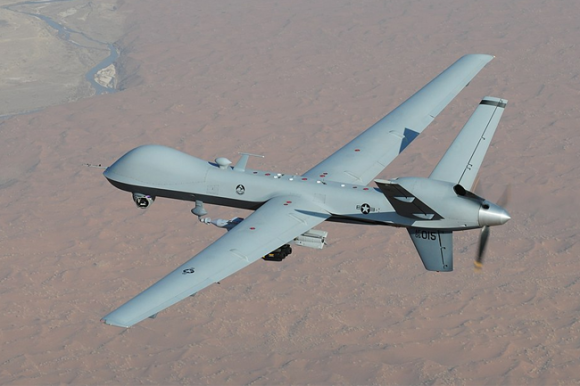
Today’s battlefield is saturated with eyes in the sky. Commercial and military drones provide persistent surveillance, turning once-hidden movements into visible targets .
If it can be seen, it can be hit.
The rise of the operator
Now, a single drone operator – often kilometres from the front line – can have strategic impact. Using tools that resemble gaming systems, operators guide drones with precision.
The economics of destruction
A tank costs millions. A drone costs hundreds.
This inversion allows smaller forces to inflict disproportionate damage.
The future battlefield
Future conflicts will likely feature swarms of autonomous drones, AI-assisted targeting systems and reliance on commercial technologies, including DJI.
Drone warfare distances the operator from the target and blurs accountability.
Ukraine is not just fighting a war — it is demonstrating the future of warfare.
War is no longer just fought by armies. It is fought by networks.
John Todd is an independent researcher and commentator focused on governance, infrastructure, public accountability and emerging technology.
 This work is licensed under a Creative Commons Attribution-NonCommercial-NoDerivs 3.0 Australia License
Support independent journalism Subscribe to IA.


Related Articles
- Drone wars: AI rewriting the rules of combat
- The great American drone panic: Miracles or massive hoax?
- U.S. loses control of airspace as mysterious drone sightings escalate
- Drone technology transforming Australian agriculture
- Drones killing birds: What can be done?