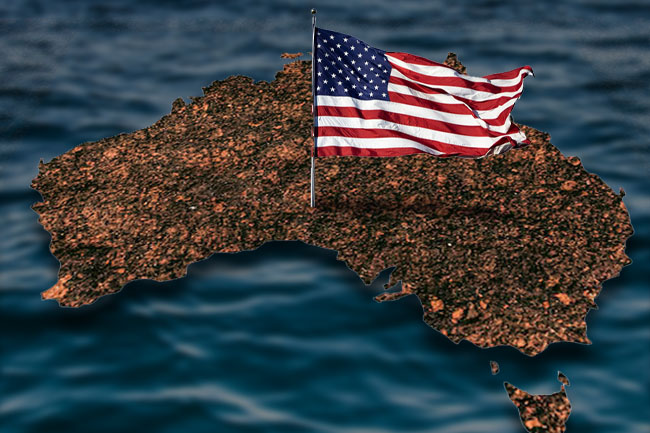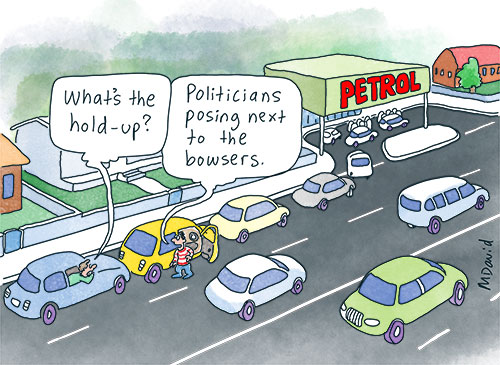
Despite its vast natural wealth, too many Australians are missing out on its benefits, writes Bevan Ramsden.
We’ve golden soil and wealth for toil;
Our home is girt by sea;
Our land abounds in nature’s gifts...
So our national anthem tells us. But the truth is that whilst our country has immense natural resources and potential wealth, the vast majority of Australians are deprived of a share in this wealth. And are deprived to the extent that they suffer daily from the economic impact of this deprivation.
Homelessness is on the rise.
Data from the 2021 Census shows that more than 122,000 people in Australia experienced homelessness on Census night. Social housing waitlists remain unacceptably high, with more than a quarter of a million households (254,571 applicants) waiting for social housing, including 122,457 in greatest need on priority waitlists, a 12% increase.
Poverty is on the increase, with one in six Australian children assessed as living in poverty according to the Australian Council of Social Service (ACOSS) report of October, 2025.
Toil is not producing the wealth to live without hardship, causing economic stress for many. Mental Health Australia’s 2023 Report to the Nation found that over half of Australians believe the rising cost of living is having a significant impact on their mental health.

The Black Dog Institute has reported that mental ill health is rising at an alarming rate, with almost two in five young Australians now living with a mental illness — a 50% increase over the last 14 years.
That Australia has significant mineral wealth is not disputed.
Recent annual export figures show the export of coal was valued at $91 billion, iron ore at $138 billion, LNG at $73 billion, oil and gas at $76.8 billion, and gold and non-ferrous metals at $33 billion. Australia exports seven times as much as is imported.
But this money did not go into the government treasury but into the pockets of private corporations, mainly U.S.-owned. Does the Government and the people of Australia get any part of this? Unfortunately, very little.
For example, take the export of LNG: Qatar exports 100 billion cubic metres of LNG annually and gets a return to government of $26.6 billion. Australia exports a similar quantity of LNG annually, but the return to our government is a pitiful $0.8 billion.
Returning to the title of this article, why has a country so gifted in natural resources and potential wealth failed to share this wealth with its citizens?
I believe the answer lies in successive governments’ open-door encouragement to foreign investors, allowing a virtual takeover, control and indeed rapacious exploitation of our natural resources for their benefit, not ours.
Quoting from Professor Clinton Fernandes, economist:
Right now, U.S. corporations eclipse everyone else in their ability to influence our politics, through their investments in Australian stocks.
Using company ownership data from Bloomberg, I analysed the ownership of Australia’s 20 biggest companies a few days after the 2019 Federal Election in May. Of those 20, 15 were majority-owned by U.S.-based investors. Three more were at least 25% U.S.-owned.
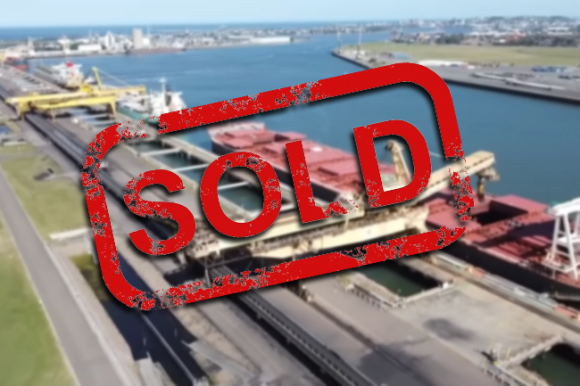
The list included the following:
- Commonwealth Bank of Australia, once the “People’s Bank” but, following privatisation, now 62% U.S.-owned;
- BHP Group, once the “Big Australian”, now 73% U.S.-owned;
- Westpac Bank, 64% U.S.-owned;
- National Australia Bank, 63% U.S.-owned;
- ANZ Bank, 54% U.S.-owned;
- Woolworths, 66% U.S.-owned;
- Rio Tinto, 65% U.S.-owned; and
- Westfarmers, 56% U.S.-owned.
And so the list goes on.
Because of their financial size and domination, decisions about industry investment and development are made not by the Australian Government but in the boardrooms of those corporations and most probably overseas. Those decisions are made to maximise profit for their shareholders, their prime responsibility, not to meet national priorities for the benefit of the Australian people
We also lose out because of tax manipulation and so-called “creative accounting”.
Clinton Fernandes, in his excellent book, Island Off the Coast of Asia, writes:
Recent work by investigative journalist Michael West and the Tax Justice Network has exposed the myriad ways in which certain corporations get around the tax laws. ExxonMobil, for instance, “paid zero tax on more than $18 billion in income” in 2014-15, although the price of domestic gas went “through the roof”.
Figures analysed and released in December 2017 showed Glencore, which operates in commodity industries such as coal, copper, oil and zinc, “managed to exterminate all profit and tax on $22 billion in income”.
Shell Australia “paid zero on $4.2 billion in Revenue. Chevron nothing on $2.1 billion, Viva Energy (which bought the petrol stations from Shell), zero tax on $16.8 billion and ExxonMobil not a cent on $6.7 billion.
In short, one Australian worker paid more tax than five giant U.S. corporations whose combined income in that year was $51.8 billion.

Norway’s alternative approach to development of its energy resources, whilst maintaining sovereign control for the benefit of its people, is explained by Clinton:
Norway harnessed its earnings from oil and gas in its continental shelf. The Norwegian Government is the largest shareholder in Statoil, its state oil company.
The Norwegian government created Oliefonder, or Oil Fund in 1990 to invest Norway’s oil revenue. The fund had more than 11 billion kroner (more than $1.7 trillion Australian dollars) in 2021. This was a handsome investment for a country with 5.5 million people.
Norway has one of the highest standards of living in the world.
Successive Australian governments have lost sovereign control of the economy and the ability to set national economic priorities. And Australians have lost their share of the wealth of our country.
The defence against foreign ownership and control is publicly-owned enterprises. That ownership can be regained using the compulsory acquisition powers under the constitution, using the existing power of the legislature (s51 xxxi) to acquire property on just terms.
Parliament does have the power to nationalise, in whole or in part, critical national industries and provide compensation for the acquisition over a long period of time. It’s just a question of whose interests are to be served and having vision, intent and some Australian backbone to do what is needed.
Summing up, we are being ripped off. We are not getting a fair return on the immense wealth of this country, which could otherwise provide us with world-class infrastructure, including affordable housing and transportation, free health, education and child care, removing the economic stresses that cause mental illness and also help us address the existential issues associated with the climate crisis.
Stated simply, we need to break free of U.S. and other foreign domination of our economy, regain ownership and control of our strategic and wealth-generating industries and use that wealth for the benefit of the Australian people.
Bevan Ramsden is a long-time peace activist going back to his full-time voluntary organising work in the Vietnam Moratorium Campaign, for which he was, with Jim Cairns, the Victorian representative on the National Vietnam Moratorium Campaign committee. He has continued since in peace activities and more recently as a member of the national coordinating committee for the Independence and Peaceful Australia network and editor of its monthly publication, 'Voice'.
 This work is licensed under a Creative Commons Attribution-NonCommercial-NoDerivs 3.0 Australia License
Support independent journalism Subscribe to IA.