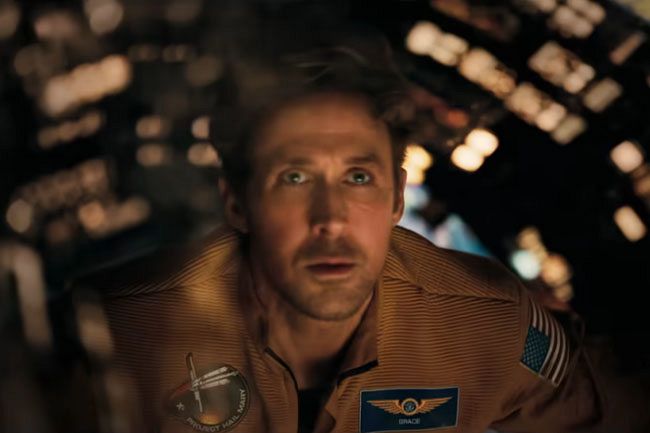
In an era where book-to-film adaptations are often met with scepticism, Project Hail Mary arrives with something rare: expectation rather than apprehension, writes Michael Gibbons.
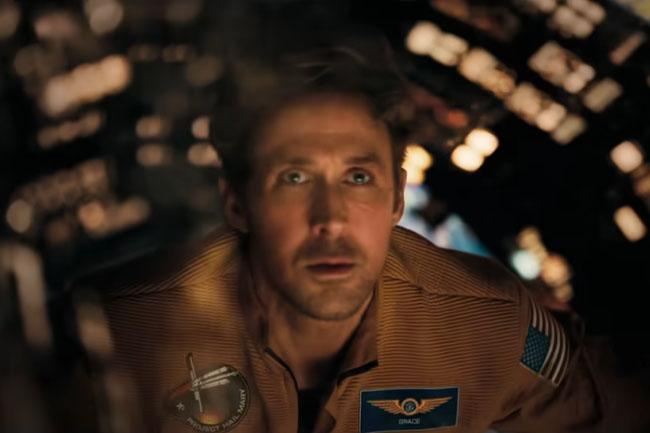
STARRING RYAN GOSLING and based on the bestselling novel by Andy Weir, the 2026 release of Project Hail Mary is one of the most anticipated science fiction adaptations in recent memory. And with good reason. For once, the question isn’t whether the film can live up to the book. It’s whether it can capture the experience.
Because Project Hail Mary isn’t just a great novel, it’s a phenomenon across formats.
Like many readers, I came to the story through the book in 2025, drawn in by its blend of hard science, humour and emotional depth. But unlike most adaptations, this one arrived with a second layer of expectation: its reputation as an outstanding audiobook. Narrated by Ray Porter, the audio version has been widely praised for transforming an already compelling story into something immersive and immediate.
There is still a lingering debate among purists about whether audiobooks “count” as reading. But in a time-poor world, that argument feels increasingly outdated. Whether it’s podcasts, short-form video or digital books, the way we consume stories has evolved. If anything, audiobooks have expanded access. They allow people to engage with complex material while commuting, exercising or simply navigating daily life.
That evolution, however, isn’t just cultural. It’s also commercial.
Despite its popularity, the Project Hail Mary audiobook has remained largely tied to Audible, a move that feels designed to keep listeners within a single ecosystem. As someone who primarily uses Spotify, I found myself waiting for it to appear there, particularly since Spotify introduced audiobook listening hours into its Premium tiers.
So far, apart from a foreign language version, it still hasn’t materialised. It’s a small frustration, but a telling one. Access to stories is no longer just about format. It’s about platform, subscription and strategy.
And yet, the demand remains.
Across online communities, particularly sci-fi forums and fan groups, Ray Porter’s narration is often described as elevating the material, bringing clarity to the dense science and adding emotional weight to the experience. For some, it even makes the difference between struggling through the text and fully connecting with it.
In that context, Project Hail Mary exists as a rare three-part success: novel, audiobook and now film.
And remarkably, the film holds up.
My reaction after seeing it was simple: this is one of the most faithful book-to-film adaptations in recent memory. Inevitably, there are omissions. Entire passages of scientific explanation are condensed and some subplots, particularly those dealing with Earth-bound attempts to solve the looming crisis, are reduced or removed entirely. But these are necessary sacrifices when translating a dense, 500-page novel into a two-and-a-half-hour cinematic experience.
What remains intact is what matters most: the relationship between Ryland Grace and Rocky. It is the emotional and narrative core of the story, and the film understands that completely. In preserving that dynamic, the adaptation succeeds where many others fail. It identifies what must stay. Not what can be cut.
History is littered with examples of adaptations that didn’t make those choices as carefully. Fans still lament the absence of Peeves in the Harry Potter films, originally brought to life by Rik Mayall, or the omission of Tom Bombadil from The Lord of the Rings trilogy. Meanwhile, Contact, adapted from Carl Sagan’s novel, took significant narrative liberties, resulting in two versions of the same story that feel fundamentally different, yet equally valid.
That tension between fidelity and interpretation sits at the heart of every adaptation. Some authors have famously rejected the film versions of their work, as noted by IndieWire, including The Shining and A Clockwork Orange. Others, like Michael Ende, even objected to how their stories concluded on screen — a particularly ironic footnote in the case of The NeverEnding Story.
But perhaps that’s the point.
Adaptations are not meant to replace the original. They are reinterpretations shaped by different media, constraints and creative voices. Where a book invites imagination, a film presents a definitive version. For some, that clash is jarring. For others, it’s part of the appeal.
Personally, I fall into the latter camp. I enjoy the differences. The tension between what I imagined and what appears on screen is not a flaw. It’s part of the experience.
There are, broadly, two ways to approach adaptations: read the book first or watch the film first. Both have their advantages. When I watched The Martian before reading the novel, the visual framework made the science easier to process. With Project Hail Mary, I did it the other way around. While I loved seeing the story realised on screen, the lack of surprises inevitably dulled some of the impact.
That may be the film’s only real limitation. Its faithfulness is its strength, but also, in a strange way, its constraint.
For those who haven’t read the book – particularly those who avoid trailers and spoilers – the experience will likely be far more powerful. For them, the film doesn’t just adapt the story. It delivers it.
And that may ultimately define its legacy.
Because if Project Hail Mary proves anything, it’s that great adaptations don’t need to reinvent their source material. They just need to understand it.
And in doing so, it positions itself comfortably alongside modern science fiction standouts like Interstellar, Arrival and Ex Machina, films that respect their audience’s intelligence and the integrity of their ideas.
Michael Gibbons is an Australian writer with a Bachelor of Arts (with Distinction) majoring in Screen and Cultural Studies.
 This work is licensed under a Creative Commons Attribution-NonCommercial-NoDerivs 3.0 Australia License
Support independent journalism Subscribe to IA.