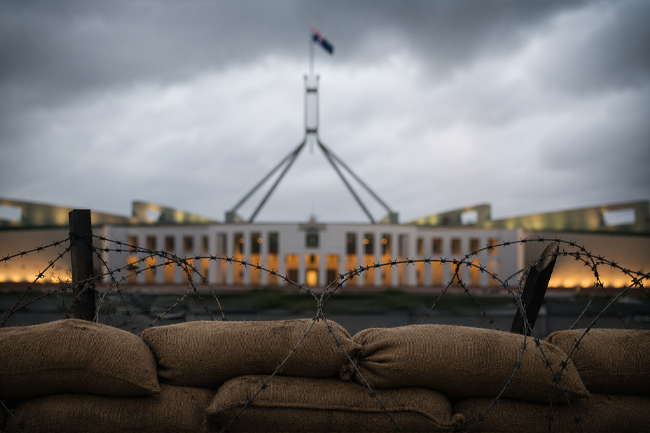
War should never be an executive reflex — it demands democratic consent, because those who pay the price deserve a voice before the first shot is fired, writes Dr Adriano Tedde.
LEADERS AROUND THE WORLD are increasingly normalising the prospect of war and urging societies to prepare for it.
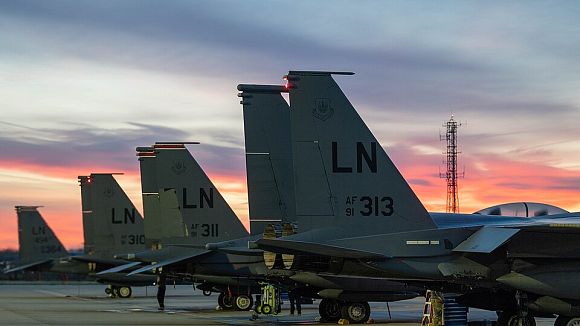
Since 2022, rearmament, conscription debates and war statements have intensified across Europe following Russia’s aggression against Ukraine. Rather than prioritising diplomatic pathways to end a war on their doorstep, European institutions have largely doubled down on military support, echoing the Roman saying si vis pacem, para bellum — if you want peace, prepare for war.
At the same time, global instability appears to be widening. As Peace Nobel candidate Donald Trump has expanded conflict theatres with attacks in Latin America and the Middle East, global public opinion is focused on war. In such a climate, war is no longer understood as an exception, but as a likely feature of international politics.
In these moments, a familiar set of voices takes centre stage. Experts in geopolitics, strategy and military affairs talk of shifts in the balance of great powers. Their analyses are indispensable in helping policymakers and the public understand the dynamics of conflict. Yet, they rarely address a more fundamental question: how can war be prevented, rather than managed?

As Leo Tolstoy suggests in War and Peace, one can pursue the causes of conflict through rigorous scientific inquiry indefinitely, but no explanation will ever justify war’s human tragedy. More recently, psychologist James Hillman argued in A Terrible Love of War (2004) that war is so deeply embedded in the human experience that it escapes rational understanding. War, in his account, is “inhuman” — something that transcends human reason, even as we attempt to analyse it.
If this is the case, there is value in shifting how we frame war. Rather than treating it solely as a strategic or technical subject, it can be understood as a question of social justice. Such a reframing doesn’t replace geopolitical analysis but complements it by highlighting the human and societal consequences of organised violence.
This change in how we perceive and study war matters because public debate often abstracts war into strategic competition, deterrence models and military capability. These concepts can obscure war’s everyday reality. In a neoliberal economy marked by precarity, many citizens are more immediately concerned with economic survival than with geopolitical abstractions.
Even today’s angry, impoverished nationalist constituencies are not preoccupied with fighting the foreign enemy more than making ends meet, as MAGA supporters’ anti-war sentiment seems to confirm.
At its core, war remains a profoundly unequal enterprise. Decisions to use force are taken by a narrow segment of political leadership, while their costs are borne collectively and disproportionately by those who fight – often the least privileged segments of society – and those who live in conflict zones.
The oft-attributed quotation, linked to poets Paul Valéry or Pablo Neruda, captures this asymmetry:
“War is the massacre of people who don't know each other for the profit of people who know each other, but don’t kill one another.”
If war is understood in these terms, then its prevention becomes not only a strategic objective, but a democratic imperative. To paraphrase the Roman saying: si vis pacem, para democratiam — if you want peace, prepare democracy, as argued by Italian constitutionalist Gustavo Zagrebelsky.
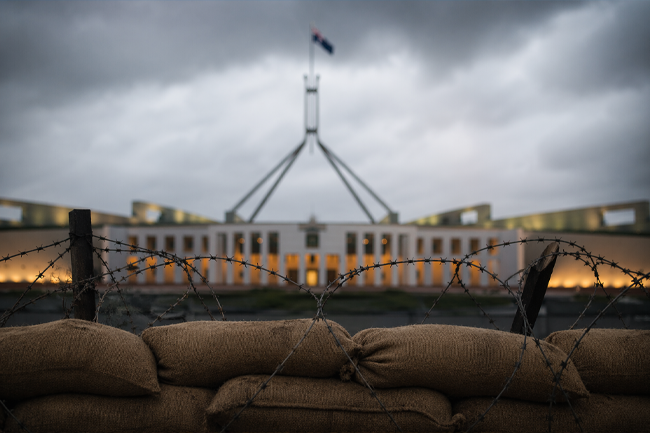
For Australia, this principle has direct policy relevance. Recent proposals to reform war powers advanced by the Australian Greens would require parliamentary approval before deploying the Australian Defence Force into armed conflict. The rationale is straightforward: decisions of such magnitude should not rest exclusively with the executive. Parliamentary scrutiny would introduce debate, transparency and accountability into the decision-making process, aligning the use of force more closely with democratic consent.
This is not a radical proposition, nor would it constrain Australia’s ability to act in its national interest. Rather, it would strengthen legitimacy and public debate and ensure that decisions to go to war are subject to the same standards of deliberation expected in other areas of public policy.
Additional measures could reinforce this logic. Targeted taxation of windfall profits in the weapon and energy sectors during wartime, or stronger regulatory oversight, if not nationalisation of those sectors. This could help address the economic incentives that accompany prolonged conflict. Such policies, however, depend on robust democratic institutions capable of acting independently of concentrated economic interests, restoring the primacy of the common good over profit.
In a strategic environment increasingly defined by the anticipation of conflict, middle powers such as Australia face a choice. They can align uncritically with prevailing narratives of militarisation, or they can seek to shape alternative approaches grounded in democratic accountability and the rule of law.
Requiring parliamentary approval for war would not eliminate the risk of global conflict. But it would represent a meaningful step towards accountability and transparency in momentous decisions. More broadly, it would signal a shift in how war is understood — not only as a techno-geopolitical matter of strategy, but as an issue grounded in social justice.
In an era of renewed great power competition, preparing for peace does not require only military readiness, but democratic determination.
Dr Adriano Tedde is a former diplomat and lecturer in Strategic and American Studies at Deakin University.
 This work is licensed under a Creative Commons Attribution-NonCommercial-NoDerivs 3.0 Australia License
Support independent journalism Subscribe to IA.


Related Articles
- 'Just obeying orders' no excuse for war crimes
- 'Us versus them': Accepting our differences might save mankind
- Warren Mundine's uranium company a failure after 20 years
- A blueprint for peace
- War Memorial's ignorance of Frontier Wars must end