Australia’s Afghan war legacy is no longer just about battlefield conduct, but a humanitarian crisis deepened by the freezing of a nation’s lifeline, writes David Higginbottom.
THE ARREST OF Ben Roberts-Smith presents an opportunity to focus on Afghanistan and Australia’s role. The 20-year U.S.-led war, which Australia dutifully supported, was sold to the public as a “good war”. The arrest of Australia's most decorated living soldier on five counts of murder brings this grim legacy into sharp focus.
The legacy of a “good war”
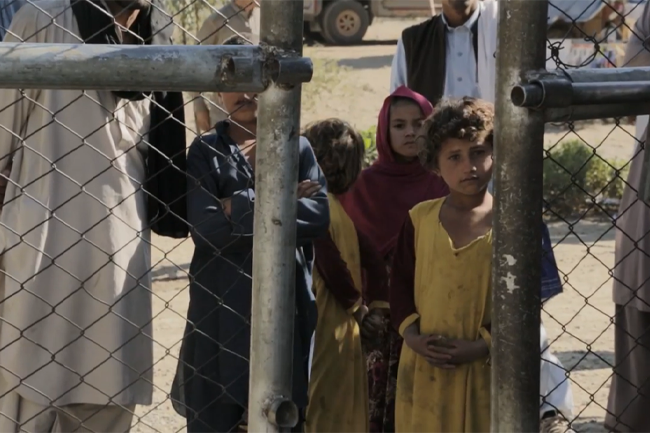
A recent article by the Associated Press (AP) detailed Afghanistan's malnutrition crisis, where the World Food Programme (WFP) turns away three out of every four desperate children. While the AP article identifies aid cuts as a proximate cause, the primary driver of Afghanistan's current economic implosion is the freezing of the country's central bank reserves by the United States — a policy of collective punishment.
The freezing of sovereign assets
In August 2021, the Biden Administration froze approximately US$7 billion (AU$9.8 billion) in assets belonging to Da Afghanistan Bank (DAB), held in the United States. On 11 February 2022, President Biden signed Executive Order 14064, formalising the seizure and diverting half of the funds – US$3.5 billion (AU$4.9 billion) – to a trust for humanitarian aid, while holding the other half for potential claims from 9/11 victims.
Central bank reserves are not the property of the ruling regime; they are the sovereign property of the state itself, belonging to the Afghan people. These funds are essential for backing the domestic currency, managing inflation and ensuring the liquidity of the entire banking system.
Legal scholars have argued that the unilateral seizure represents a potential violation of sovereign immunity under international law. Even a U.S. court has since affirmed that the DAB assets are immune from seizure by 9/11 victims, acknowledging they do not belong to the Taliban.

From frozen assets to starving children
The seizure instantly decapitated the Afghan economy:
- First, it triggered a massive liquidity crisis: without access to its foreign reserves, the central bank could not perform its most basic functions. Private banks were starved of cash, and strict withdrawal limits were imposed on citizens and humanitarian organisations alike.
- Second, the banking system seized up entirely. Trade financing evaporated, salaries went unpaid and commerce ground to a halt. As Human Rights Watch noted, the markets are full of food, but families – their incomes and savings gone – simply cannot afford to buy it.
- Third, even when international aid is available, the crippled banking sector makes it exceedingly difficult for humanitarian organisations to transfer and withdraw funds to pay local staff, procure supplies and run programs effectively.
The Biden Administration's creation of the Fund for the Afghan People has proven to be an exercise in futility. Since its establishment in September 2022, the fund's assets have grown to US$3.9 billion (AU$5.5 billion) through interest, yet not a single dollar has been disbursed.
The fund's board has cited concerns about the central bank's independence and the risk of Taliban diversion. The result is a cruel paradox: the U.S. is withholding the very funds needed to stabilise the Afghan economy, citing the central bank's lack of capacity as the reason for doing so.
A policy of starvation
The cuts to the World Food Programme are the final, brutal turn of the screw. Having crippled the Afghan economy by seizing its central bank reserves, the U.S. then cut funding for emergency food assistance in May 2025, citing concerns that aid could benefit the Taliban, as reported by the AP.
This decision directly explains why the WFP is now forced to make the unconscionable choice of which starving children to feed and which to turn away. In March 2026, 17.4 million people were expected to face acute hunger, while the UN humanitarian appeal for Afghanistan remains only 10 per cent funded.
The humanitarian catastrophe in Afghanistan is not an accident. It is the result of a deliberate policy choice to use the country's economic and monetary system as a tool of coercion. The freezing of sovereign assets is an illegal act of collective punishment that has plunged an entire population into destitution. The subsequent aid cuts only compound the cruelty.

The burden of allied policy
For Australia, the implications are significant. Having spent 20 years and billions of dollars as a partner in Afghanistan, Australia bears a moral responsibility to the Afghan people. Yet, the current U.S.-led financial blockade directly undermines Australia's own humanitarian efforts.
The Australian Government has provided over $310 million in humanitarian assistance to Afghanistan since the fall of Kabul, announcing a further $50 million package in January 2026. Australia has rightly taken a strong stance against Taliban abuses, implementing a sanctions framework to target Taliban leaders directly. This targeted approach demonstrates that it is possible to hold the Taliban to account — without collectively punishing 40 million Afghans.
However, the blanket freezing of sovereign assets does the opposite. Australia's aid is being stretched to breaking point because the underlying economy has been suffocated by our closest ally.
The path forward
Australia, as a key ally and major humanitarian donor, must use its diplomatic leverage in Washington to advocate for the U.S. to initiate a phased, conditional release of the $3.5 billion held in the Afghan Fund for macroeconomic stabilisation, accompanied by independent third-party auditing of DAB transactions.
As Dr Albert Palazzo argues in Independent Australia, the collapse of the “rules-based order” presents Australia with a chance – and a necessity – for foreign policy independence. We must stop acting as a silent vassal to a hegemonic power and instead lead a coalition of middle powers to demand a clear separation between humanitarian, economic stability and political recognition of the Taliban.
The Roberts-Smith trial should catalyse a much broader reckoning. As Antony Loewenstein, in a recent podcast, points out, the national conversation remains focused on individuals rather than the systemic failure and nature of the war itself. We imprisoned whistleblower David McBride for exposing these crimes, while the political and military architects of the disaster remain unaccountable.
As Loewenstein concludes, the legacy of Australia in Afghanistan is one of “failure and war crimes and violence”. We owe it to the Afghan people – whose country we helped destroy – to at least ensure they do not starve as a consequence of our ally's financial blockade.
David Higginbottom is a member of the coordinating committee of the Independent and Peaceful Australia Network (IPAN) and coordinator of the Make Peace A Priority campaign (mpap.au).
 This work is licensed under a Creative Commons Attribution-NonCommercial-NoDerivs 3.0 Australia License
Support independent journalism Subscribe to IA.


Related Articles
- Taliban's new laws further degrade women's rights
- Sanctions driving Afghans to brink of starvation
- Australia must help Afghans deprived of lives, dreams and futures
- Iconic Afghanistan: Life before war
- Afghanistan is a warning of global denialism