When moral frameworks are weaponised as trade instruments, they are hollowed out, writes Wayne Hawkins.
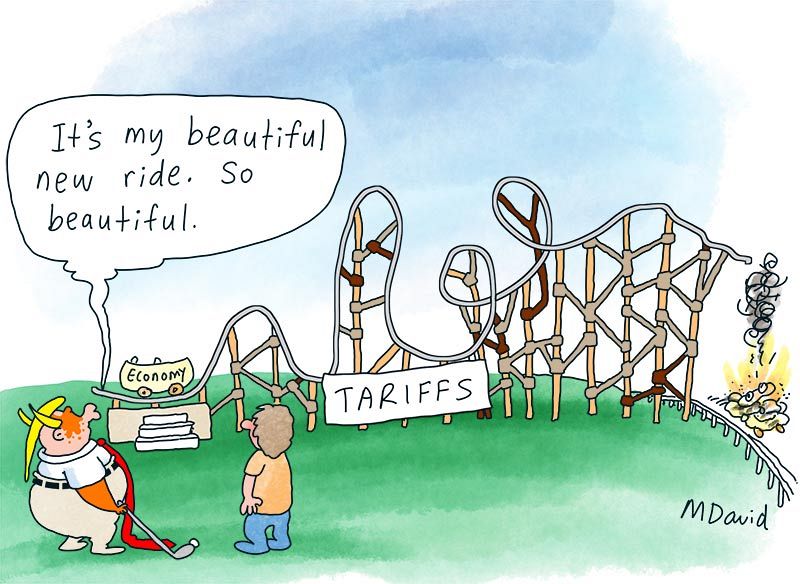
WHEN THE TRUMP ADMINISTRATION announced a 12.5 per cent tariff on Australian goods last week, citing our failure to crack down on forced labour, the response from Canberra was predictably diplomatic. Anthony Albanese called it “unjustified”. The foreign affairs machinery quietly began working the phones for an exemption. Nobody said the obvious thing.
So let’s say it.
The United States Department of Labor (DOL) recorded an 88 per cent increase in child labour violations since 2019. In fiscal year 2023 alone, nearly 5,800 infractions were recorded.
Children as young as 12 years old have been pulled from chicken slaughterhouses, car parts factories, and construction sites. A 16-year-old lost both legs on a U.S. construction site. A 15-year-old fell to his death from a roof in Alabama. A 13-year-old was found working 50-60-hour workweeks operating sheet-metal machinery at a Hyundai supplier. This is not historical. This is now.
And while this was happening, 28 U.S. states introduced bills to weaken child labour protections. Twelve enacted them. Iowa passed legislation permitting 14-year-olds to work on factory assembly lines. The same political movement now lecturing the world about forced labour has been systematically dismantling the laws that prevent it at home.
This is not hypocrisy as an accident. This is hypocrisy as a system.
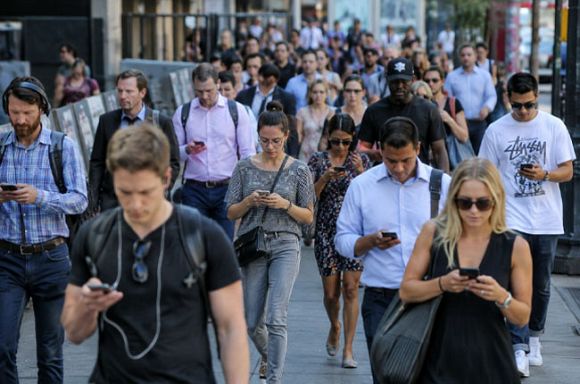
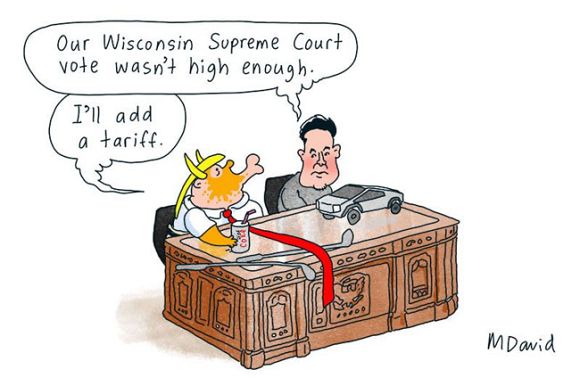
The forced labour tariff mechanism itself is a legal workaround — the U.S. Supreme Court struck down Trump’s original “Liberation Day” global tariffs as unlawful in February. The moral language is a chassis for economic coercion after the courts shut down the first vehicle. Every foreign government knows this. Not one will say it plainly, because they all want exemptions.
The EU called it unjustified. Australia called it unjustified. Then both quietly got back in the exemption queue. Diplomatic silence is the price of keeping a seat at the table.
But there is a cost to that silence that compounds across generations. When moral frameworks are weaponised as trade instruments without consequence, they are hollowed out. The next time forced labour rhetoric is genuinely needed – when it matters, when real accountability is at stake – it will carry the residue of this moment.
The precedent, unremarked upon, becomes the baseline.
“The window changes over time; it can shift, shrink, or expand. It exemplifies the slow evolution of societal values and norms.”
Joseph Overton
Australians should understand this dynamic because we have been living it.
The Overton window is the range of ideas a society considers acceptable at any given moment. The window moves not through dramatic announcement but through patient repetition: a welfare recipient called a bludger often enough that the shame transfers from the system that failed them to the person it failed.
A public asset described as a “burden” until privatisation feels like relief. A secular constitutional settlement quietly reframed as a Christian nation until people forget the Constitution never said any such thing — and it doesn’t.
Section 116 of the Australian Constitution explicitly prohibits the Commonwealth from establishing any religion. We have never been a theocracy.
I grew up across southern Tasmania in the years after the White Australia policy ended. I grew up in a country where “a fair go” and “mateship” weren’t slogans — they were the actual operating system.
They were the values that built Medicare, created superannuation, gave workers something to retire on, and gave students a path to education without generational debt. These were not Left-wing ideas in some ideological sense. They were Australian ideas, broadly shared, because the lived experience of most Australians – of working hard, of needing a fair system, of understanding that your neighbour’s security made yours more solid – produced them organically.
That consensus didn’t collapse overnight. WorkChoices stripped unfair dismissal protections and hobbled collective bargaining — and was sold as modernisation.
HECS debt, once genuinely manageable, ballooned under indexation arrangements that turned education into a liability held over a generation. Medicare has been defended, but the pressure on it has never ceased. Each individual shift, presented as reasonable, as necessary, as inevitable. The window moves, and people mistake the new view for the one they always had.
And somewhere in that movement, people started writing fine print into the fair go. Deciding who qualifies. Importing the language of American culture wars into a country that built its identity on something genuinely different.
The same politicians who benefited from free or heavily subsidised university educations now preside over a student debt system that would have been unrecognisable to their younger selves. The same political tradition that once argued the market alone should not determine a person’s worth now argues that it should determine almost everything.
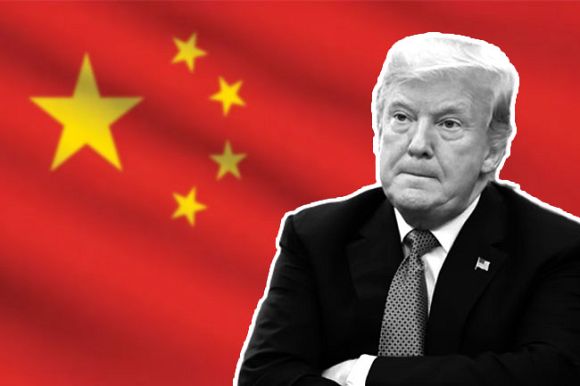
The U.S. forced labour tariff and the slow erosion of Australian collectivism are not unrelated phenomena. They are both products of the same decades-long project: the progressive normalisation of the idea that power justifies itself, that the strong make the rules, that the moral language is for public consumption while the real mechanism runs underneath.
The world’s failure to call out American child labour hypocrisy directly is the international version of what Australians have been doing domestically — calculating that this is not the moment to spend political capital, absorbing the insult, managing the relationship, not making it worse.
And the window moves. And the next generation inherits the new position as the natural one. They don’t grieve what they never knew existed.
My generation grew up after the White Australia policy ended. We understood, or tried to, that the fair go was for everyone — that mateship wasn’t a membership with conditions.
That understanding is worth fighting for. Not with nostalgia — the old Australia had its own profound injustices, ones we are still reckoning with. But with clear eyes about what we are losing, piece by piece, while the window moves and we mistake drift for arrival.
The next generation will not know what they lost if no one names it as it happens. The window does not announce itself. It moves when the people who know better decide that silence is safer than clarity. We have been silent long enough.
The glasshouse is not a metaphor. It is a choice — to keep throwing stones from behind it, or to finally name the walls for what they are and demand we build something worth living in.
Wayne Hawkins is a small business owner in Hobart, Tasmania, and an independent candidate for the federal seat of Clark at the 2028 Election.
 This work is licensed under a Creative Commons Attribution-NonCommercial-NoDerivs 3.0 Australia License
Support independent journalism Subscribe to IA.